Fish Feed Technical Article
Size Fish Feed Extruder Line: DS70/DS85 Twin-Screw Manufacturer
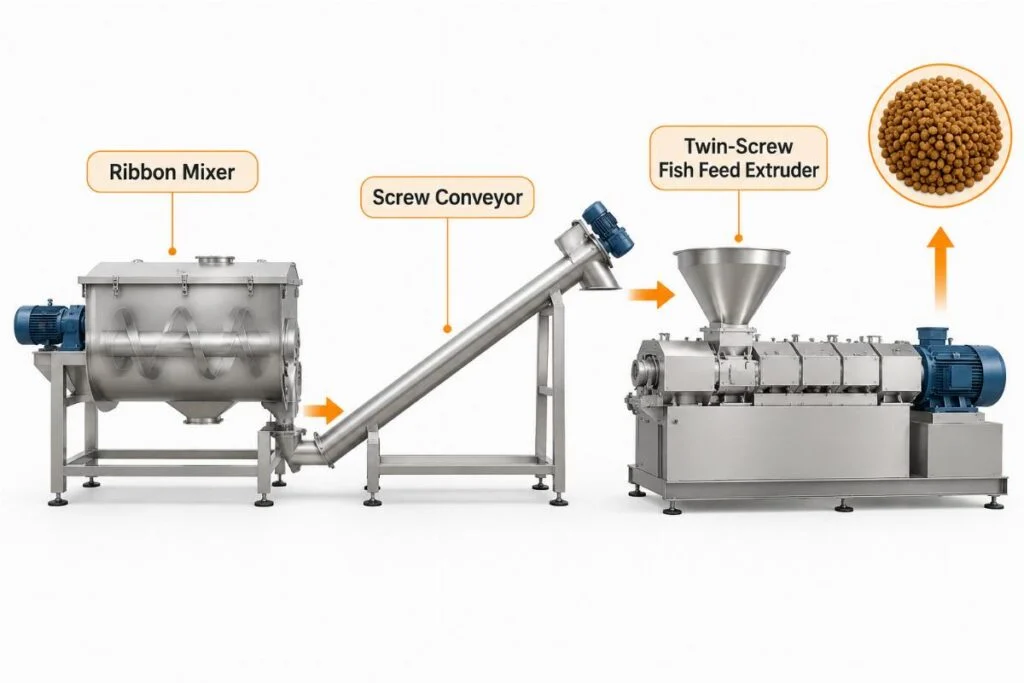
Bigger upstream equipment does not guarantee better output; an oversized mixer creates dead zones that ruin moisture uniformity, while an over-speed conveyor starves the extruder and destroys the floating profile of your fish feed.
To properly execute fish feed extruder line sizing, you must match the continuous feeding rate of the mixer and conveyor to the extruder’s intake capacity using a moderate buffer ratio. This prevents material starvation and bridging, ensuring the precise gelatinization required for consistent floating or sinking feed quality.
I still remember a sweltering afternoon in Rayong, Thailand, standing next to a DS70 twin-screw extruder. The client was producing sinking tilapia feed, but the pellets kept floating to the surface. We traced the issue back to the upstream setup: the mixer was too large, creating dry pockets, and the conveyor fed too erratically. The extruder was literally choking on air and starved of consistent moisture. That day reinforced a hard truth about aquaculture feed production line design: the extruder is only as good as the material it receives.
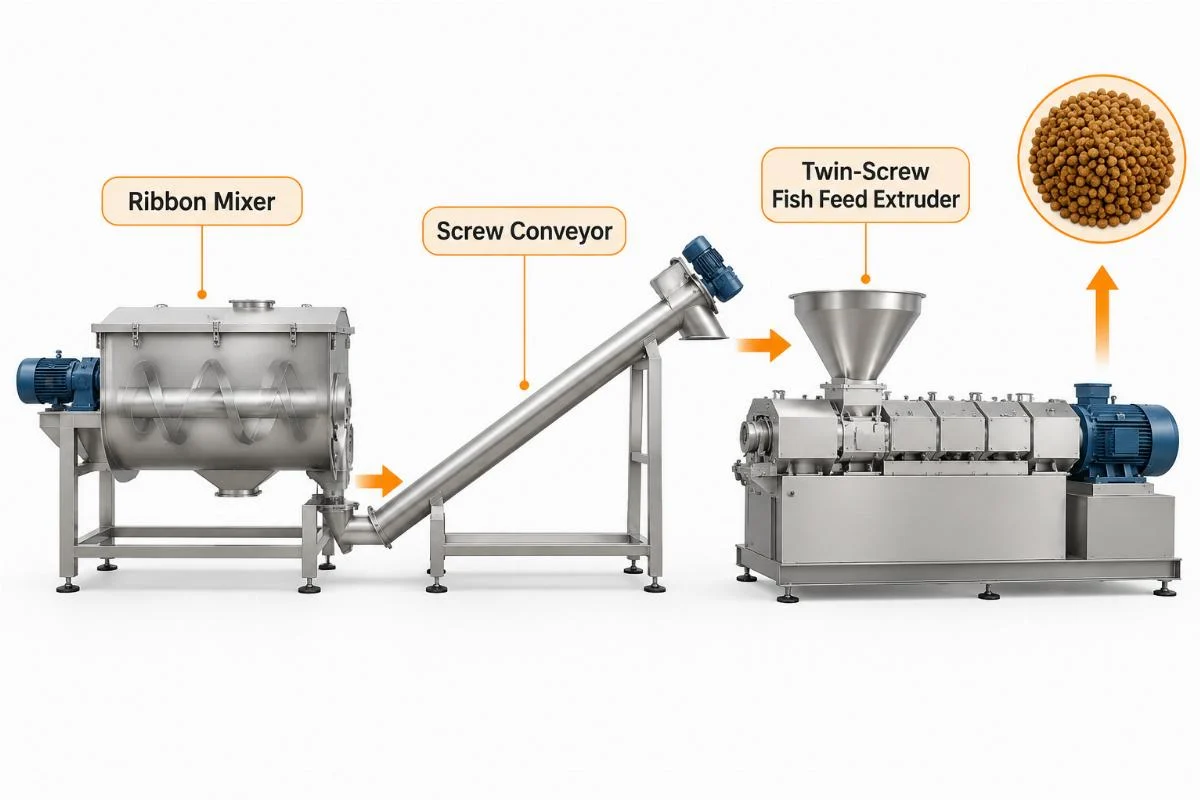
Getting the fish feed extruder line sizing right from the very first hopper is the only way to secure seamless production flow and optimal feed quality.
Why Mixer and Conveyor Sizing Dictates Feed Quality?
Mismatched upstream equipment directly causes material starvation or bridging, which ruins the floating and sinking profiles of the final product.
When you are figuring out how to size mixer and conveyor for fish feed extruder setups, the core argument is continuous feeding stability. If the conveyor feeds faster than the extruder can process, the feed throat bridges, and the motor draws excessive current. If it feeds slower, the extruder experiences material starvation. Starvation means the material inside the barrel does not receive enough mechanical shear and thermal energy. Without proper gelatinization, the starch matrix cannot expand correctly upon exiting the die, causing sinking feed to float or floating feed to collapse.
In a Southeast Asia tilapia farm project, we observed that an improperly sized ribbon mixer for a standard sinking feed line led to severe moisture segregation. The center of the mixer batch remained dry while the edges were over-conditioned. When this uneven blend entered the extruder, the floating quality was completely unpredictable. Proper fish feed extruder line sizing requires calculating the exact moisture retention time to ensure every particle receives identical thermal treatment before extrusion.
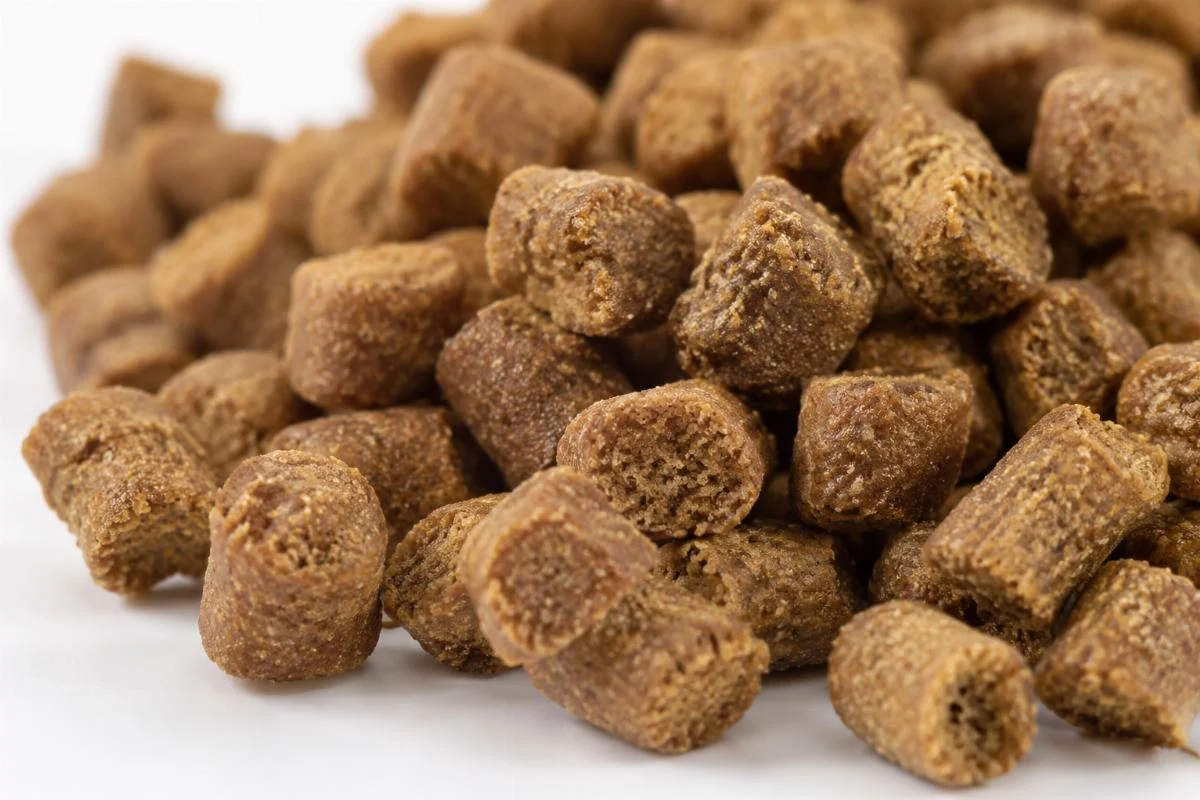
How to Calculate the Right Mixer Capacity?
Target a moderate capacity buffer ratio between the batch mixer and the continuous extruder to eliminate dead zones while maintaining a steady supply.
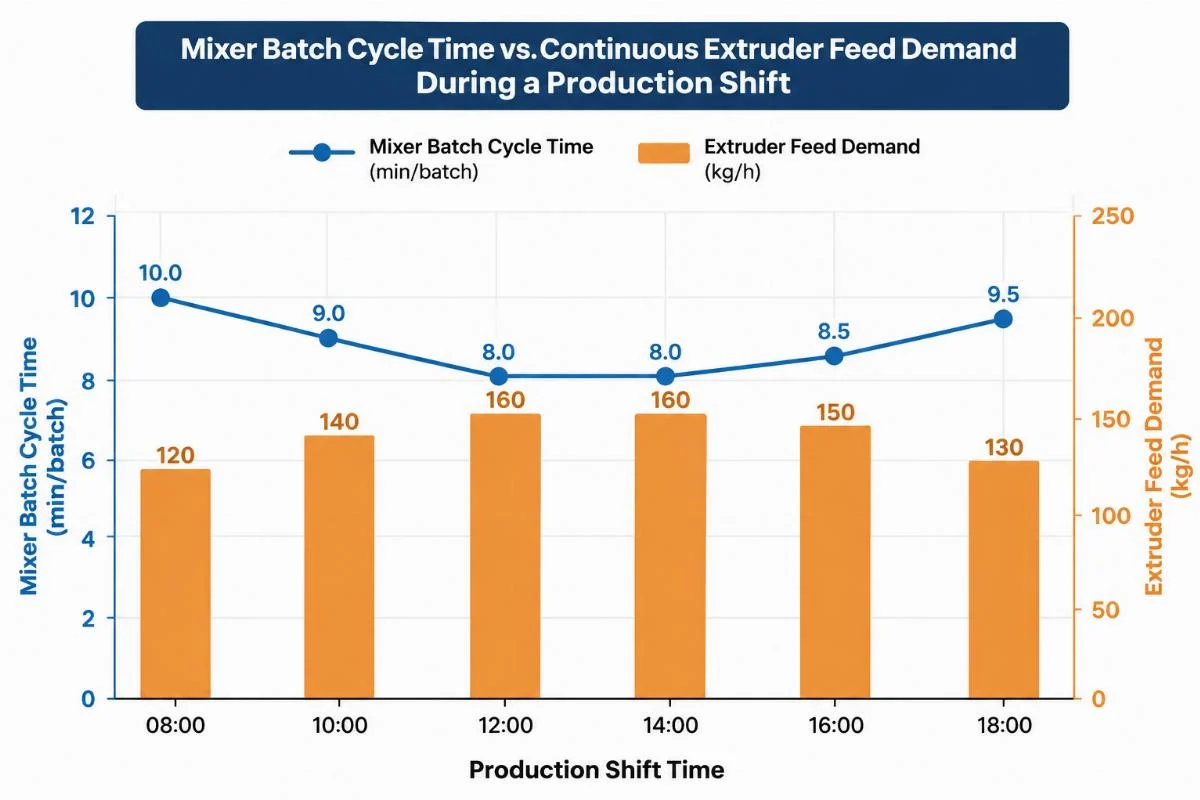
A common misconception in twin screw extruder capacity calculation is that a massive mixer solves all supply issues. In reality, an oversized mixer increases the batch cycle time unnecessarily and creates dead zones where ingredients stagnate, leading to uneven moisture distribution. For a continuous fish feed extruder line sizing strategy, the mixer must complete its mixing and discharge cycle just before the extruder’s buffer bin runs empty.
The industry standard methodology dictates a capacity buffer ratio that accounts for mixing time, discharge time, and conveyor transit time. If your extruder requires a continuous feed, the mixer’s effective batch output must align with this demand. For instance, when sizing a ribbon mixer for a sinking feed line, the focus must be on retention time and moisture uniformity rather than sheer volume. The mixer should be large enough to handle the full formula batch but small enough to ensure rapid, homogeneous blending without ingredient degradation.
Furthermore, the conveyor linking the mixer to the extruder must be calibrated to the mixer’s discharge rate. If the conveyor clears the mixer’s discharge port too quickly, it pulls air and causes pulsating flow into the extruder feed throat. Accurate fish feed extruder line sizing demands that the mixer discharge valve and conveyor speed are synchronized to maintain a full, but not overflowing, feed throat.
Sizing the Conveyor: Screw vs. Belt for Fish Feed?
Selecting the correct conveyor type based on material characteristics and line position is critical for preventing bridging and ensuring stable extruder feeding.
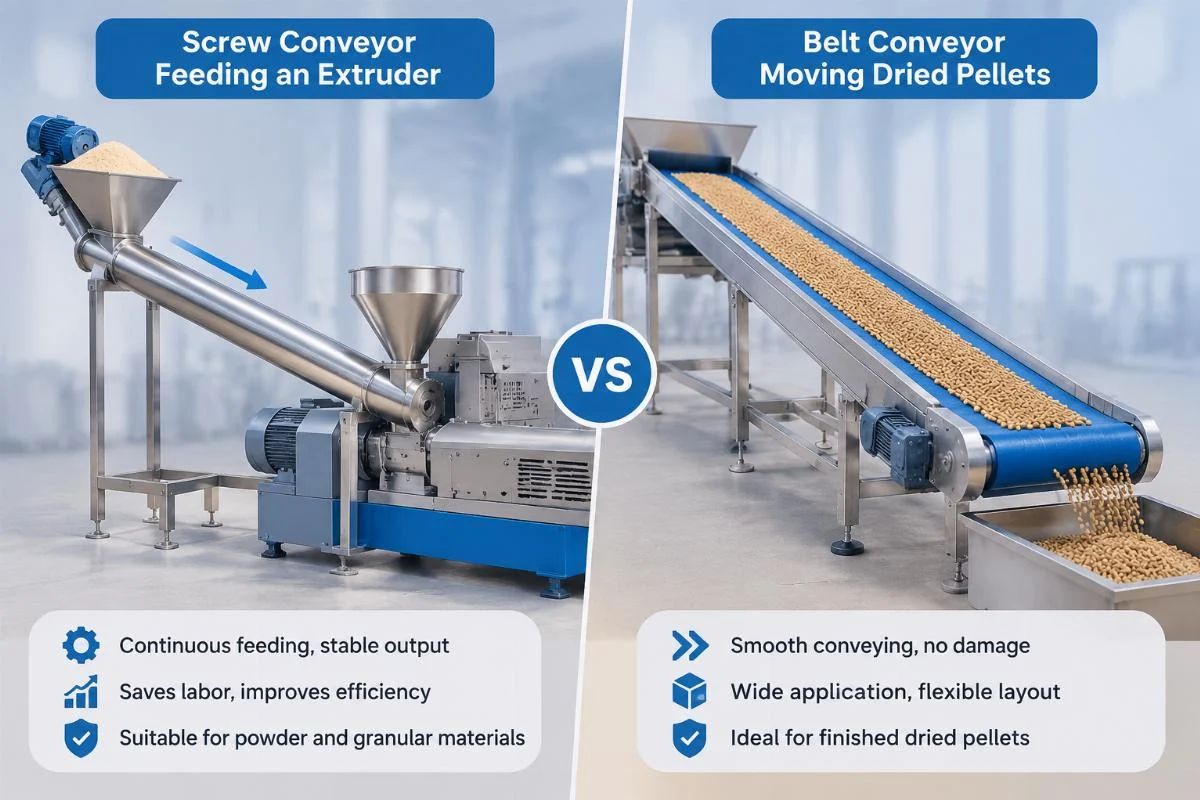
When evaluating aquaculture feed production line design, the choice between a screw conveyor and a belt conveyor depends entirely on the material state and the specific process stage. A screw conveyor is mandatory for transferring dusty, powdery, or finely ground raw materials from the mixer to the extruder feed bin. It prevents dust escape and allows for precise flow control via a variable frequency drive. However, screw conveyors are prone to bridging if the screw pitch and trough dimensions do not match the material’s angle of repose.
Conversely, a belt conveyor is strictly reserved for post-extrusion stages, such as transporting wet extruded pellets to the dryer or moving dried pellets to the cooling and coating systems. Using a belt conveyor for raw powder feeding is a fatal error in fish feed extruder line sizing, as it offers no flow control and creates massive dust hazards.
Below is a specification comparison matrix to guide your conveyor selection for different stages of the production line.
| Conveyor Type | Application Stage | Material State | Flow Control Capability | Bridging Risk | Dust Containment |
|---|---|---|---|---|---|
| Screw Conveyor | Pre-Extrusion Feeding | Powder / Fine Meal | High (via VFD) | High (if pitch mismatched) | Excellent (Enclosed) |
| Belt Conveyor | Post-Extrusion Transfer | Wet Pellets / Dried Pellets | Low (Fixed speed) | None | Poor (Open design) |
| Bucket Elevator | Vertical Raw Material Lifting | Powder / Granules | Moderate | Moderate (at boot section) | Good (Enclosed casing) |
In a Latin America shrimp producer case, we dealt with a floating feed line where the screw conveyor kept bridging at the incline section. The issue was not the motor power, but the screw pitch relative to the extruder feed throat dimensions. By adjusting the anti-bridging angles and matching the variable frequency drive to the extruder’s real-time torque feedback, we stabilized the feed. This highlights that twin screw extruder capacity calculation must include the mechanical geometry of the upstream conveyor.
Integration Checklist for a Turnkey Fish Feed Line
Aligning moisture control, retention time, and drive synchronization across all upstream and downstream equipment guarantees precise floating or sinking feed production.
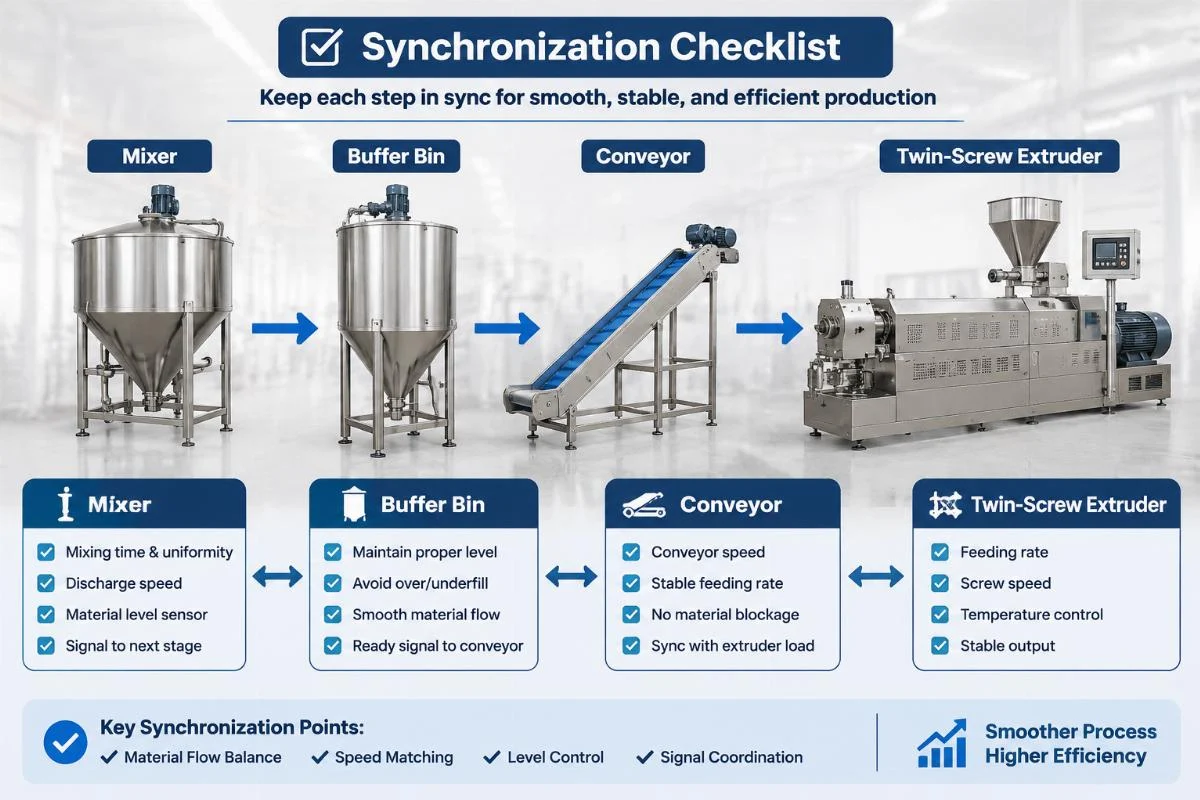
Executing a flawless aquaculture feed production line design requires a holistic view of the entire system. The extruder cannot compensate for poor upstream preparation. Here is the integration checklist for a turnkey fish feed line:
- Buffer Bin Coordination: Ensure the buffer bin between the mixer and extruder has sufficient volume to absorb batch-to-batch variations without causing the extruder to starve during mixer discharge transitions.
- VFD Synchronization: Link the conveyor’s variable frequency drive to the extruder’s main motor amperage. If the extruder load drops, the conveyor must automatically reduce speed to prevent overfeeding and die blockage.
- Moisture Retention Verification: Calculate the exact retention time in the conditioner and mixer to ensure the raw meal reaches the target moisture level before entering the extruder barrel.
- Feed Throat Geometry: Match the screw conveyor’s discharge flange and pitch directly to the extruder’s feed throat dimensions to eliminate air pockets and ensure dense material feeding.
For startups and expanding producers, navigating these technical integrations can be overwhelming. This is where partnering with an experienced manufacturer becomes invaluable. Meiteng provides comprehensive turnkey line design, ensuring that every component from raw material intake to the final packaging is perfectly calibrated. Our DS-series twin-screw extruders, ranging from 200kg/h to 3000kg/h, including the highly versatile DS70 and DS85 models, are pre-calibrated with customized upstream mixers and conveyors. We do not just sell a machine; we deliver a fully integrated system engineered to guarantee the precise floating and sinking feed quality your aquaculture market demands, backed by on-site installation and operator training.
Conclusion
Precise upstream equipment matching is the absolute foundation of consistent fish feed quality.
Proper fish feed extruder line sizing eliminates material starvation and bridging, ensuring the thermal and mechanical energy required for perfect gelatinization. By aligning mixer capacity, conveyor geometry, and extruder feed rates, producers can reliably achieve the exact floating or sinking profiles demanded by the aquaculture market.