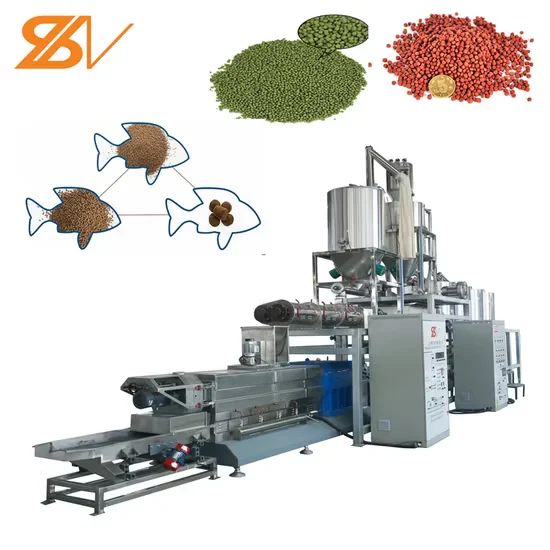
floating fish feed machine
1 t/h Aquatic Floating Sinking Fish Feed Pellet Processing Machine
1 t/h Floating and Sinking Fish Feed Production Line — co-rotating twin-screw extrusion processes high-fat formulas into consistent pellets. Conditioner…

Aquatic Feed Application
Farms raising bottom-feeding species need dense pellets that sink quickly and stay intact until the fish reach them, produced on sinking feed lines or on an extruder set up for both feed types. The main challenge is limiting expansion while…
Complete feed lines and single machines from Jinan MT Machinery, a twin-screw extruder manufacturer in Shandong, China, supplying feed plants in more than 60 countries.
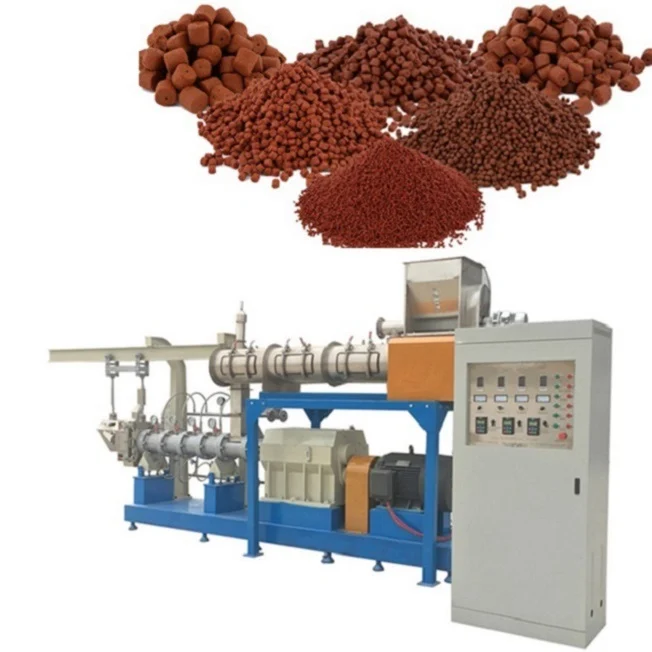
Application Overview
The right line starts from your pellet target, local raw materials and required output. The extruder, die and dryer are then matched to those three inputs.
Farms raising bottom-feeding species need dense pellets that sink quickly and stay intact until the fish reach them, produced on sinking feed lines or on an extruder set up for both feed types. The main challenge is limiting expansion while still cooking the mash thoroughly. Buyers look for consistent sink behaviour, low feed loss on the pond bottom and an easy switch between sinking and floating production.
Machine Categories
These Jinan MT Machinery categories are matched to this feed type and are available as complete lines or single machines.
Equipment
Each machine below suits this application, and output, die, screw configuration and heating method can be built to your plant.
floating fish feed machine
1 t/h Floating and Sinking Fish Feed Production Line — co-rotating twin-screw extrusion processes high-fat formulas into consistent pellets. Conditioner…
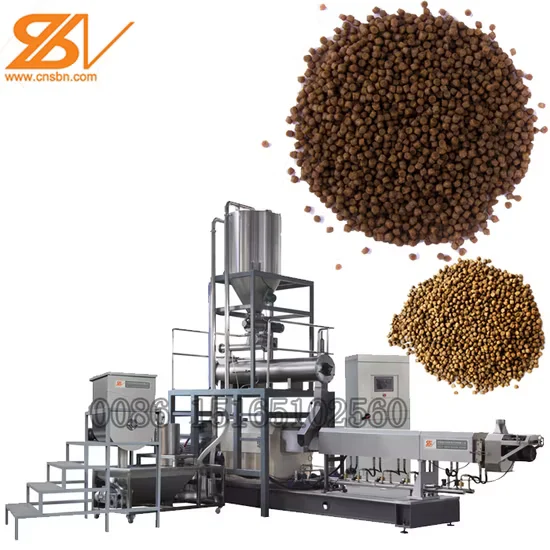
floating fish feed machine
1 Ton Floating Fish Feed Production Line — twin-screw extrusion processes corn, cassava, and fish meal for tilapia and catfish…
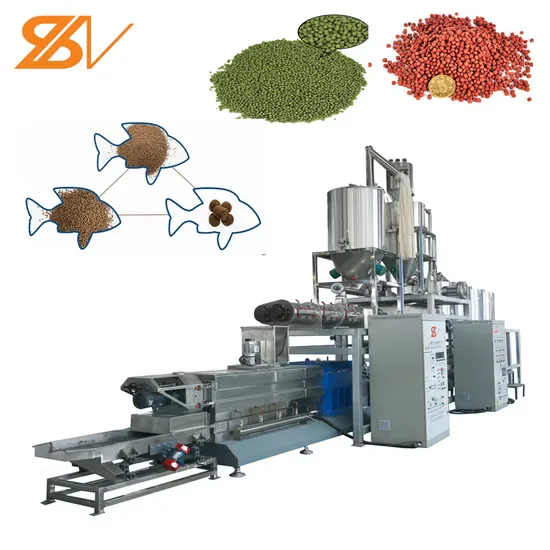
floating fish feed machine
1 Ton Per Hour Fish And Shrimp Pellet Feed Production Line for floating and sinking aquatic pellets. The preconditioner improves…
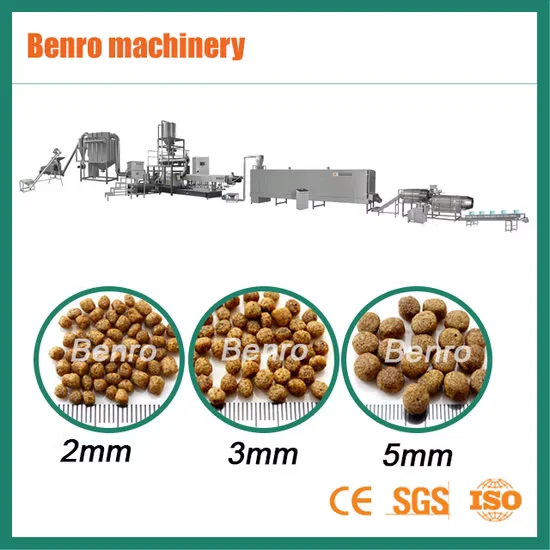
floating fish feed machine
1 Ton Per Hour Floating Fish Feed Production Line — twin-screw extrusion adapts to corn, fish meal, and fresh meat…

floating fish feed machine
1 ton/h Fish Feed Production Line for Floating and Sinking Pellets — twin-screw extrusion processes diverse raw materials into 1-14…

floating fish feed machine
1-2 t/h Floating Fish Feed Production Line — processes wheat flour, corn flour, and fish meal into 1-30 mm floating…

floating fish feed machine
1-2 T/H Sinking and Floating Fish Feed Production Line for tilapia, catfish, and carp. Mixer blends corn, soybean, and fish…
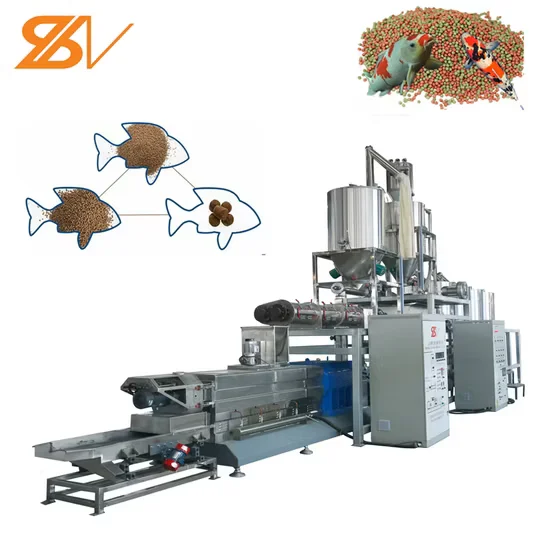
floating fish feed machine
1-2 t/h Floating and Sinking Fish Feed Production Line — twin-screw extrusion for diverse aquaculture species. The preconditioner optimizes starch…

floating fish feed machine
1-2 ton/h Floating Fish Feed Production Line for Aquatic Feed — the preconditioner improves floating performance and pellet strength through…

floating fish feed machine
1-6 t/h Fish Feed Production Line for Floating and Sinking Aquatic Feed — the preconditioner improves gelatinization, while the twin-screw…

floating fish feed machine
1-6 t/h Floating Fish Feed Production Line for 1-14 mm Pellets — twin-screw extrusion handles diverse local raw materials like…
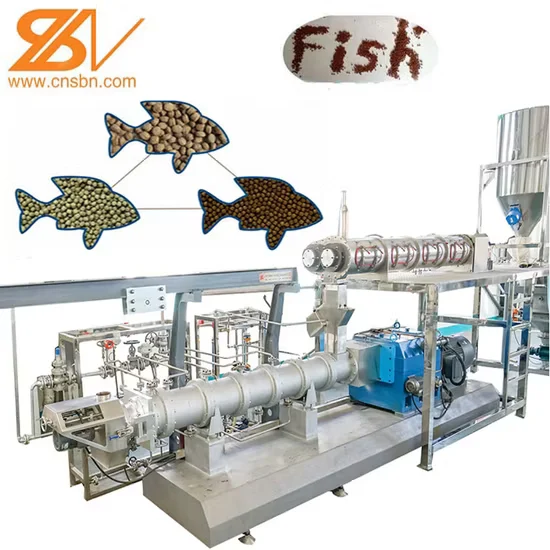
floating fish feed machine
1-6 t/h Floating and Sinking Fish Feed Production Line — twin-screw extrusion producing 1-14 mm aquatic pellets from local raw…

floating fish feed machine
1.5 t/h Floating Fish Feed Production Line — twin-screw extrusion processes 0.9 to 15 mm pellets from wheat, corn, and…

floating fish feed machine
100-150 kg/h Floating Fish Feed Production Line — twin-screw extrusion processes diverse raw materials into 1-14 mm floating or sinking…
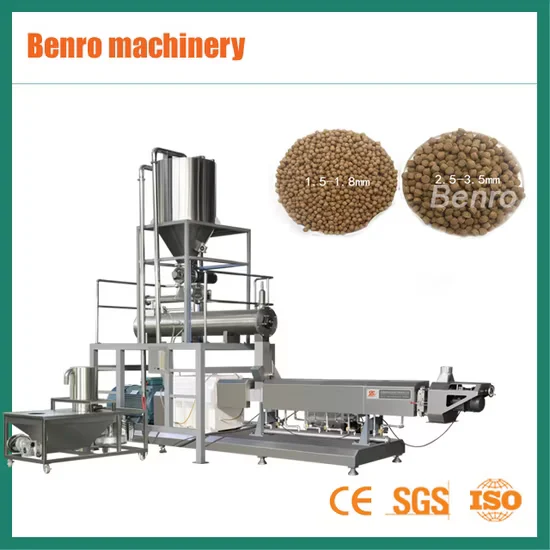
floating fish feed machine
100-3000 kg/h Fish Feed Production Line for floating and sinking aquatic feed. The twin-screw extruder processes diverse raw materials into…
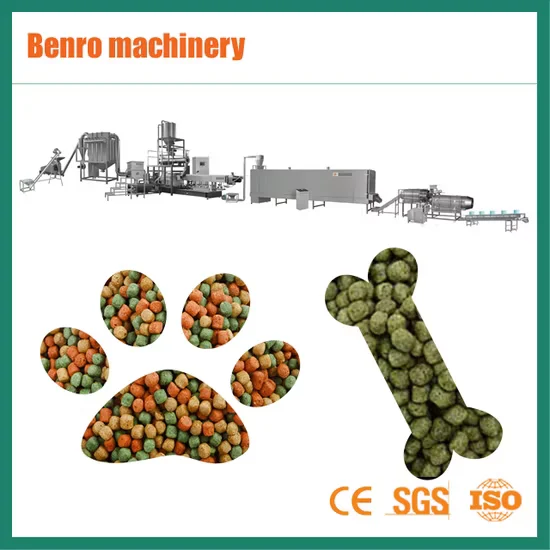
floating fish feed machine
100-500 kg/h Floating Fish Feed Production Line for 0.9-15 mm Pellets — the MT75 twin-screw extruder cooks mixed raw materials…
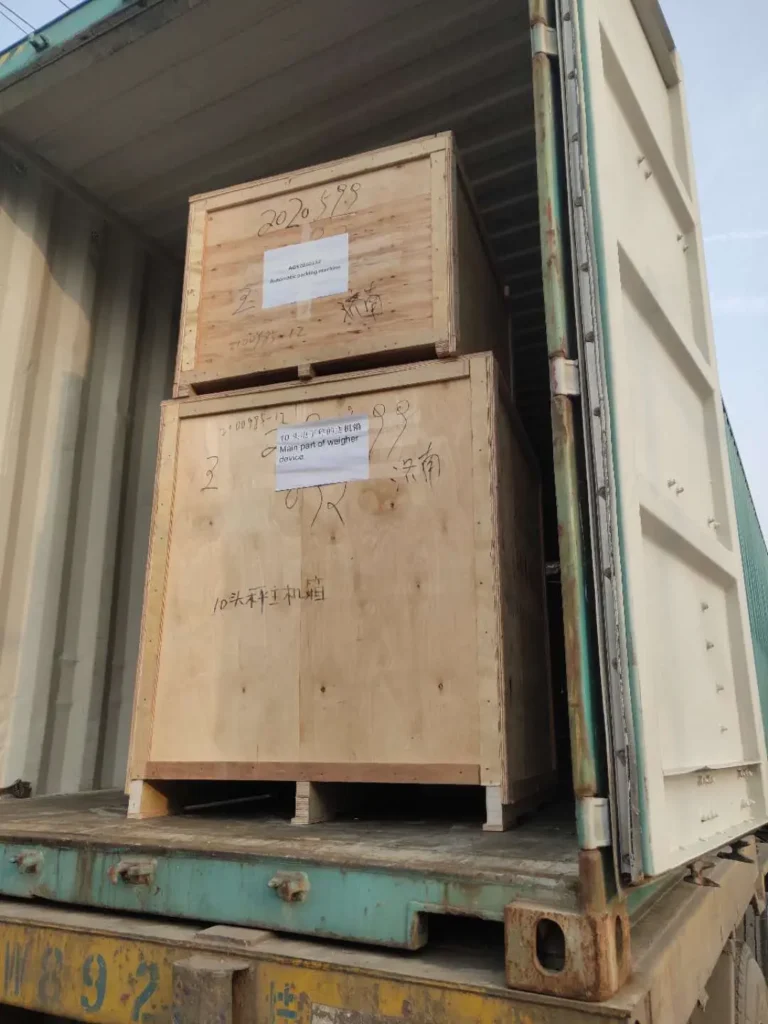
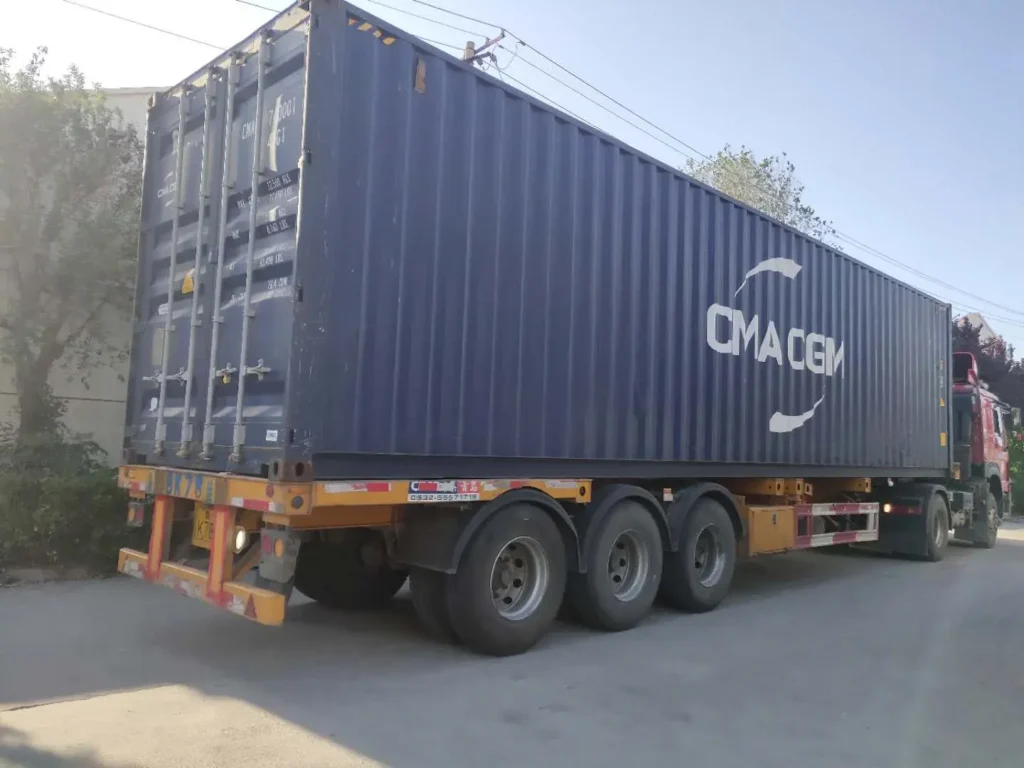
Packed for international transport. Send us your port or address for freight and lead time.
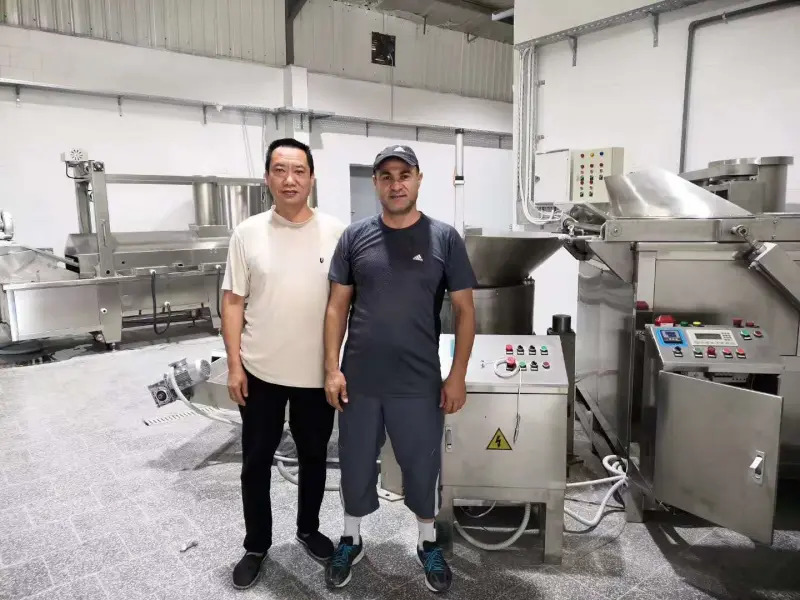
“Floating pellets hold on the water for over six hours. On our old line half the feed sank within 30 minutes and we lost money on every bag.”

Recipe Verification
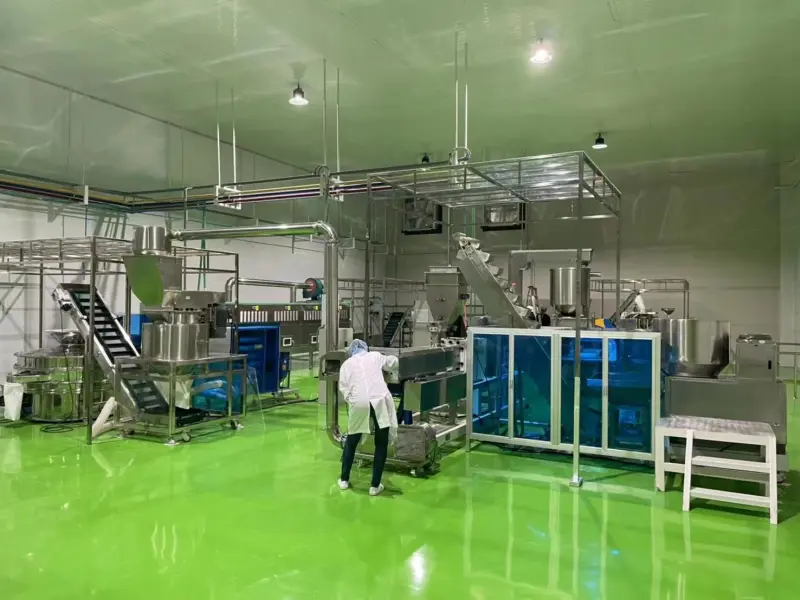
Jinan MT Machinery runs formula tests and lets buyers trial their own raw materials at our Shandong factory, so pellet quality is confirmed before the contract is signed.
Adjust your recipe on working equipment and find the settings that reach the expansion you need.
Bring the corn, cassava or soybean meal you will buy at home and trial it on the machine.
Check size, shape and water behaviour yourself, then have the screw, die and heating built around that result.
"They tested our local cassava and rice bran blend at their factory before we signed, and the expansion ratio we got on site matched what they promised."
 Pham Quoc BaoTechnical Director, Mekong Aqua Feed, Vietnam
Line Configuration
Pellet quality is set across five linked sections. Jinan MT Machinery sizes each one to your feed type, so the MT75 twin-screw extruder and the equipment around it run as one system under PLC/MCC control.

Steam and moisture pre-cook the mash. Weak conditioning leaves pellets that break apart in water.
Screw configuration, heat and shear control expansion, which decides whether the pellet floats or sinks.
Die openings and cutter speed set diameter, length and shape, and keep the size distribution tight.
Too little drying leads to mould in storage. Too much wastes energy, so the dryer is sized to the feed.
An even oil coat after drying adds energy and palatability and gives the pellet a smoother finish.
Technical Articles
These articles cover the process and equipment decisions behind this feed type.
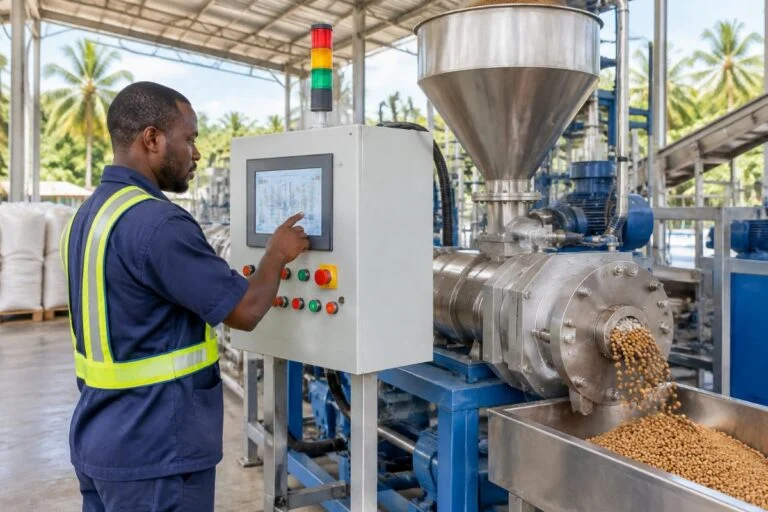
Oct 20, 2026 · Industry News
Overcoming feed spoilage in tropical waters is the primary bottleneck for Cage fish farming Africa, driving the urgent shift to local feed production. Achieving…
Read the Article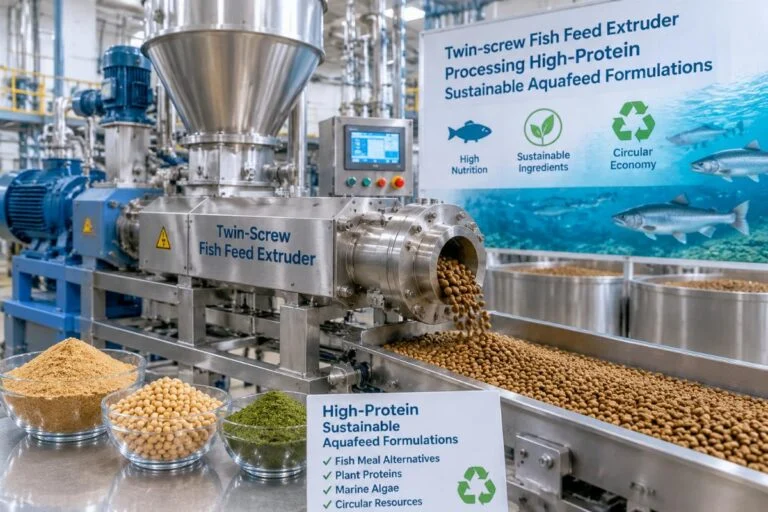
Oct 20, 2026 · Industry News
Navigating evolving aquafeed demand trends requires precise twin-screw extrusion to overcome high-protein formulation challenges and ensure optimal starch gelatinization for water stability. Mastering shear…
Read the Article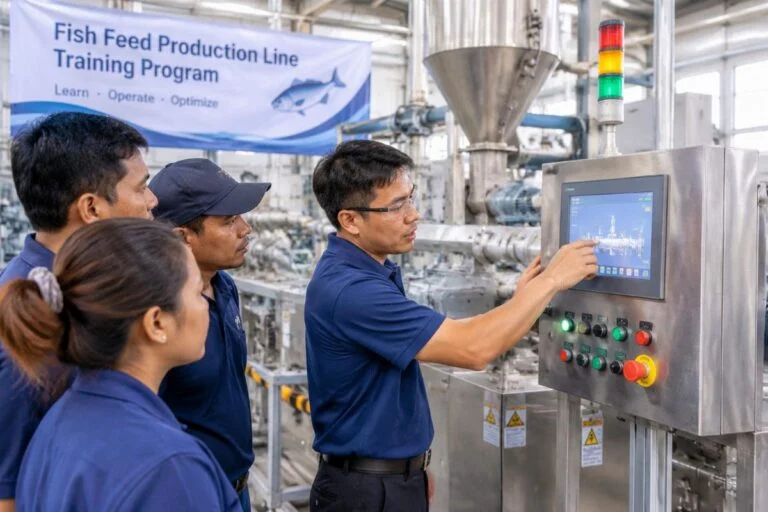
Oct 19, 2026 · News & Cases
A practical fish feed line training program resolves sinking pellets caused by improper energy balance in new extrusion lines. On-site debugging aligns parameters with…
Read the ArticleMore Applications
Jinan MT Machinery builds lines for floating feed, sinking feed, shrimp and crab feed, and fry starter feed.
 Tilapia & Catfish Floating Feed Tilapia and catfish farms and the feed mills supplying them use twin-screw extrusion lines to produce floating pellets from local raw materials such as…
 Shrimp & Crab Feed Shrimp and crab farms and specialist feed mills need small, dense pellets for animals that graze slowly on the pond bottom. Because crustaceans nibble… Fish Fry Starter Feed Hatcheries, nurseries and feed mills serving them produce fine starter feed for fry, working at the small end of the 0.9–15 mm pellet range.…
Project Inquiry
Jinan MT Machinery replies within 24 hours and prepares a free process plan with a CAD or 3D workshop layout and an itemized technical quote.