Fish Feed Technical Article
Meiteng Fish Feed Line Commissioning: Start-Up Day Guide for Buyers

Most buyers assume start-up day is just about turning on the main switch and watching the pellets flow.
Successful fish feed line commissioning relies entirely on a closed-loop control of steam pressure, moisture content, and feed rate, rather than merely powering up the extruder.
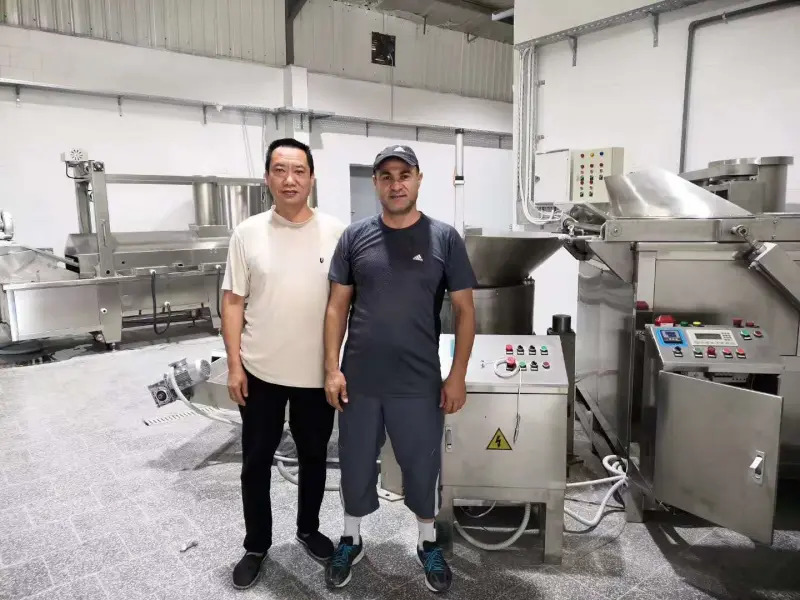
Working in the feed machinery sector out of Jinan, I have spent extensive time running on-site installations across multiple regions. During one fish feed line commissioning project for a medium-capacity line in West Africa, the startup sequence began without verifying the conditioner steam pressure. Within a very short time, the die completely blocked, the cutter blades shattered, and the entire batch of material was ruined. The client was understandably furious while staring at the scorged mash. Since that incident, I strictly monitor core parameters during every startup. Commissioning is never just about flipping a switch; steam, moisture, and feed speed must form a synchronized loop. This guide breaks down the critical startup details learned from processing wasted materials.
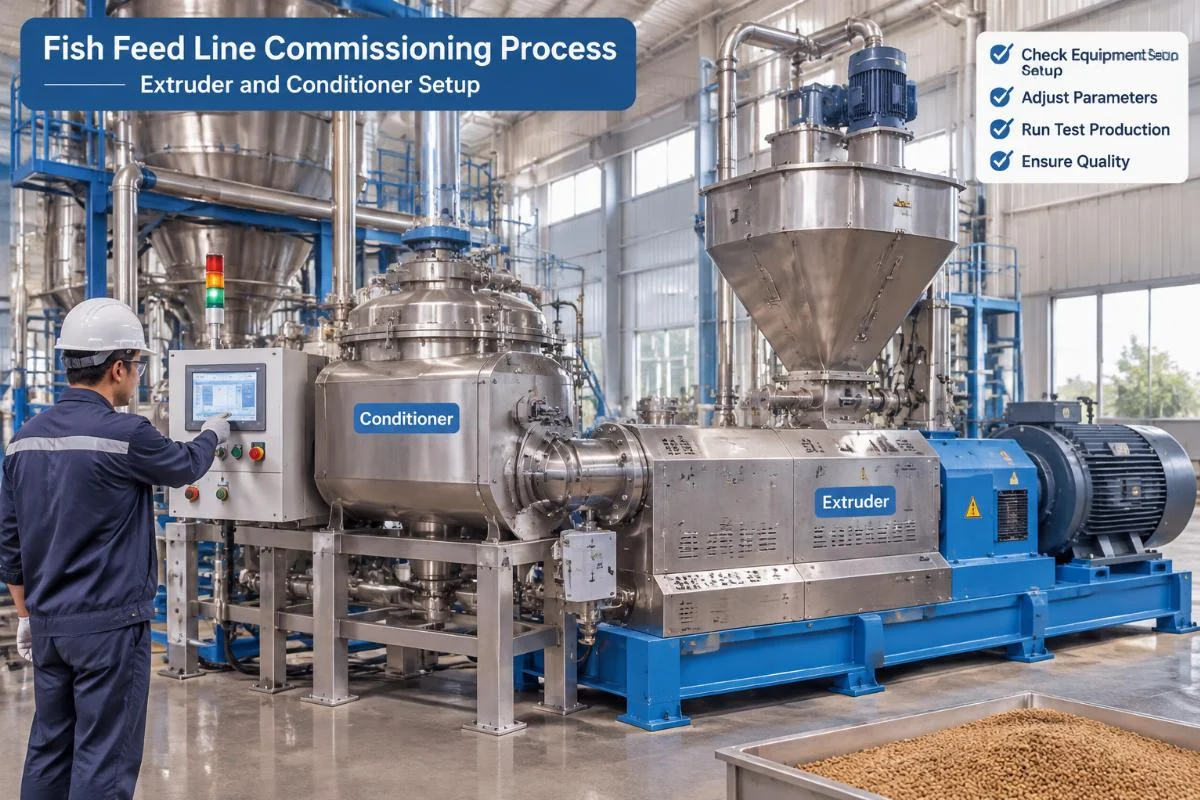
Let us explore the practical steps and technical realities of getting an aquaculture feed extrusion line running smoothly.
What Actually Happens on Start-Up Day?
Start-up day is a dynamic balancing act of thermal and mechanical energy, not a simple power-on sequence.
The core reality of fish feed line commissioning is that the extruder operates as a continuous chemical reactor. The raw materials undergo intense shear, heat, and pressure to achieve proper gelatinization. If the thermal input from steam and the mechanical input from the screws are mismatched, the process collapses. According to extrusion engineering principles, achieving the right specific mechanical energy requires precise synchronization of all upstream variables.
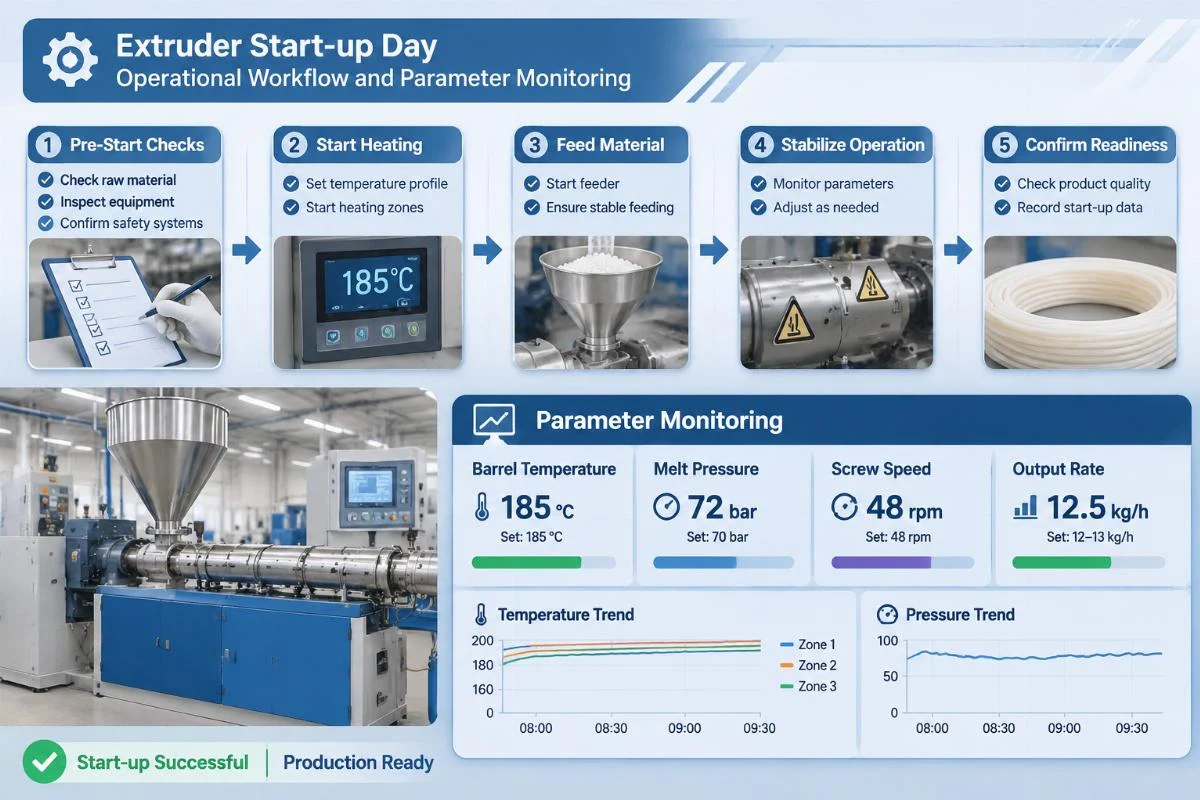
Here is the standard sequence of events during a proper startup:
- Pre-heating and Lubrication: The barrel sections are heated to the target baseline temperature. A soft, high-moisture starter mash is fed to lubricate the screws and build initial pressure without overloading the main motor.
- Steam Injection Calibration: Live steam is introduced into the preconditioner. The valve is adjusted incrementally while monitoring the outlet temperature and material texture.
- Feed Rate Ramping: The feeder speed is slowly increased from the initial crawl rate to the target capacity. This must be perfectly timed with steam adjustments to maintain the correct moisture evaporation rate inside the barrel.
- Die Pressure Stabilization: As the material fills the barrel, the pressure at the die face builds up. The operator watches the torque and pressure gauges, making micro-adjustments to the feeder and steam to keep the motor load within the safe operating window.
Skipping any of these incremental steps to rush toward full capacity is the fastest way to trigger a mechanical failure.
Why Do Dies Block and Cutters Break on Day One?
Unchecked steam pressure and moisture variance directly cause physical damage to core extrusion components during the initial run.
It is a common misconception that higher steam always means better gelatinization. In reality, excessive steam without a corresponding moisture balance is the primary culprit behind die blockages. When the steam-to-material ratio is skewed, the material becomes too fluid inside the barrel, failing to build the necessary friction and pressure. When this under-pressurized mash finally reaches the die, it does not extrude cleanly; instead, it bakes and hardens inside the die holes, creating a solid plug that requires hours of drilling to remove.
I witnessed this exact scenario during a sinking feed line startup. The moisture content of the raw mix varied noticeably from the expected baseline. Because the moisture was too low, the material acted like sandpaper against the internal components. The cutter blades, designed to slice cleanly through properly gelatinized pellets, struck the dense, under-cooked extrudate. The impact caused severe blade deformation and damaged the cutter shaft.
Furthermore, feed rate fluctuations during the initial ramp-up can cause motor overloads. If the feeder speed jumps suddenly, the extruder is flooded with cold, dry material. The screws cannot generate enough shear heat to process the surge, the motor draws maximum current, and the system trips. Root cause analyses in feed machinery consistently point to these upstream inconsistencies as the main drivers of early mechanical failures.

How to Build the Steam-Moisture-Feed Closed Loop?
Synchronizing conditioner steam, raw material moisture, and feeder speed is the only way to ensure stable extrusion and consistent pellet quality.
Building this closed loop is the most critical technical skill in fish feed line commissioning. It requires treating the preconditioner and the extruder as a single, interconnected system rather than isolated machines.
Follow these steps to establish the loop:
- Establish the Baseline Moisture: Test the raw material blend before it enters the preconditioner. The total moisture target after conditioning must be calculated based on the evaporation rate expected inside the extruder barrel.
- Calibrate Steam Pressure: Ensure the boiler steam pressure is stable and matches the preconditioner design requirements. Install a pressure reducing valve to maintain a constant inlet pressure, preventing steam surges that disrupt the moisture balance.
- Link Feeder Speed to Steam Flow: In advanced setups, the steam valve is automatically linked to the feeder speed. As the feeder increases, the steam valve opens proportionally. If operating manually, the operator must adjust the steam valve every time the feeder speed changes.
- Monitor Specific Mechanical Energy: Watch the main motor amperage. A stable amperage reading indicates that the material viscosity inside the barrel is consistent, meaning the steam and feed rate are perfectly balanced.
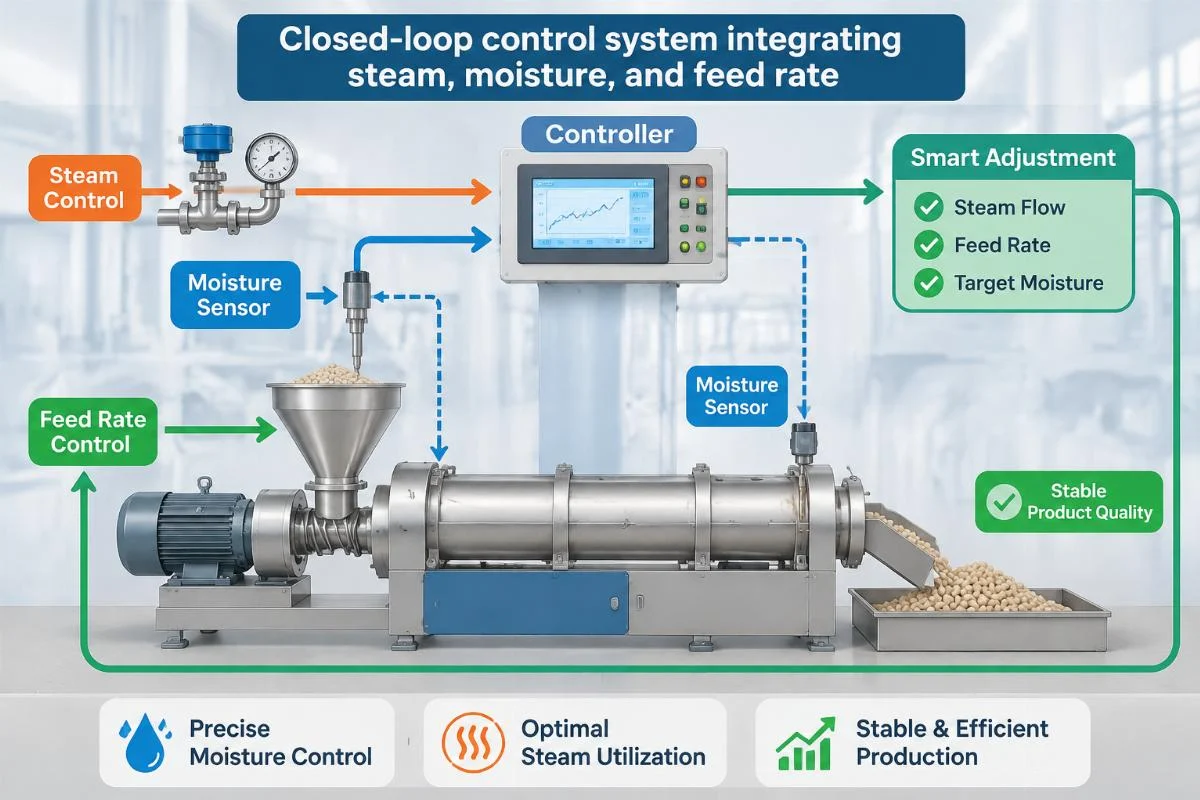
When this loop is closed, the extruder runs smoothly, the die pressure remains constant, and the cutter produces uniform pellets without breaking.
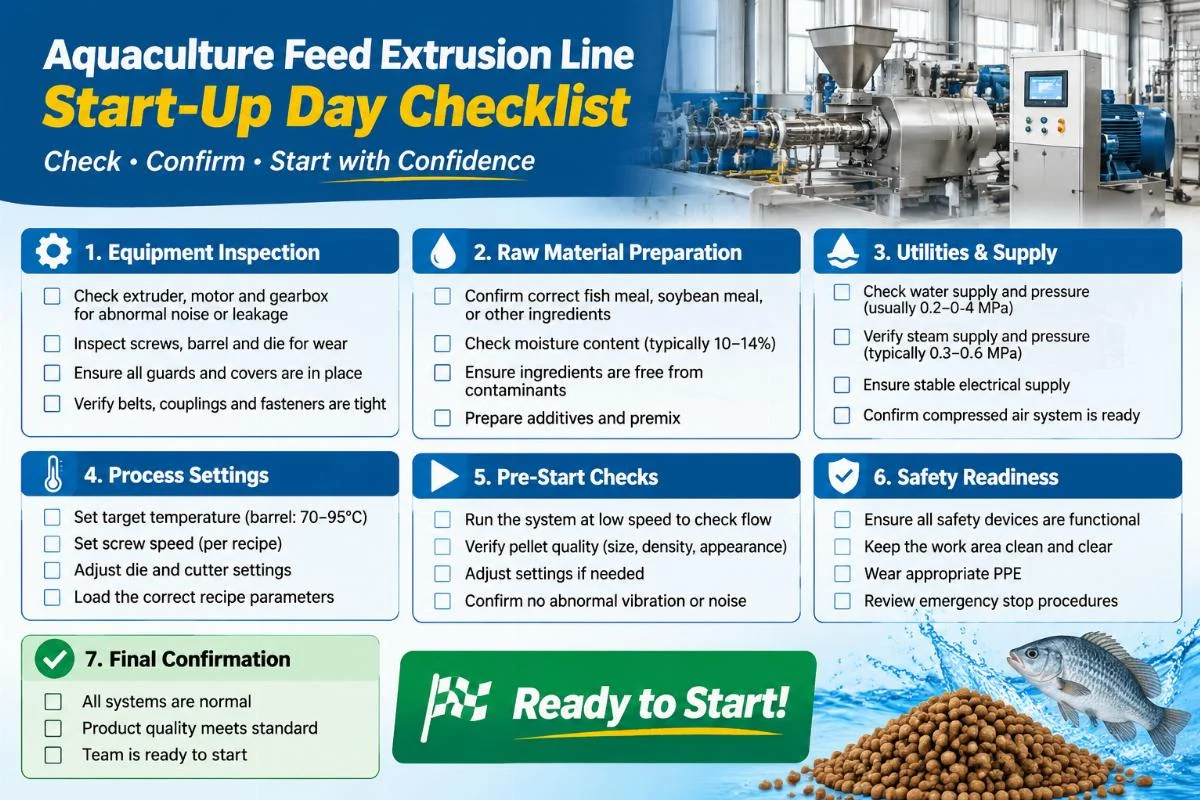
What is the Ultimate Start-Up Day Checklist?
A systematic pre-start verification prevents material waste, protects expensive extruder components, and ensures the closed-loop parameters are perfectly calibrated.
Before any material is fed into the system, a rigorous checklist must be completed. This is not just a formality; it is the final defense against costly startup errors.
Mechanical and Electrical Verification:
- Check the alignment of the main motor and the gearbox.
- Verify that all barrel section heating elements are functioning and thermocouples are reading accurately.
- Ensure the cutter motor rotates freely and the blades are sharp, properly seated, and making even contact with the die face.
Steam and Fluid Systems:
- Drain the steam lines to remove condensate. Wet steam destroys the thermal balance.
- Verify the steam pressure at the preconditioner inlet matches the required operational range.
- Check the water cooling lines for the barrel sections to ensure they are not leaking into the product zone.
Tooling and Die Preparation:
- Inspect the die for any residual material from previous tests or storage.
- Ensure the die holes are completely clear and the die face is perfectly flat.
- Verify that the cutter arm is securely locked and the distance between the blades and the die face is set correctly for the specific pellet size.
Executing this checklist flawlessly requires deep familiarity with the specific machinery. This is where comprehensive on-site support becomes invaluable. During our fish feed line commissioning projects, the Meiteng installation team conducts this exact verification alongside the client’s operators. We provide hands-on training to ensure the local team understands how to read the torque gauges, adjust the steam valves, and interpret the motor load. Additionally, our remote diagnostic assistance allows our engineers in Jinan to monitor the machine’s operational data in real-time, guiding the local team through any parameter adjustments needed for their specific formulas. This level of integrated support ensures the closed-loop is established correctly from day one, protecting the investment and accelerating the path to stable production.
Conclusion
Start-up is a dynamic balancing act of thermal and mechanical parameters, not a simple power-on process. Mastering fish feed line commissioning requires strict adherence to the steam-moisture-feed closed loop and a rigorous pre-start checklist to prevent die blockages and cutter failures. By focusing on these core operational details, producers can ensure a smooth transition from installation to stable, high-quality aquaculture feed production.