Fish Feed Technical Article
Fish Feed Line Setup: DS70 Extruder Manufacturer for Sale

Most installers obsess over pipe diameters, but steam pressure stability and micro-leveling actually dictate whether your extruder runs or blocks.
A successful fish feed line utilities setup requires strict adherence to steam-to-material ratios, micron-level foundation leveling, and industrial water hardness treatment to prevent die blockages, motor overloads, and cooling system scaling.
I still remember the sweltering heat in Veracruz, Mexico, when a newly installed DS70 twin-screw extruder completely choked its膨化腔 within three days of operation. The local team blamed the formula, but the real culprit was a fluctuating steam supply that ruined the gelatinization process, leaving raw dough to cement the die holes. That specific failure highlighted a universal truth in aquaculture feed production: a proper fish feed line utilities setup is not just about connecting pipes; it is about mastering the invisible physics of steam routing, vibration damping, and water chemistry.

Getting the physical connections right is only the beginning. Let us break down the exact methodology to ensure your utilities match the rigorous demands of high-capacity extrusion.
Why Does Steam Pressure Stability Matter for Fish Feed Extrusion?
Stable steam ensures proper gelatinization and prevents die blockages by maintaining consistent thermal energy transfer to the raw materials.
In aquaculture feed production, steam is not merely a heating agent; it is a critical plasticizer. The steam injected into the preconditioner must achieve a specific thermodynamic state to gelatinize starches effectively. If the pressure drops unpredictably, the steam condenses into liquid water inside the barrel, turning the feed mixture into a dense, unextrudable paste.
To achieve a reliable fish feed line utilities setup, follow these steps for steam integration:
- Calculate the Steam-to-Material Ratio: Determine the exact mass flow rate of your raw ingredients and select a boiler capacity that maintains a continuous supply without pressure dipping during peak extrusion cycles.
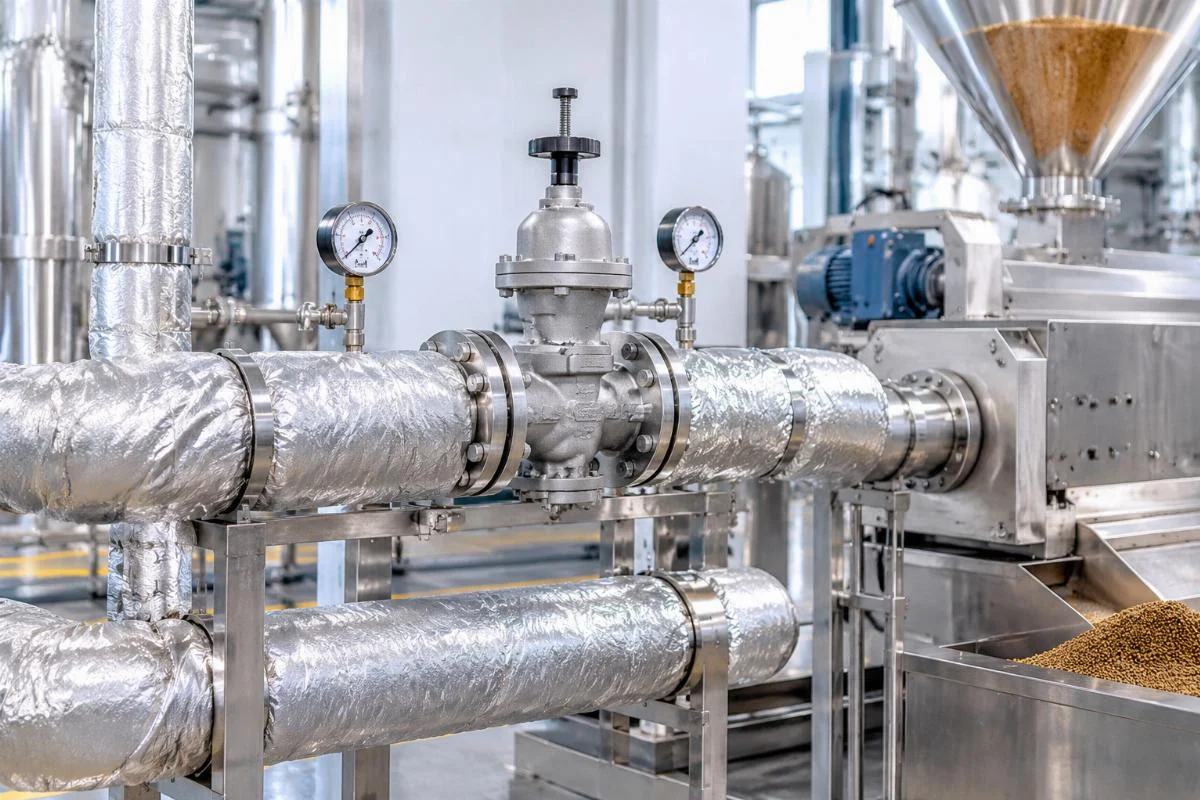
- Install Pressure-Reducing Valves (PRVs) at the Point of Use: Do not rely solely on the main boiler output. Place PRVs directly next to the extruder’s steam inlet to isolate the machine from factory-wide pressure fluctuations.
- Implement Steam Tracing and Insulation: Wrap all steam lines with high-grade thermal insulation and use tracing cables where necessary to prevent condensation before the steam reaches the conditioner.
- Route Pipes with Gentle Sweeps: Avoid sharp ninety-degree bends in the steam piping. Use long-radius elbows to minimize pressure drop and ensure smooth vapor flow.
During a project in Southeast Asia, a client insisted on using standard municipal steam pressure without dedicated regulation. The result was a catastrophic buildup of ungelatinized protein inside the DS70 barrel, causing a motor current spike that tripped the main breaker repeatedly. By redesigning the steam routing and adding localized pressure regulation, the thermal profile stabilized, and the blockages vanished entirely.
How to Properly Level the Foundation for Twin-Screw Extruders?
Precise leveling prevents vibration-induced misalignment and motor overload by ensuring the twin-screw assembly remains perfectly coaxial under heavy operational loads.
Most think basic concrete is fine for heavy machinery. Actually, micro-leveling and vibration damping are crucial for long-term screw alignment. A twin-screw extruder generates immense torque and rotational force. If the foundation settles unevenly, even by a fraction of a millimeter, the screws will rub against the barrel liner, leading to rapid wear and catastrophic mechanical failure.
Execute the following steps for a flawless foundation preparation:
- Conduct Soil Bearing Capacity Tests: Before pouring concrete, verify that the subgrade can support the dynamic loads of the extruder and the downstream drying equipment without subsidence.
- Pour a Reinforced Concrete Pad with Anti-Vibration Grooves: Use high-strength concrete and embed steel rebar grids. Isolate the pad from the surrounding factory floor using expansion joints to prevent external vibrations from transferring to the machine.
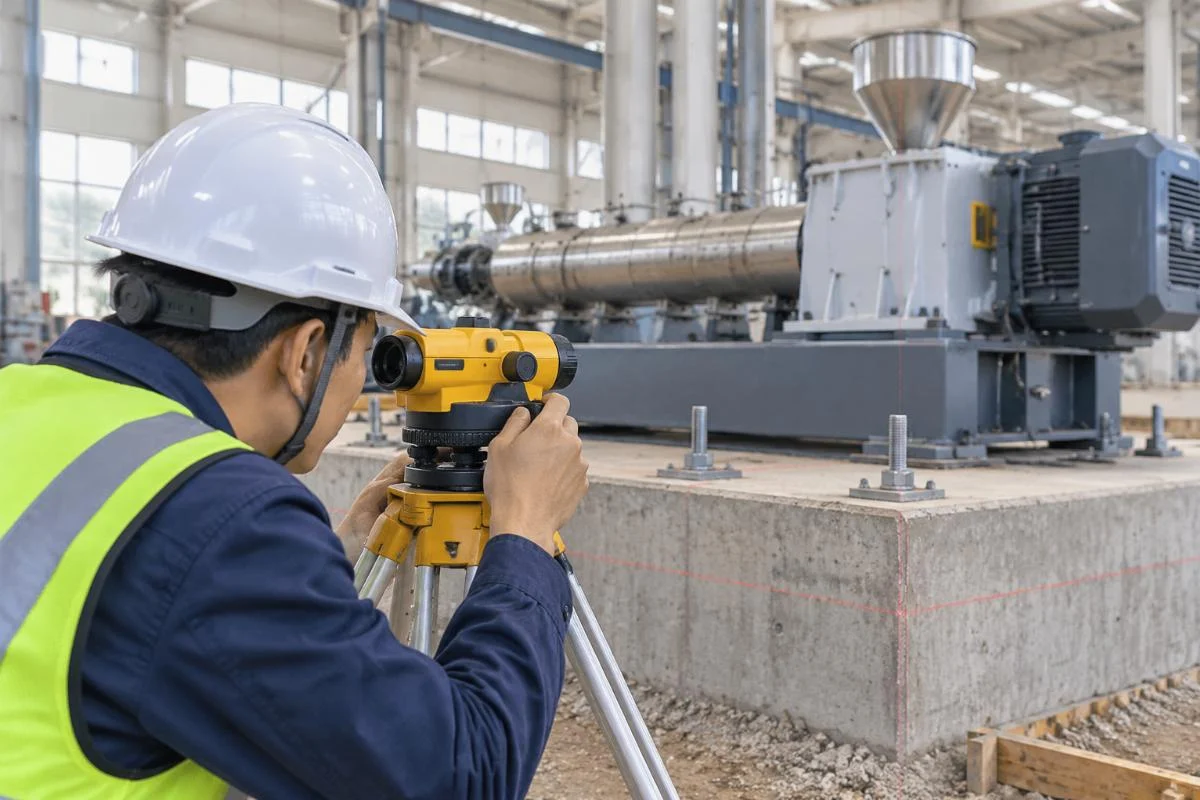
- Perform Micro-Leveling During Curing: Use precision optical levels to check the flatness of the concrete surface. The tolerance must be strictly maintained across the entire mounting footprint.
- Install Industrial Vibration Dampers: Place specialized elastomeric or spring mounts between the concrete pad and the extruder base to absorb high-frequency operational vibrations.
I once inspected a facility where the foundation was poured hastily without proper curing time. Within months, the heavy DS70 extruder caused micro-fractures in the concrete, shifting the machine’s alignment. The resulting friction melted the barrel liner, requiring a complete and expensive replacement. Proper fish feed line utilities setup demands that you treat the foundation as a precision component, not just a slab of cement.
What Are the Water Quality Requirements for the Cooling System?
Treating water hardness prevents scaling and maintains drying efficiency by ensuring optimal heat exchange in the cooling circuits.
Water is the lifeblood of the cooling and drying systems in an aquaculture feed plant. However, untreated water contains dissolved minerals that precipitate when heated, forming a hard, insulating scale inside the heat exchangers. This scale drastically reduces thermal conductivity, forcing the dryers to work harder and longer, ultimately ruining the moisture consistency of the final fish feed pellets.
Follow these steps to secure your water utility installation:
- Test the Source Water Hardness: Analyze the local water supply for calcium and magnesium concentrations. High hardness levels require immediate intervention before the water enters the cooling loop.
- Install a Closed-Loop Cooling Tower with Softened Water: Instead of using raw municipal water directly, use a closed-loop system filled with treated, softened water. This prevents continuous mineral introduction into the system.
- Deploy Automatic Dosing Systems for Inhibitors: Integrate chemical dosing pumps that continuously add scale and corrosion inhibitors to the cooling water, maintaining the chemical balance automatically.
- Schedule Regular Blowdown and Filtration: Implement a strict maintenance schedule to flush out concentrated minerals and replace filtration elements to keep the water chemistry stable.
In a coastal plant in Latin America, the high ambient humidity and hard groundwater caused severe scaling in the dryer’s heat exchangers. The aquaculture feed production line water utility installation was initially overlooked, leading to prolonged drying times and inconsistent pellet buoyancy. After implementing a comprehensive water softening and closed-loop cooling system, the thermal efficiency recovered, and the product quality stabilized.

How to Route Power and Utility Pipes for Easy Maintenance?
Logical routing reduces pressure loss and simplifies future troubleshooting by organizing utilities into accessible, clearly labeled zones.
A chaotic tangle of pipes and cables is a nightmare for maintenance teams. When a sensor fails or a valve leaks, technicians need immediate access without dismantling half the production line. The physical layout of your utilities directly impacts the operational lifespan and safety of the entire plant.
Adhere to these routing principles:
- Segregate Utilities by Function: Keep high-voltage electrical cables, low-voltage control signals, steam lines, and water pipes in separate, dedicated trays or trenches. This prevents electromagnetic interference and thermal damage.
- Utilize Overhead Racks for Steam and Water: Route heavy fluid pipes overhead where possible. This keeps them away from floor-level forklift traffic and makes leaks immediately visible.
- Install Isolation Valves at Every Branch Point: Ensure that every piece of major equipment, like the DS70 extruder or the coating drum, has its own shut-off valves. This allows you to isolate a single machine for repair without shutting down the entire fish feed line utilities setup.
- Label Everything with Industrial-Grade Tags: Use durable, color-coded tags on every pipe and cable. Include flow direction arrows and utility type identifiers.
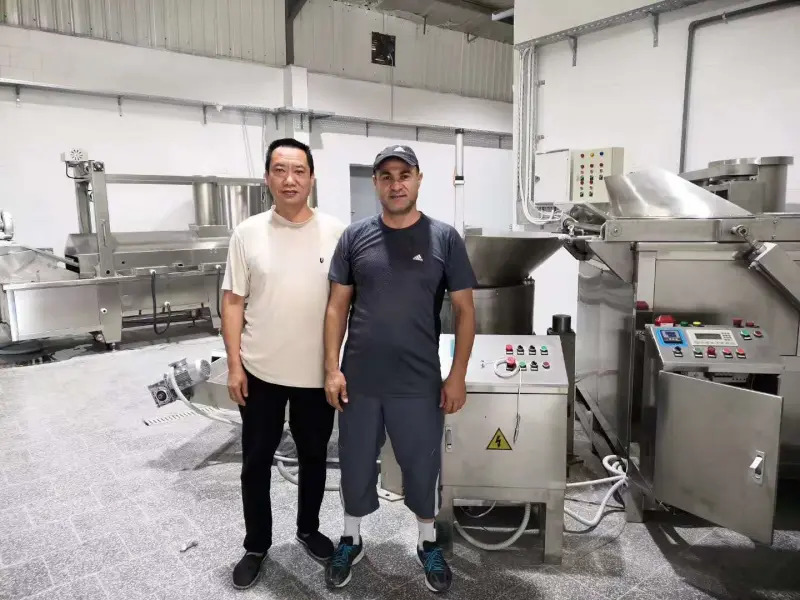
When Meiteng engineers execute the on-site installation, commissioning, and operator training for the DS-series extruders, they do not just connect the machines; they map out the entire utility network for long-term operability. They ensure that the steam routing matches the extruder’s specific thermodynamic needs and that the foundation leveling protects the twin-screw alignment. This holistic approach transforms a simple equipment delivery into a robust, future-proof production facility.

Conclusion
Mastering the invisible utilities is the true secret to uninterrupted aquaculture feed production. A rigorous fish feed line utilities setup focusing on steam stability, micro-leveling, and water treatment prevents catastrophic blockages and mechanical failures. By treating your infrastructure with the same precision as your extrusion machinery, you ensure long-term efficiency and product quality.