
Fish Feed Technical Article
Fix Excess Fines & Broken Pellets in Fish Feed Lines Manufacturer

Swapping the screen mesh will not solve your fines problem.
Excess fish feed fines and broken pellets stem primarily from mismatched cutter-extruder speeds and uneven template wear, requiring precise mechanical calibration rather than formula adjustments.
I still remember the smell of hot starch and the tension in the air at a tilapia plant in Indonesia. The line had just started, and the client was already pointing at the silo, furious about the dust and shattered pieces at the bottom. I crawled under the dryer and checked the discharge. The root cause was not the recipe. The cutter was lagging behind the extruder output, and the template holes were worn unevenly, turning floating fish feed into dust. Since that day, my first move when inspecting a twin-screw extruder is grabbing a feeler gauge for the template and a tachometer for the cutter. Dealing with fish feed fines and broken pellets is never about guessing; it is about mechanical synchronization.

Let us break down the exact steps to fix broken fish feed pellets and reduce excess fines in aquafeed production.
Why Do Fish Feed Pellets Turn into Fines?
The majority of fines generation is a mechanical synchronization failure, not a formulation flaw.
Many operators assume that changing the screen or tweaking the moisture content will fix the dust issue. This is a costly misconception. When the cutter blade passes the template face at the wrong interval relative to the material extrusion rate, the pellet is either torn or crushed.
In a previous troubleshooting case involving a tilapia line, the fines were excessive because the cutter RPM was too low for the twin-screw output volume. The pellets were being dragged and sheared rather than cleanly sliced. Conversely, broken pellets are often blamed on binding agents or protein levels. However, they frequently result from template wear or post-extrusion cooling shock. If the clearance between the cutter and the die face deviates, the pellets crack at the base. Addressing fish feed fines and broken pellets requires looking at the hardware first.
How to Calibrate Cutter Speed to Match Extrusion?
Use tachometers to align cutter RPM with twin-screw output for a clean cut.
To reduce excess fines in aquafeed, the cutter must slice the pellet exactly as it exits the die, without pulling or dragging. This requires precise twin-screw extruder cutter adjustment.
- Measure Extruder Output: Calculate the mass flow rate of the extrudate per minute.
- Calculate Required Cutter RPM: Based on the number of die holes and the desired pellet length, determine the exact rotational speed needed for the cutter shaft.
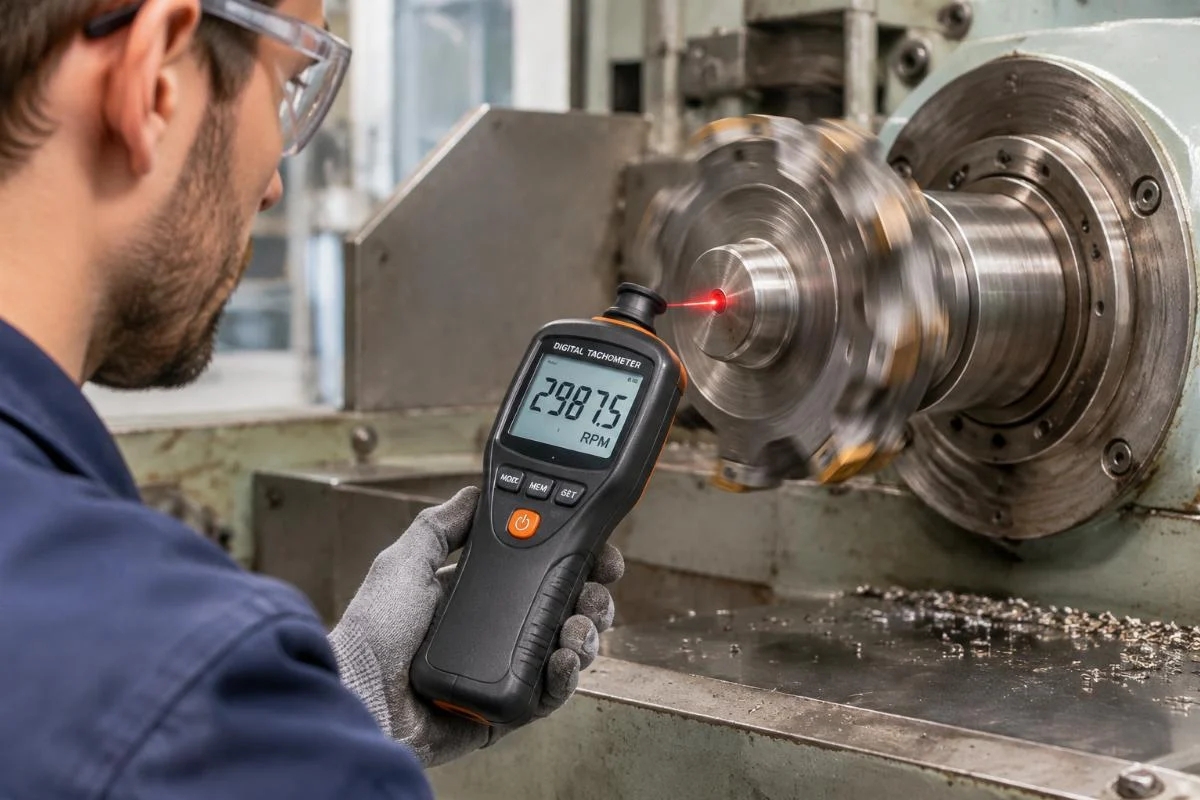
- Verify with Tachometer: Run the line and measure the actual cutter shaft RPM.
- Adjust Drive Ratio: Modify the inverter frequency or mechanical gear ratio until the measured RPM matches the calculated target.
During a shrimp feed line audit, the breakage rate was high. The cutter was running slightly slower than the extrusion speed, causing the blades to drag the soft pellets, creating micro-fractures that turned into fish feed fines and broken pellets during cooling. Proper calibration eliminates this shear stress. Meiteng’s twin-screw extruders feature precision speed control systems that allow operators to maintain this critical RPM ratio consistently, even under varying load conditions.
How to Inspect and Maintain the Extruder Template?
Regularly measure hole wear with feeler gauges to ensure clean cuts and uniform pellet length.
Template wear is a silent killer of pellet quality. As the die holes erode from abrasive ingredients and high pressure, the exit geometry changes. This leads to uneven pellet swelling and irregular cutting, directly contributing to fish feed fines and broken pellets.
- Cool and Remove the Die: Safely shut down and extract the template.
- Clean the Holes: Ensure no carbonized material blocks the extrusion channels.
- Check Face Flatness: Place a straight edge across the die face. Any light leakage indicates warping.
- Measure Cutter Clearance: Use a feeler gauge to check the gap between the cutter blade and the die face. The clearance must be uniform across all blades.
- Inspect Hole Wear: Check the countersink and the land length of the holes. Excessive wear changes the extrusion pressure and pellet density.
In a catfish feed operation, uneven template wear caused clearance deviation. Some pellets were cut cleanly, while others were torn, generating massive amounts of fines. Replacing the worn template and setting a precise, uniform cutter clearance immediately restored pellet integrity. Meiteng supplies durable, precision-machined templates designed to resist wear, and our on-site operator training emphasizes the critical nature of regular feeler gauge checks to maintain optimal die performance.

How Does Drying Affect Pellet Structural Integrity?
Control drying temperature to prevent thermal shock and internal cracking.
Even perfectly extruded and cut pellets will turn into fish feed fines and broken pellets if the drying process is flawed. Rapid moisture drop causes the pellet surface to harden while the core remains soft and expands, leading to internal stress and surface cracks.
- Monitor Inlet and Exhaust Temperatures: Ensure the drying air temperature matches the pellet’s thermal tolerance.
- Track Moisture Drop Rate: The moisture content should decrease gradually across the dryer sections.
- Avoid Thermal Shock: Do not expose hot, soft pellets to sudden high heat or cold air blasts immediately after extrusion.
I once investigated a line where pellets looked perfect at the dryer inlet but shattered into dust at the cooling bin. The issue was a rapid moisture drop rate in the first drying zone, causing thermal shock and internal cracking. By adjusting the zonal temperatures and slowing down the dryer belt, the structural integrity was saved. Fix broken fish feed pellets by treating the dryer as a critical texturizing step, not just a moisture removal tool. Meiteng’s integrated drying and cooling systems are engineered with multi-zone control to ensure a gentle, consistent moisture reduction, preserving the pellet’s physical structure.

Conclusion
Mechanical precision dictates pellet quality.
Excess fish feed fines and broken pellets are rarely a mystery; they are the direct result of cutter lag, template wear, and drying shock. By synchronizing cutter RPM, maintaining strict die clearances, and controlling the moisture drop rate, producers can eliminate dust and fractures. Proper equipment calibration and routine maintenance are the only reliable paths to consistent, high-quality aquafeed.