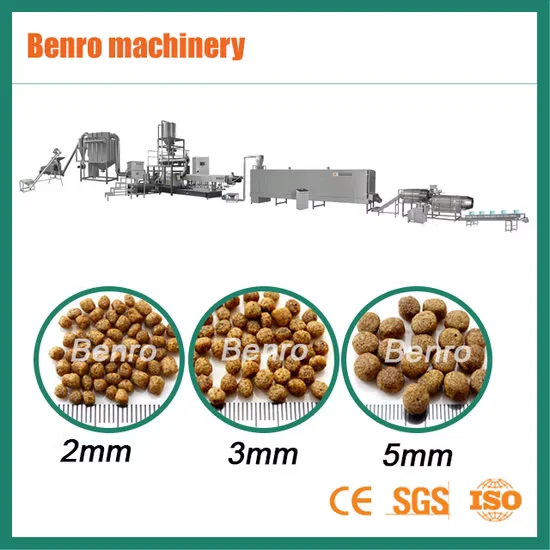
Fish Feed Technical Article
Uniform Fish Feed Pellet Cutter for Sale by Meiteng Manufacturer

Most producers mistakenly believe that simply increasing the extruder speed will solve uneven pellet lengths, but the real culprit lies in the mismatch between the feeding system consistency and the cutting mechanism.
To achieve uniform pellet length, you must select a fish feed pellet cutter based on blade material hardness and feeding auger stability, rather than just focusing on the extruder die or motor speed. Verifying the cutter lifespan and powder rate control mechanisms before purchasing is the only way to prevent sinking feed and reduce mold issues in your aquaculture operations.
Early in my career working in procurement, I made the mistake of purchasing a cheap, low-quality fish feed pellet cutter to save on initial capital. The results were disastrous. The cut pellets varied wildly in length, generating an extremely high powder rate. When the feed was distributed to the ponds, the excessive fines and uneven pellets sank directly to the bottom and started molding. The pond owners were furious and pointed fingers at our equipment. Since transitioning to the supply side of the aquaculture feed machinery industry here in Jinan, my biggest fear is seeing clients fall into that exact same trap. When evaluating a fish feed pellet cutter, you cannot just look at the advertised RPM; you have to scrutinize the fish feed cutter blade material and the uniformity of the feeding system. Asking the right questions about blade lifespan and powder rate control before signing a contract will save you from regretting the purchase once the machine arrives on-site.
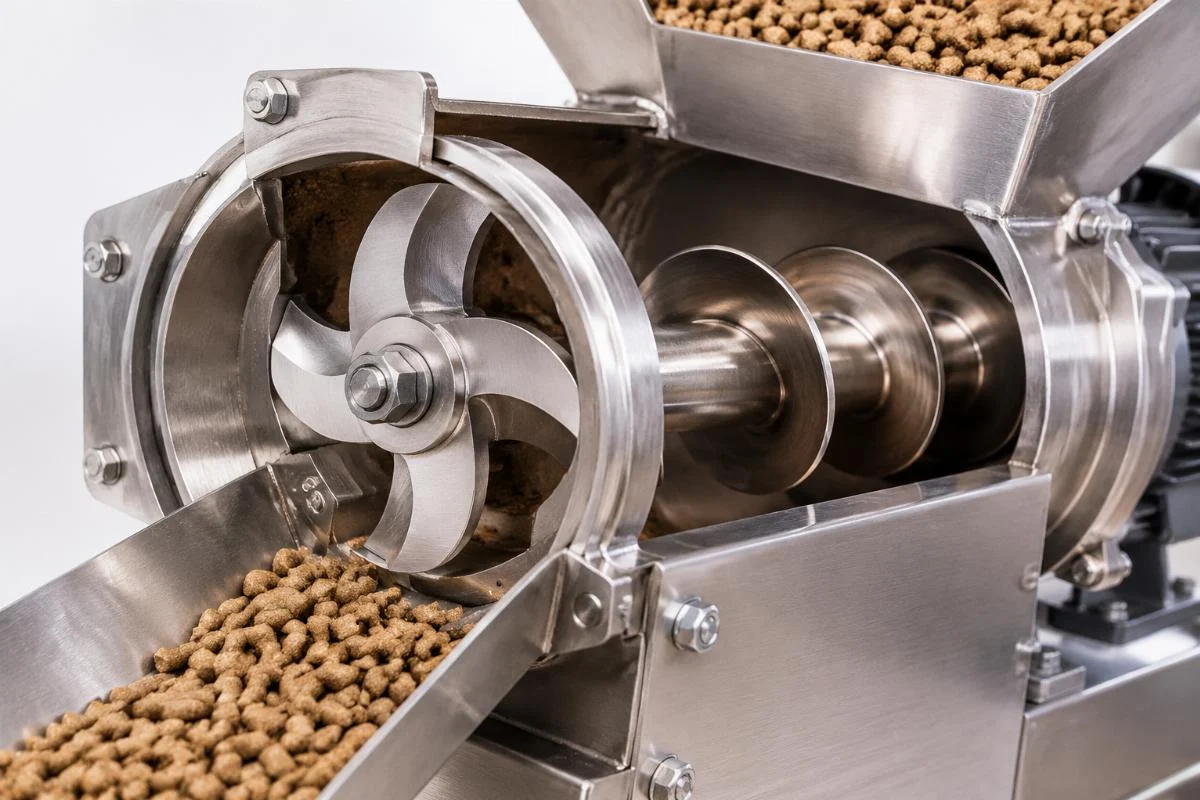
Understanding why length variations occur is the first step in solving the problem. The root causes are almost always tied to feeding consistency and blade sharpness, not the extrusion process itself.
Why Do Pellet Lengths Vary?
Uneven pellet lengths are primarily caused by fluctuating feed rates into the cutting chamber and dull blades that tear rather than slice the extruded dough.
Many operators blame the extruder die when pellets come out looking like a mess, but the die only shapes the strand. The actual length is determined at the cutting face. If the feeding auger experiences even minor RPM fluctuations, the extrudate will speed up and slow down microscopically. When the fish feed pellet cutter rotates at a constant speed but the material flow is inconsistent, the resulting pellets will inevitably vary in length..
Furthermore, blade sharpness degrades over time. A dull blade does not cleanly shear the soft, hot extrudate; it drags and tears it. This tearing action creates excessive fines and irregular ends, which directly contributes to a high powder rate. In my early procurement days, the machine I bought lacked a stable feeding mechanism, and the blades lost their edge within weeks. The powder rate was so high that we were essentially throwing money away. When you are figuring out how to choose fish feed pellet cutter for uniform length, you must demand data on the feeding system’s torque stability and the blade’s edge retention capabilities.

Blade Material vs. Extruder Speed: What Really Matters?
The hardness and wear resistance of the fish feed cutter blade material dictate the consistency of the cut far more than adjusting the extruder motor speed ever could.
There is a persistent myth in the industry that a faster cutting speed guarantees better uniformity. This is counter-intuitive but true: mismatched cutter-extruder speeds actually cause severe length variations. If the cutter spins too fast relative to the extrudate flow, you get ultra-short pellets and excessive powder. If it spins too slow, you get long, uncut strands. The solution is not to blindly increase the speed, but to ensure the cutting mechanism can maintain its precision over extended periods.
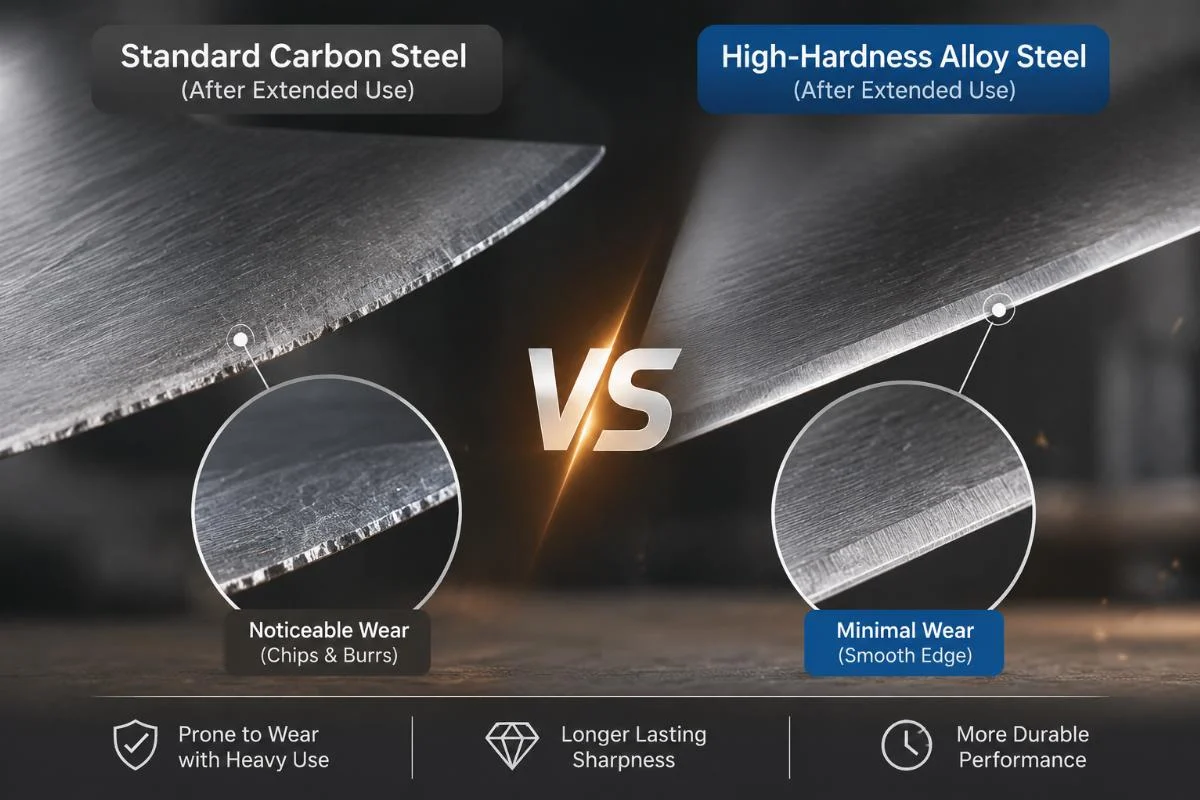
This is where the fish feed cutter blade material becomes the critical factor. Blades made from inferior carbon steel will soften and deform when exposed to the heat and abrasion of the feed dough. In contrast, blades utilizing high-hardness alloy steel or specialized heat-treated stainless steel maintain a sharp edge significantly longer..
A Southeast Asian aquaculture feed producer I worked with upgraded their old line because they were drowning in fines. They replaced their basic carbon steel blades with high-hardness alloy blades on a properly matched aqua feed pellet cutting machine. The powder rate dropped noticeably, moving from a problematic level to well within acceptable standards. More importantly, the blade replacement cycle extended substantially, reducing their maintenance downtime and spare parts costs. The uniformity of the pellet length improved dramatically, which directly reduced bottom sedimentation in the ponds by a noticeable margin, solving their sinking and mold issues.
Specification Matrix: Choosing the Right Cutter for Your Capacity
Selecting the correct fish feed pellet cutter requires matching the cutter’s rotational speed and blade configuration with your specific extruder output capacity to ensure length deviation remains within tight tolerances.
When sourcing equipment, buyers often get overwhelmed by generic spec sheets. To make an informed decision, you need to compare how different machines handle feeding consistency and blade durability across various capacity ranges. The following matrix highlights the qualitative differences you should expect when evaluating options for your production line.
| Feature / Capacity Range | Basic Entry-Level Setup | Standard Commercial Setup | Meiteng Integrated Turnkey Line |
|---|---|---|---|
| Feeding Auger Stability | Uncontrolled (Prone to surging) | Standard (Basic VFD control) | Controlled (Precision torque feedback) |
| Blade Material Hardness | Basic (Softens quickly under heat) | Resistant (Standard alloy treatment) | Robust (High-hardness specialized alloy) |
| Powder Rate Control | Vulnerable (High fines generation) | Standard (Moderate fines management) | Noticeably reduced (Optimized shear geometry) |
| Length Deviation Tolerance | Uncontrolled (Wide variation) | Standard (Acceptable for basic markets) | Micron-level precision (Tight uniformity) |
| Blade Lifespan | Basic (Frequent replacements needed) | Substantially extended (Season-long use) | Exceptionally extended (Multi-season durability) |
Data reflects qualitative performance tiers based on industry machinery standards and operational field reports..
For high-capacity floating feed production, matching the cutter speed with outputs ranging from 200kg/h to 3000kg/h is essential. Meiteng’s integrated drying and cooling systems are designed to work seamlessly with these cutters, ensuring that the pellets maintain their structural integrity post-cutting. Our CE and ISO 9001 certified cutters are built with food-grade 304 and 316 stainless steel, ensuring that the equipment not only performs reliably but also meets strict hygiene standards required for aquaculture feed. By serving producers across 60+ countries, we have refined these specifications to handle diverse formulations and regional water quality challenges.
How to Verify Quality Before Buying?
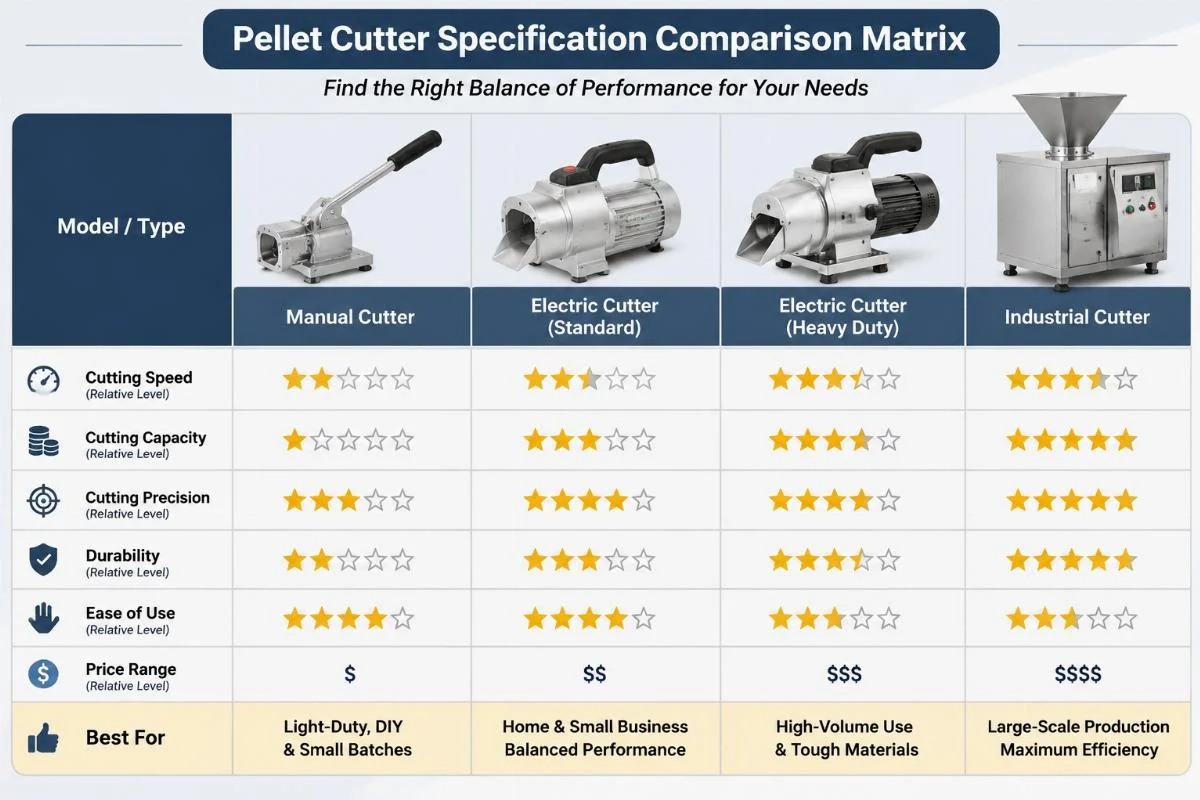
Before finalizing any purchase, you must request verifiable powder rate tests and blade lifespan guarantees to ensure the fish feed pellet cutter will perform as promised in your specific production environment.
Do not rely solely on brochures or verbal assurances. The most effective way to evaluate a potential supplier is to demand a live trial or request detailed test reports using your specific raw material formulation. A reputable manufacturer will have no issue providing data on the powder rate and length deviation under controlled conditions.
When I consult with clients setting up new floating and sinking fish feed extrusion lines, I always advise them to ask three critical questions:
- What is the guaranteed powder rate percentage after continuous operation?
- What is the specific fish feed cutter blade material, and what is its expected lifespan before resharpening or replacement?
- How does the feeding system compensate for variations in raw material bulk density?
A European contract manufacturer once faced severe issues with a previous supplier whose machine looked great on paper but failed in practice. The powder rate was unacceptable, and the blades wore out in a fraction of the promised time. When they switched to a Meiteng turnkey aqua feed line, we provided on-site installation, commissioning, and comprehensive operator training. This hands-on approach ensured that their team understood exactly how to maintain the feeding consistency and monitor blade wear. The result was a stable production run where length uniformity was consistently maintained, and the feed waste was minimized.

Conclusion
Achieving uniform pellet length is a direct result of prioritizing blade material hardness and feeding consistency over mere extruder speed adjustments.
By understanding the root causes of length variation and rigorously verifying powder rate control and blade lifespan before purchasing, aquaculture feed producers can significantly reduce feed waste and improve their overall feed conversion ratio. Investing in a properly matched, high-quality cutting system ensures that your pellets remain uniform, float correctly, and ultimately deliver the nutritional value your customers demand.