Fish Feed Technical Article
Tilapia Feed Extruder Machine Manufacturer for African Commercial Farms
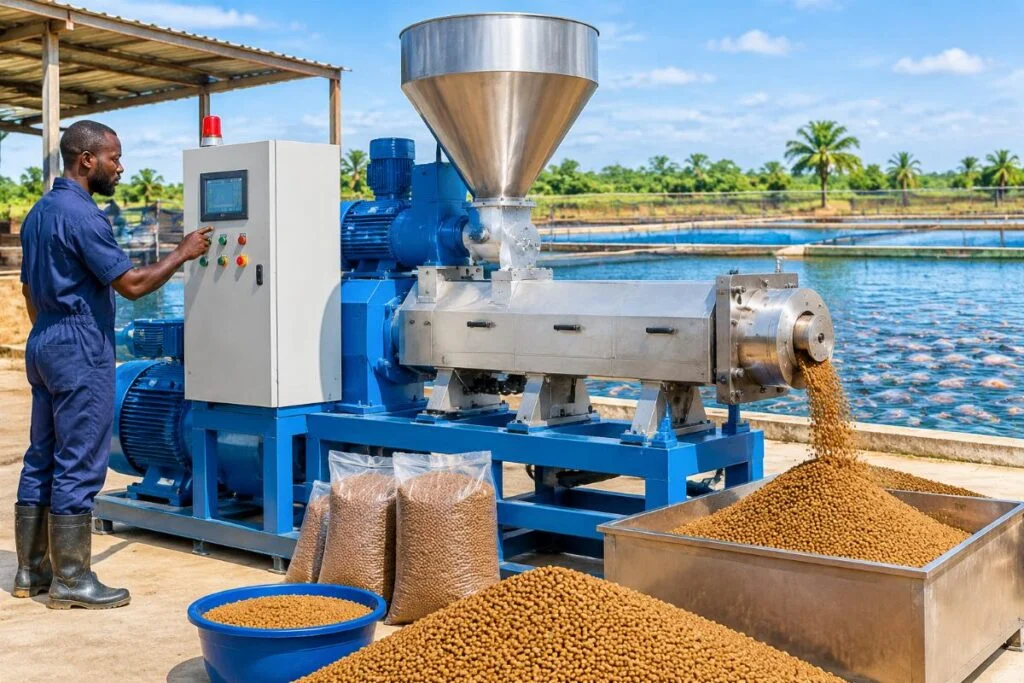
Cheaper single machines save upfront cost but fail at sinking feed control due to weak shear.
Selecting a tilapia feed machine in Africa requires matching twin-screw extruder specs with local raw material moisture and desired floating or sinking rates, rather than just comparing base prices.
Early in my career, I spent years overseeing quality inspections for twin-screw extruders before transitioning into international trade, which eventually led me to frequent aquaculture exhibitions across Europe and Hannover. At one of these trade shows, I met an entrepreneur building a tilapia farm in Ghana. He had opted for a budget-friendly standalone unit to save on initial capital, completely skipping the conditioner and ignoring die aperture customization. The result was a disaster: the feed sink rate completely missed the target, the fish refused to eat it, and he ended up calling me in the middle of the night to rush-ship replacement dies. This incident perfectly illustrates a broader industry truth. When facilities lack proper preconditioning, the starch gelatinization process collapses, leading to massive feed waste.
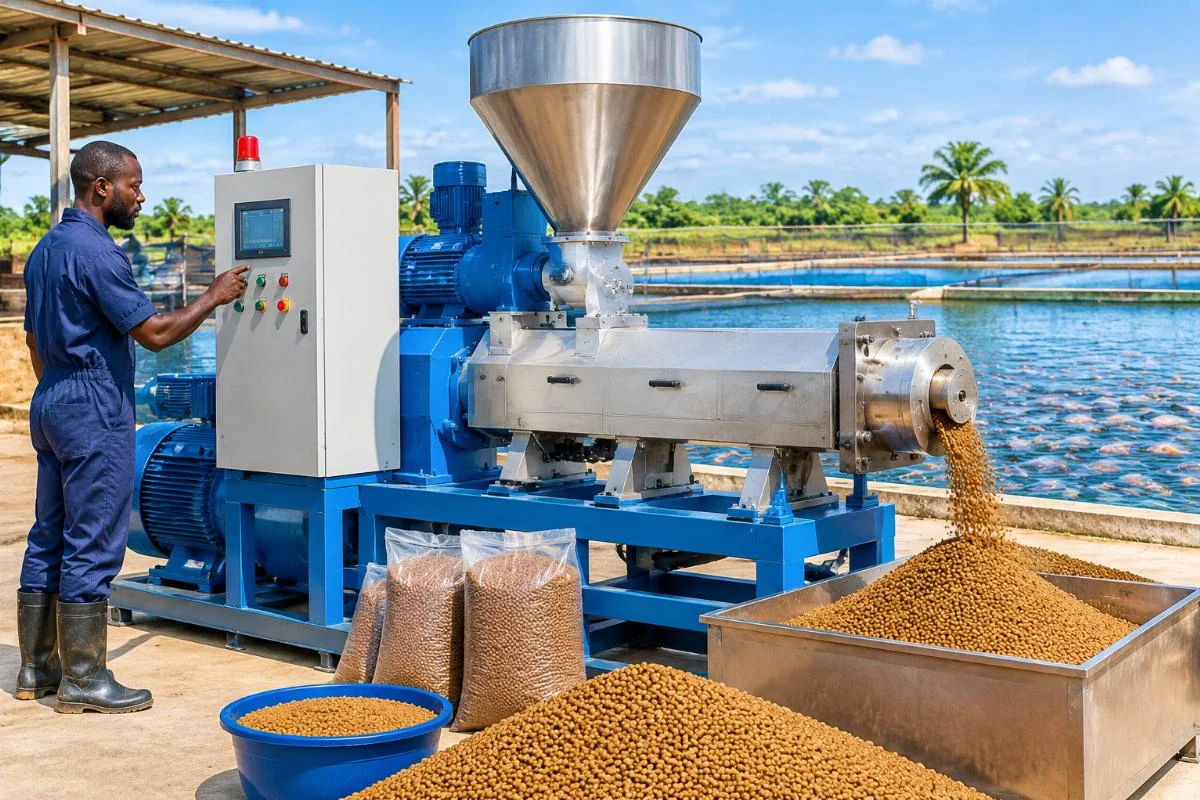
Let us break down the engineering realities behind buoyancy control, screw configurations, and complete line integration to ensure your investment actually produces viable feed.
Why Do Most Standalone Extruders Fail for Tilapia Feed?
The core issue lies in the complete absence of preconditioning, which ruins both gelatinization and sink rates.
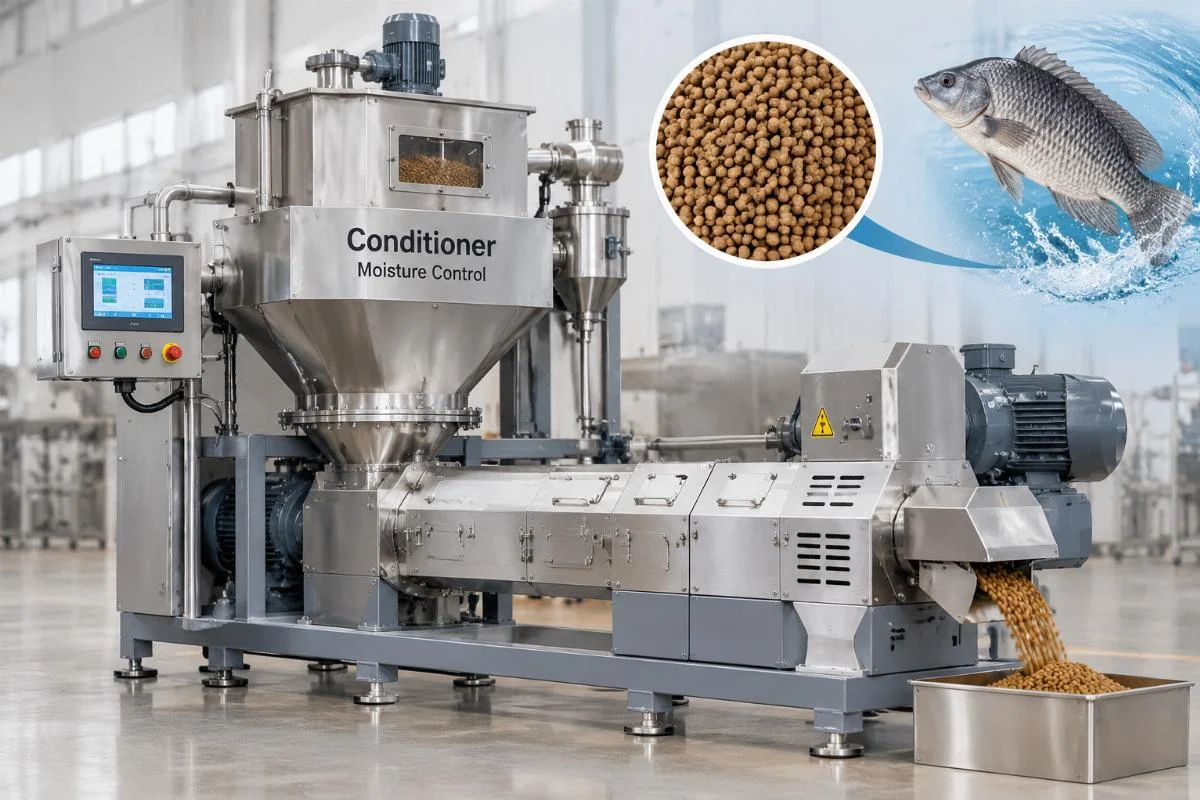
When producers attempt to process local African raw materials—often characterized by highly variable moisture content and coarse particle sizes—feeding them directly into a bare extruder barrel creates severe mechanical stress. Without a dedicated conditioner to inject steam and liquids, the material enters the extrusion chamber at an inconsistent thermal state. This forces the main motor to work excessively hard just to generate friction heat, rather than focusing on proper starch breakdown.
In a West African startup case I reviewed, the operators relied entirely on the mechanical energy generated inside the barrel. The specific mechanical energy spiked unpredictably, causing localized burning while leaving other portions of the feed completely raw. The lack of retention time in a pre-mixing zone meant that the moisture never had the chance to evenly distribute before the intense shear of the screws took over. Consequently, the final pellets lacked the structural integrity required for water stability, dissolving into mush within minutes and fouling the pond water.
To fix this, integrating a multi-shaft conditioner before the main extrusion chamber is non-negotiable. It allows steam to penetrate the raw materials thoroughly, raising the core temperature and softening the starch matrix before it even reaches the screws. This gentle pre-cooking ensures that when the material finally enters the barrel, the mechanical energy is used for shaping and texturizing, not just for basic heating.
How to Choose Between Single-Screw and Twin-Screw Extruders?
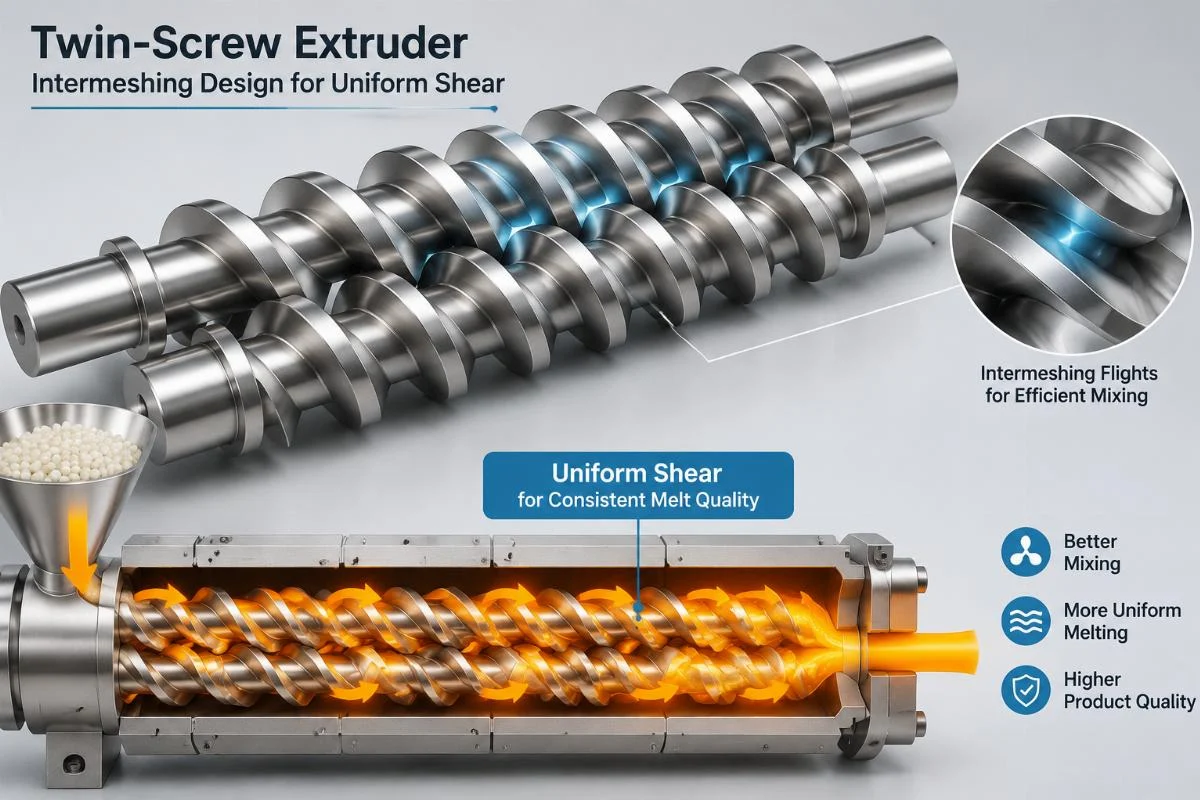
Twin-screw configurations offer superior shear control and formulation flexibility, making them vastly superior for varying local recipes.
The decision between single-screw and twin-screw technology often comes down to how much control you need over the final pellet structure. Single-screw designs rely heavily on friction between the screw and the barrel wall to move material forward. This creates a highly uneven shear profile, which is acceptable for simple, high-starch floating feeds but completely inadequate for complex sinking formulations or high-protein diets.
Twin-screw extruders, on the other hand, utilize intermeshing screws that actively pump the material forward. This positive displacement ensures a much more uniform residence time and consistent shear history across the entire batch. When dealing with alternative protein sources common in African supply chains, such as black soldier fly larvae meal or localized oilseed cakes, the self-wiping action of the twin screws prevents material buildup and ensures a homogeneous mix.
Consider the following comparison of operational characteristics:
| Operational Factor | Single-Screw Extruder | Twin-Screw Extruder |
|---|---|---|
| Material Conveying | Friction-dependent, prone to slipping | Positive displacement, highly stable |
| Shear Distribution | Uneven, high localized heat | Uniform, precisely controllable |
| High-Protein Flexibility | Vulnerable to scorching | Robust, excellent mixing |
| Sinking Feed Control | Uncontrolled, weak shear | Controlled, precise density management |
An East African farm I consulted for initially tried to produce a high-protein sinking tilapia diet using an older single-screw model. The friction heat degraded the amino acids, and the weak shear failed to create the dense matrix required for sinking. Upgrading to a twin-screw setup immediately resolved the protein degradation and allowed them to achieve the target density without altering their core formula.
What Specs Dictate Floating vs. Sinking Feed Production?
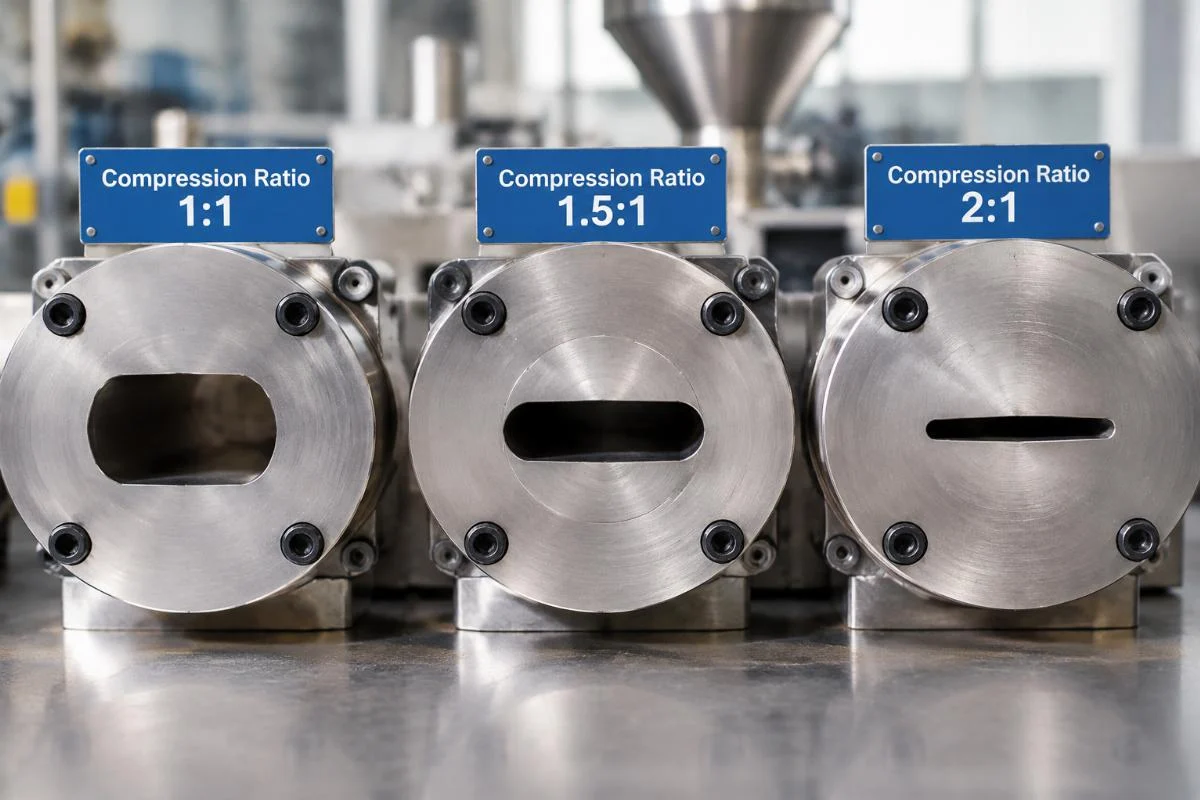
Die aperture, compression ratio, and screw configuration are the primary mechanical drivers that control buoyancy.
There is a widespread misconception that achieving a high sink rate is purely a matter of formulating a denser recipe. While ingredient density plays a role, the mechanical extrusion parameters are equally critical. High sink rate relies heavily on precise die hole compression ratios and the degree of air entrapment during the expansion phase.
When the feed exits the die, the sudden drop in pressure causes moisture to flash off. If the compression ratio of the die is too low, the material expands rapidly, trapping air bubbles and creating a floating pellet. To produce sinking feed, the die must exert enough backpressure to keep the matrix dense, while the screw configuration must minimize air incorporation during the final metering zone.
Furthermore, the length-to-diameter ratio of the screws dictates how long the material is subjected to these pressure zones. A longer ratio allows for a more gradual pressure build-up and release, which is essential for controlling the exact expansion rate. If you attempt to force a sinking formulation through a die designed for floating feed, the pellets will simply pop out and float, regardless of how dense your raw materials are.
| Buoyancy Target | Die Compression Ratio | Screw Configuration Focus | Expansion Control |
|---|---|---|---|
| Floating Feed | Lower ratio, rapid release | Focus on high shear cooking zones | Uncontrolled, rapid expansion |
| Sinking Feed | Higher ratio, sustained backpressure | Focus on dense metering and degassing | Controlled, minimal expansion |
In a Southern African scale-up project, the client needed to switch from floating to sinking feed to accommodate a new pond aeration system. They initially just changed the recipe, which failed. By swapping the die plates to a higher compression ratio and adjusting the screw profile to reduce air entrapment, they achieved a perfect sink rate without sacrificing production throughput.
How to Size a Turnkey Line for African Commercial Farms?
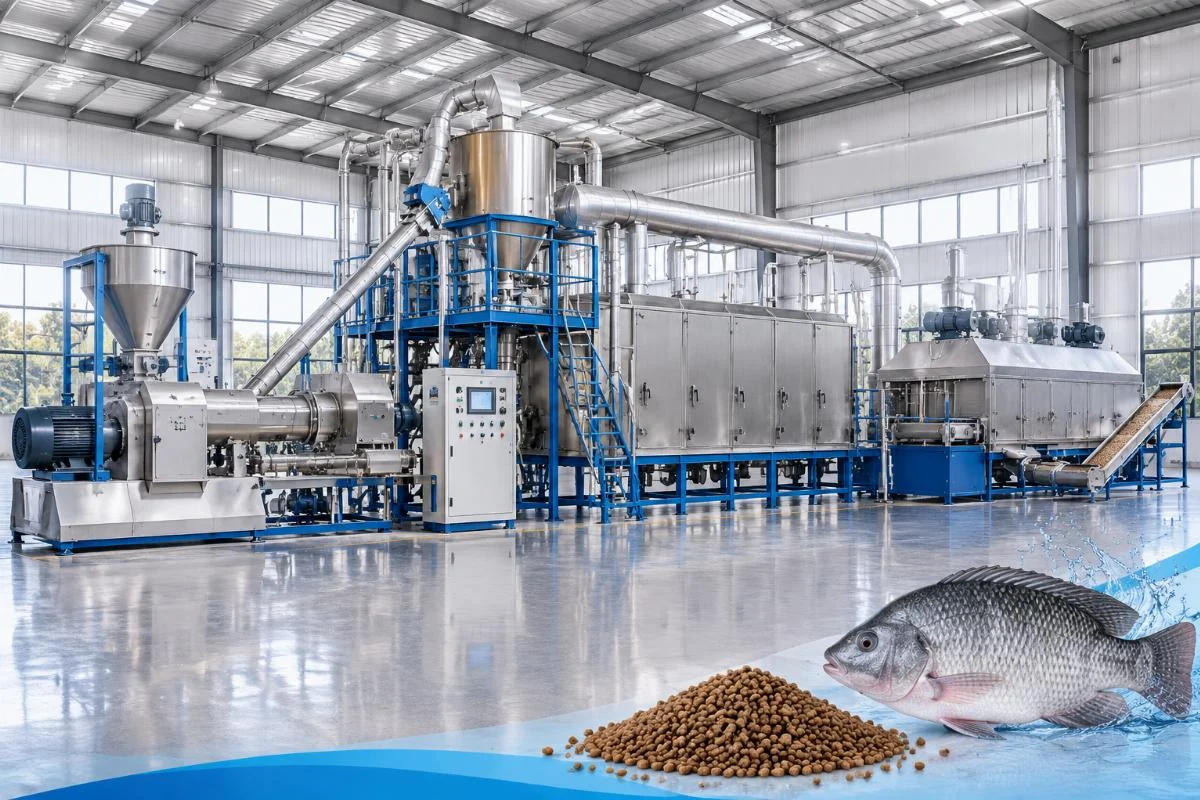
Matching the extruder capacity with integrated drying and cooling systems is critical for maintaining pellet integrity and nutritional value.
Selecting the right tilapia feed machine is only the first step; the surrounding equipment determines whether the final product is viable. Freshly extruded pellets contain significant moisture and are highly fragile. If they are not dried and cooled properly, they will develop mold during storage or crack when exposed to pond water.
A complete turnkey line must balance the extrusion output with the thermal processing capacity. For commercial farms scaling up, integrating a multi-pass dryer ensures that the moisture is removed gently from the core of the pellet to the surface. Rapid surface drying creates a hard shell that traps internal moisture, leading to structural failure and spoilage.
Furthermore, the cooling stage must bring the pellet temperature down to near ambient levels before packaging. If the feed is bagged while still warm, condensation will form inside the bags, destroying the product within days. When sizing a line, it is vital to ensure that the dryer and cooler capacities slightly exceed the extruder output to account for ambient humidity variations, which are notoriously high in many African coastal and tropical regions.
Meiteng’s DS twin-screw series is specifically engineered to integrate seamlessly into these comprehensive turnkey setups. By handling everything from the initial raw material intake to the final cooling and packaging integration, the entire line operates as a synchronized ecosystem rather than a collection of mismatched standalone units. This holistic approach ensures that the specific mechanical energy applied in the extruder is perfectly matched by the thermal energy applied in the dryer, preserving the nutritional profile of the feed.
Conclusion
Successful aquaculture feed production hinges on mechanical precision, not just raw material recipes.
Matching twin-screw extruder specifications with local moisture conditions and buoyancy targets ensures consistent feed quality. Integrating proper preconditioning, precise die compression, and synchronized thermal processing transforms a basic extrusion setup into a reliable commercial operation.