Fish Feed Technical Article
Meiteng Fish Feed Line: Formula Support & Wholesale Manufacturer
Most buyers assume extruder mechanics dictate pellet quality; actually, raw material protein matching is the true core.
Yes, Meiteng provides comprehensive formula development support alongside every fish feed line order to ensure optimal pellet water-stability and nutritional value.
Running aquaculture sites around Can Tho in Vietnam for years, I have seen too many feed mill owners fail because they ignored the recipe. Back when I worked in quality control, I used to stare at the extruder screw speed all day. After switching to trade, I realized that having good machinery means nothing without the right formulation. An Indonesian client once bought a standalone machine to save costs, skipping the recipe support. The result? The extruded fish feed disintegrated the moment it hit the water. The fry refused to eat it, and the feed rotted in the pond, leading to massive waste. They ended up blaming the machine. Now, when I take an order, I discuss raw material protein and expansion degree first. The equipment is the skeleton, but the formula is the soul. Without proper matching, the best fish feed line formula support becomes useless scrap metal.
Moving from equipment specs to actual feed performance requires understanding how formulation dictates the final product.
Does Meiteng Offer Formula R&D for Fish Feed Lines?
Yes, turnkey packages include recipe development tailored specifically to your available raw materials and target species.
When sourcing a fish feed line formula support, buyers often focus solely on the hardware. However, the integration of aquaculture feed extrusion formula development is what separates a functional mill from a profitable one. Meiteng approaches this by analyzing the specific protein sources available in your region..
A Southeast Asian startup recently faced this exact hurdle. They had high-quality local fish meal but struggled with a severe water-disintegration rate. The issue was not the twin-screw fish feed production line with recipe support they purchased; it was a missing recipe that failed to account for the specific lipid profile of their local ingredients. By adjusting the protein ratio and fine-tuning the expansion degree during the R&D phase, the feed stability was restored. This highlights why a supplier must offer more than just steel and motors. The formulation must be customized to the exact moisture content and protein gelatinization rates required for the specific aquatic environment.

Why is Formula Support Crucial for Pellet Stability?
Proper expansion degree and protein matching prevent feed from dissolving in water, directly impacting feed conversion ratios.
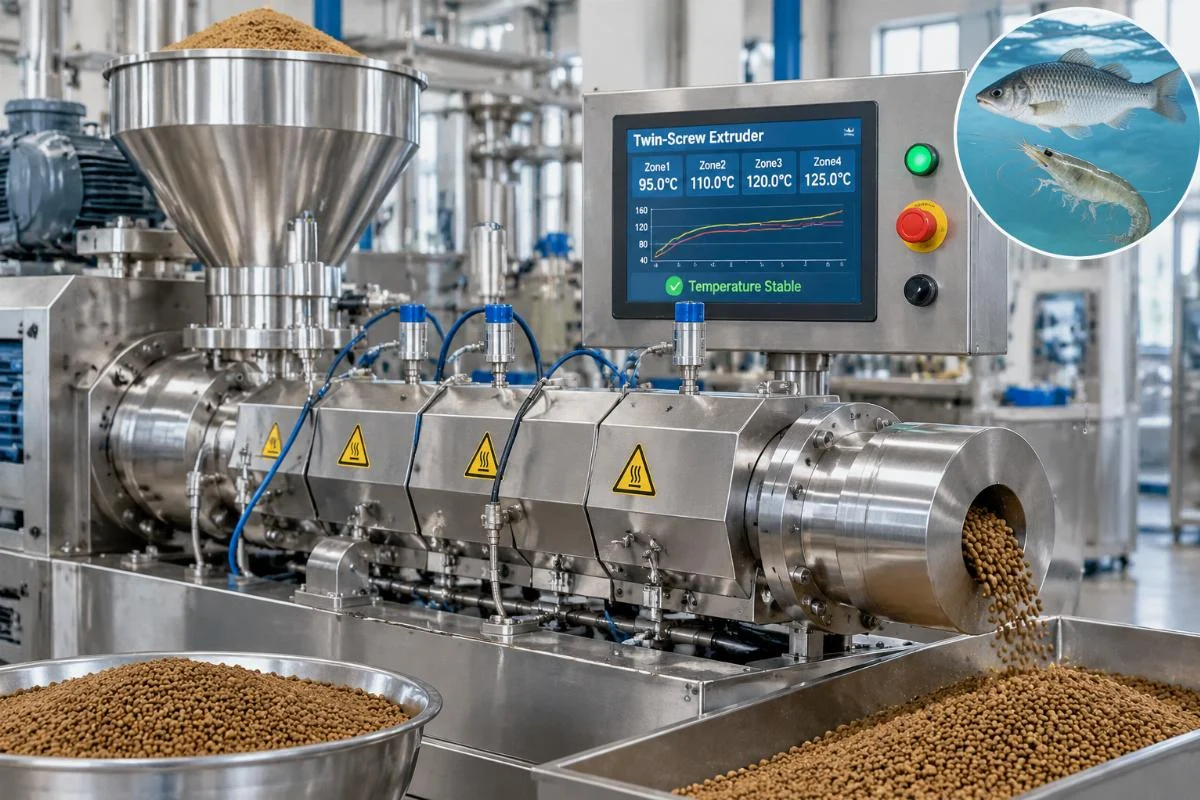
In aquaculture, pellet stability is non-negotiable. If the feed dissolves too quickly, it pollutes the water and starves the stock. The secret lies in the twin-screw shear-temperature profiles applied during extrusion..
Consider a medium-scale producer who needed to upgrade their operations for a specific high-value species. They required a twin-screw fish feed production line with recipe support to precisely control the density, ensuring the feed sank at the correct rate rather than floating aimlessly. Without the proper aquaculture feed extrusion formula development, the starch matrix would not set correctly, leading to poor gelatinization. The fish would reject the feed, or it would leach nutrients into the water column. By utilizing dedicated fish feed line formula support, the producer achieved the exact sinking velocity and water-stability duration required by international aquaculture nutrition standards. The machinery executes the physics, but the formula dictates the chemistry.

How Does Meiteng Customize Recipes for Different Feed Types?
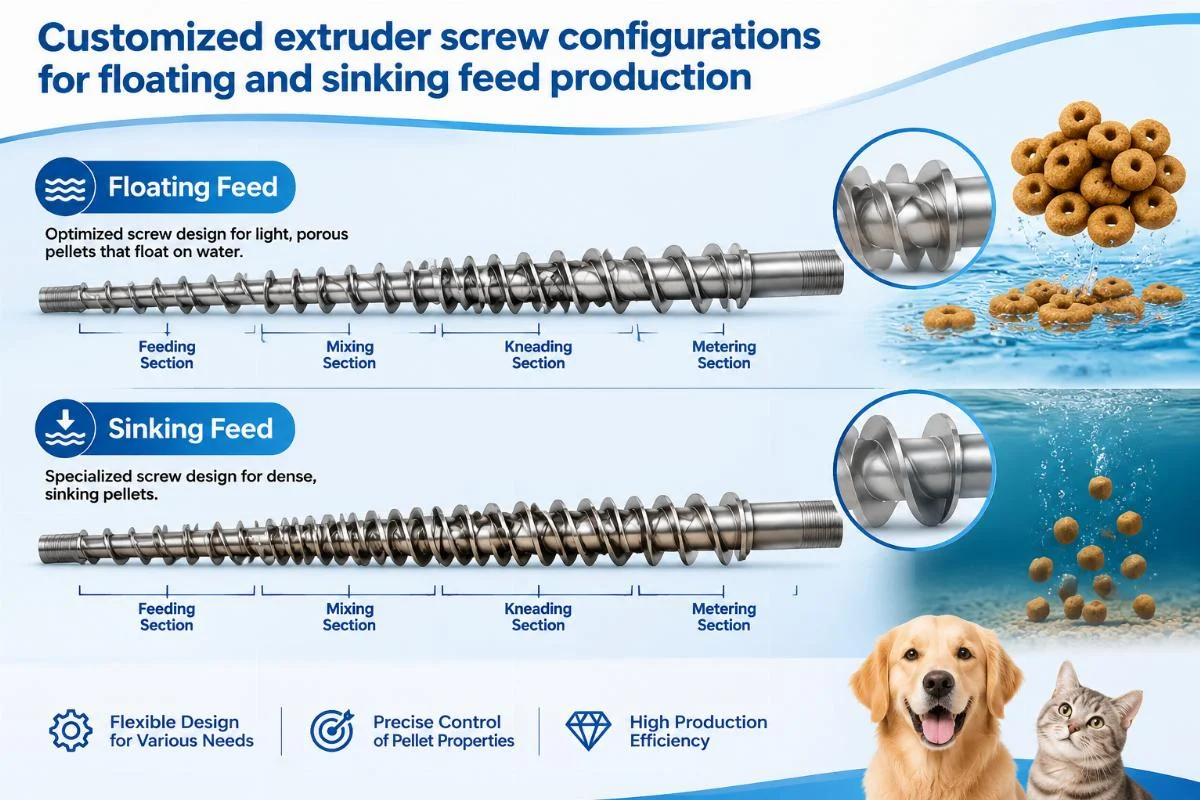
We adjust parameters for floating and sinking feeds based on target species, utilizing multi-formulation flexibility for ingredient substitution.
Different aquatic species require different feeding behaviors, which dictates the physical structure of the pellet. A contract manufacturer recently needed to produce multiple formulations on a single line to serve diverse regional markets. They required a fish feed line formula support that allowed for rapid ingredient substitution and moisture content tuning without compromising the final pellet integrity.
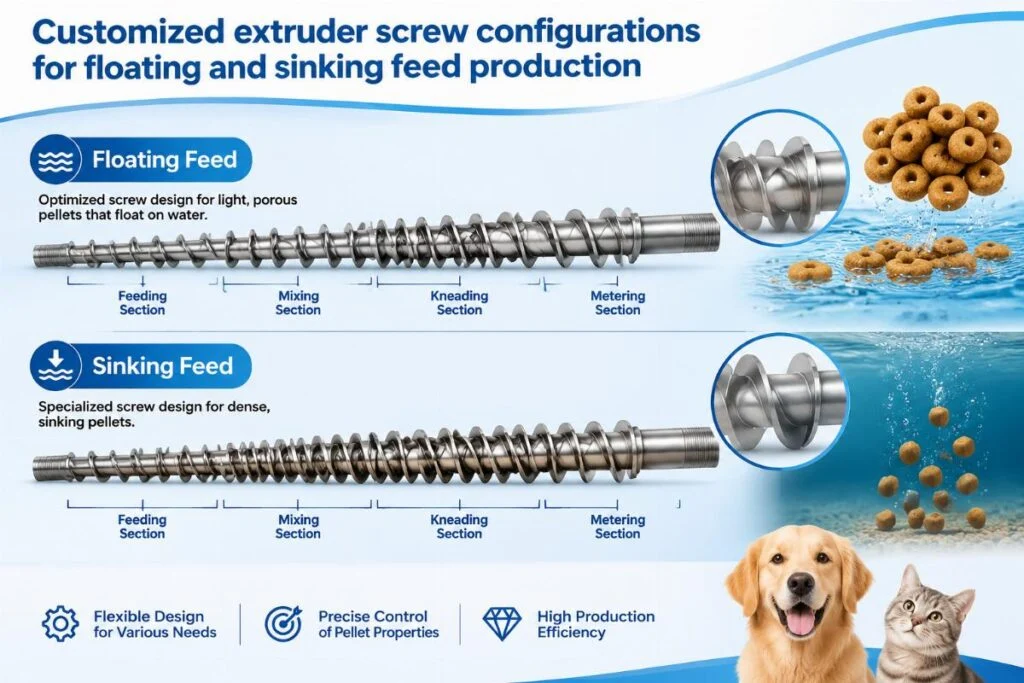
Meiteng addresses this by mapping out the specific twin-screw shear-temperature profiles for each recipe.. For floating feeds, the formula support focuses on maximizing expansion to create a porous structure that traps air. For sinking feeds, the aquaculture feed extrusion formula development minimizes expansion while ensuring the protein matrix remains dense enough to withstand water immersion. This level of customization ensures that whether you are producing feed for surface-feeding tilapia or bottom-feeding shrimp, the twin-screw fish feed production line with recipe support delivers consistent, species-specific results.
What Happens if You Buy Equipment Without Formula Support?
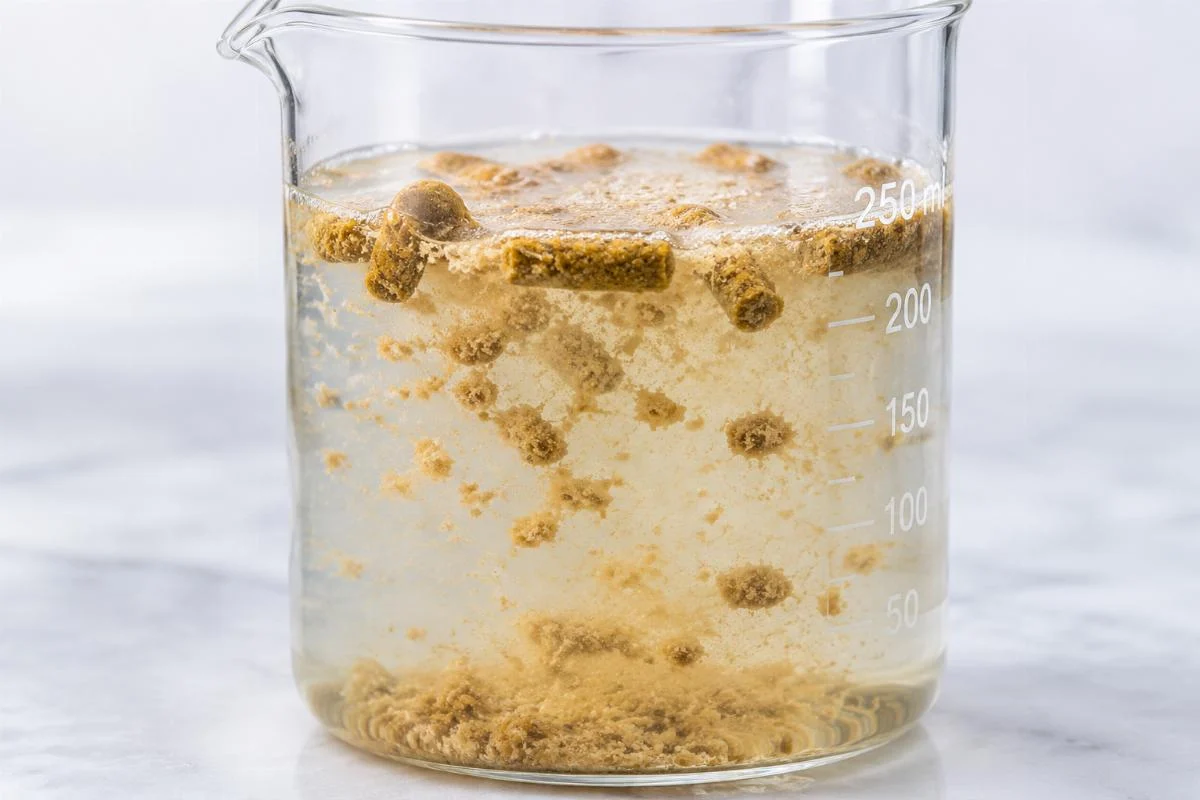
Mismatched recipes lead to poor gelatinization, causing fish to reject the feed and turning expensive equipment into scrap.
The most counter-intuitive view in this industry is the assumption that standalone machines save costs. Many buyers purchase hardware without securing the necessary fish feed line formula support, believing they can figure out the recipe later. This is a critical error. Lacking formula support turns good equipment into scrap metal because the machine cannot compensate for a fundamentally flawed recipe.
Without professional aquaculture feed extrusion formula development, the raw materials may fail to reach the necessary protein gelatinization rates. The resulting pellets might look perfect when dry but will disintegrate within minutes in the pond. This leads to severe feed waste, water quality degradation, and stunted fish growth. The financial loss from rejected feed and lost stock far exceeds the initial investment in a comprehensive twin-screw fish feed production line with recipe support. Securing this support upfront ensures that the mechanical capabilities of the extruder are fully leveraged to produce nutritionally dense, physically stable pellets that meet rigorous FAO feed guidelines.
Conclusion
Equipment provides the mechanism, but formula support guarantees the nutritional and physical integrity of the final pellet. Securing comprehensive recipe development alongside your machinery prevents costly feed waste and ensures optimal aquaculture performance.