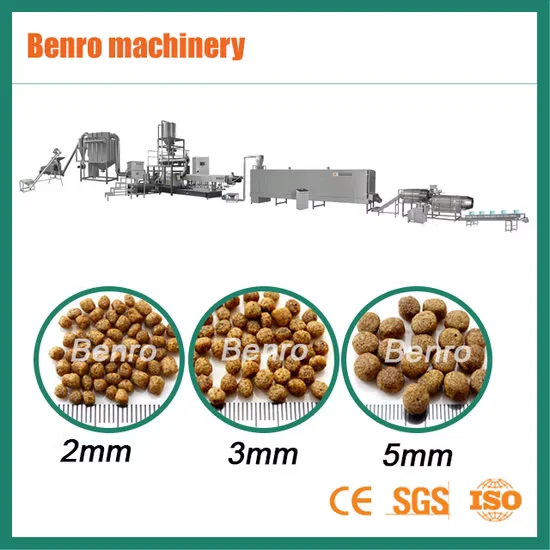
Fish Feed Technical Article
Exported Fish Feed Line Docs: Meiteng Manufacturer Guide

A commercial invoice is not just a payment request; it is the primary document customs authorities scrutinize to verify HS codes and declared values for machinery parts.
Exporting a complete fish feed production line requires strict alignment between equipment nameplates, technical manuals, and customs documents to avoid port delays and clearance failures. The essential exported fish feed production line documents include commercial invoices, packing lists, bills of lading, CE certificates, ISO quality management certificates, certificates of origin, and multi-language operational manuals. Every technical parameter on the nameplate must perfectly match the data declared in the export paperwork.
I still remember the sting of a massive port detention fee from years ago. I was closing a deal for a twin-screw extruder line at a trade show in Hannover, destined for a major aquaculture hub in Europe. The equipment arrived at the Port of Rotterdam, but it sat in customs for over two weeks. The reason? The CE documentation listed the main motor power of the twin-screw extruder with a decimal variance compared to the bill of lading. A fraction of a kilowatt difference. Customs flagged the discrepancy, suspecting undervaluation or misclassification, and detained the entire shipment. The demurrage costs wiped out a significant chunk of the profit margin. Since that day, I have obsessively verified every single digit on nameplates against the exported fish feed production line documents. In this industry, paperwork is just as critical as the machinery itself; if the parameters do not align, even the best equipment cannot enter the buyer’s facility.
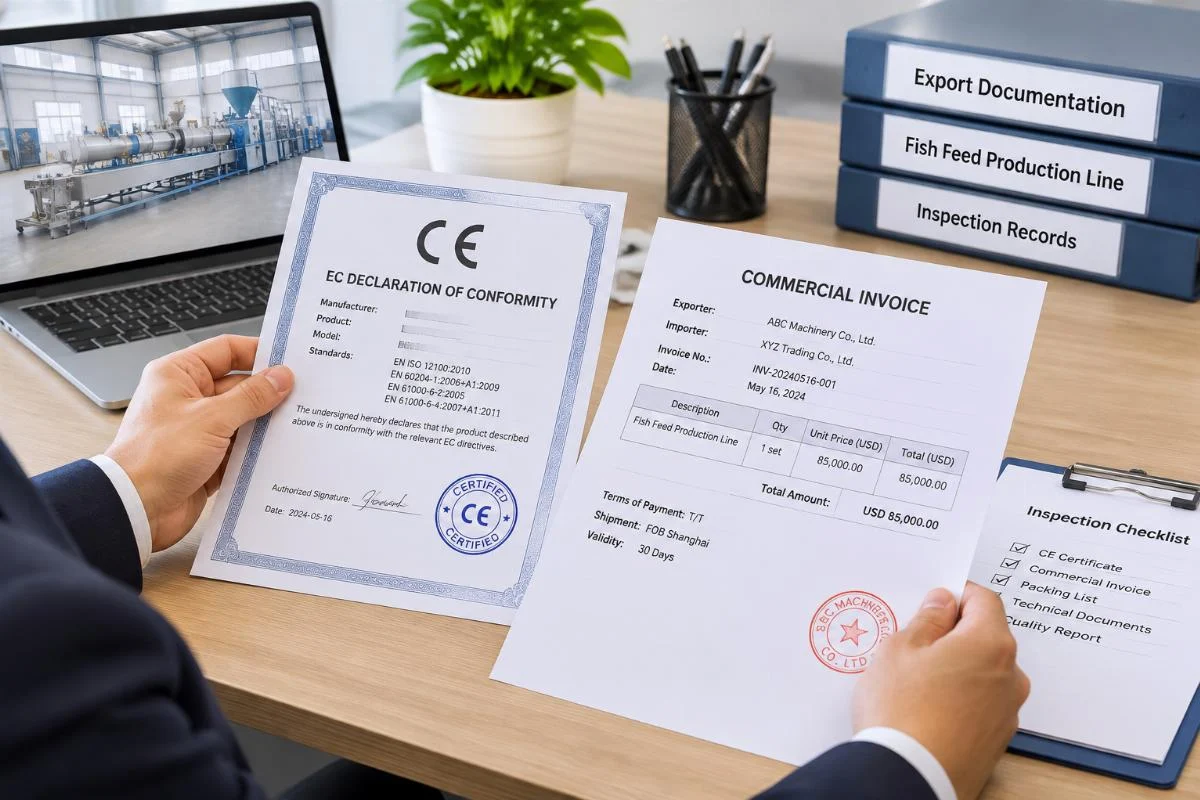
Let us break down the exact paperwork required to ensure your turnkey aquaculture feed line shipping documents are flawless and compliant.
What Are the Core Commercial & Shipping Documents?
The foundational exported fish feed production line documents consist of the commercial invoice, packing list, and bill of lading, which must perfectly align with the physical cargo and declared values.
Many buyers assume the commercial invoice is merely a billing tool. In reality, customs authorities use it to cross-reference HS codes, assess duties, and verify the declared value of complex machinery parts. When shipping a turnkey aquaculture feed line, the invoice must itemize not just the main twin-screw extruder, but also the dryers, coolers, flavor coating systems, and packaging units. Each component needs a precise HS code. Misclassifying a critical part like a ring die pellet former or a stainless steel conditioning barrel can trigger a full container inspection.
The packing list must detail the exact dimensions, gross and net weights, and container load consolidation specifics. If the physical weight of the food-grade stainless steel drying system deviates from the packing list by even a minor margin, customs officers will halt the clearance process to investigate potential smuggling or undeclared goods. The bill of lading serves as the title of goods, and its consignee information must match the commercial invoice exactly.
A Southeast Asian aquaculture cooperative once faced a nightmare scenario because their supplier listed the entire floating fish feed extrusion line under a single generic HS code for “agricultural machinery.” Customs demanded individual codes for the grinder, the mixer, the extruder, and the dryer. The resulting delays stalled their installation timeline by months, costing them an entire production season.
Risk Checklist for Commercial Docs:
- Inconsistent consignee names across the invoice and bill of lading.
- Missing itemized HS codes for auxiliary equipment like cooling and coating systems.
- Discrepancies between the declared container weight and the actual weighbridge ticket.

Which Technical Certificates Are Mandatory for Customs?
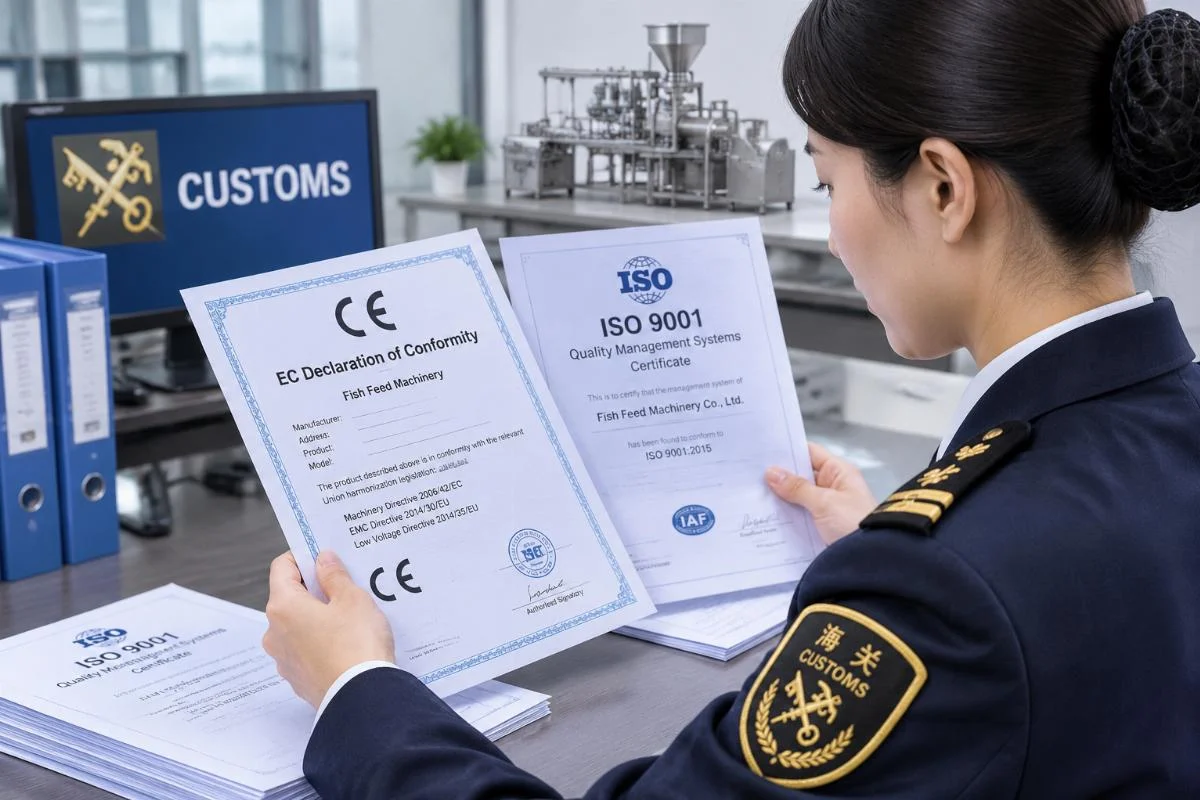
The mandatory technical exported fish feed production line documents include the CE certificate for fish feed machinery, ISO quality management certificates, and specific certificates of origin tailored to the destination country.
Buyers often assume that a CE mark covers all regulatory bases. This is a dangerous misconception. While the CE certificate is non-negotiable for entering the European market and many other regions, specific destination countries require additional origin or specific safety certificates. For instance, importing into certain Middle Eastern or South American markets requires a Certificate of Origin that must be legalized by the local chamber of commerce and embassy.
Furthermore, the CE certificate for fish feed machinery must explicitly cover the electrical control panels and the pressure-bearing components of the twin-screw extruder. If the certificate only lists the mechanical frame but omits the main drive motor or the steam conditioning system, customs will reject the technical compliance. ISO certificates, particularly ISO quality management standards, are also heavily scrutinized to prove that the manufacturer maintains controlled production environments, especially when food-grade stainless steel is involved.
A buyer in Latin America imported a complete line but failed to provide a legalized Certificate of Origin that matched the exact commercial invoice value. The local customs authority refused to clear the goods, demanding a re-issued document from the exporting country’s embassy. The delay forced the buyer to pay for extended warehouse storage, proving that regional compliance is just as vital as the CE mark.
Risk Checklist for Technical Certs:
- CE documentation missing coverage for electrical cabinets or steam valves.
- Failure to legalize the Certificate of Origin for specific regional markets.
- Expired ISO certificates at the time of the bill of lading date.
How to Ensure Nameplate Data Matches Export Docs?
Ensuring the physical nameplate data perfectly matches the exported fish feed production line documents is the most critical step to prevent port detentions and clearance failures.
This is where the majority of export nightmares originate. The nameplate affixed to the twin-screw extruder must display the exact motor power, voltage, frequency, and manufacturing serial number. These figures must be transcribed identically into the CE documentation, the commercial invoice, and the packing list. A decimal variance in kilowatts, or a slight difference in voltage rating (e.g., 380V vs 400V), will immediately flag the shipment for inspection.
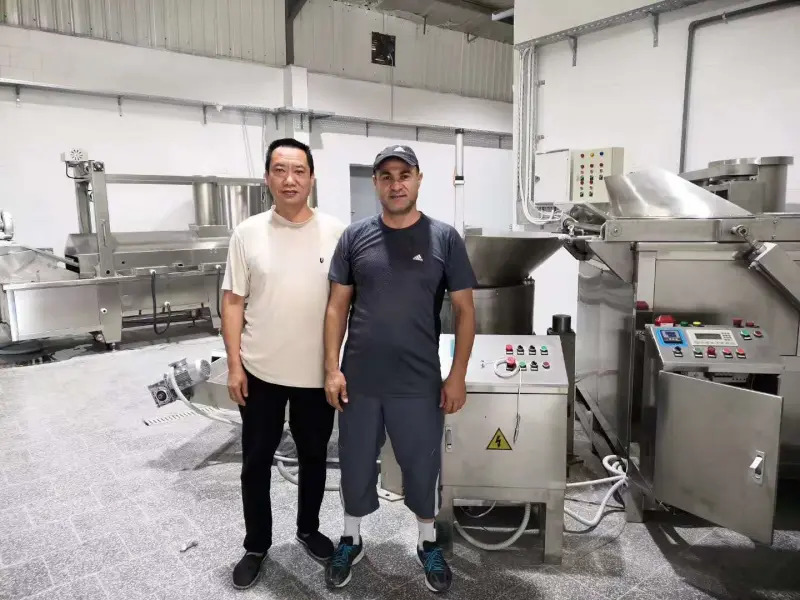
At our manufacturing facilities in Jinan, we enforce a strict one-to-one document verification protocol for all twin-screw extruders and single-screw extruders. Before the CE certificate for fish feed machinery is finalized, the technical team physically verifies the nameplate data against the draft documents. We also ensure that the material grade declarations, such as food-grade stainless steel contact parts, are explicitly stated in both the technical manuals and the compliance certificates. This rigorous alignment prevents the exact type of decimal-kilowatt mismatch that causes port detentions.
A European importer once received a batch of extruders where the nameplate indicated a specific amperage draw, but the technical manual provided a slightly different figure due to a revision in the motor supplier. Customs officers, comparing the nameplate to the manual during a random audit, seized the equipment for technical non-compliance. The lesson is absolute: the nameplate, the manual, and the export docs must speak the exact same language.
Risk Checklist for Nameplate Alignment:
- Decimal variances in motor power or amperage between the nameplate and CE docs.
- Voltage or frequency mismatches tailored for the wrong regional grid.
- Serial number discrepancies between the physical machine and the packing list.

What Operational Manuals Should Be Included?
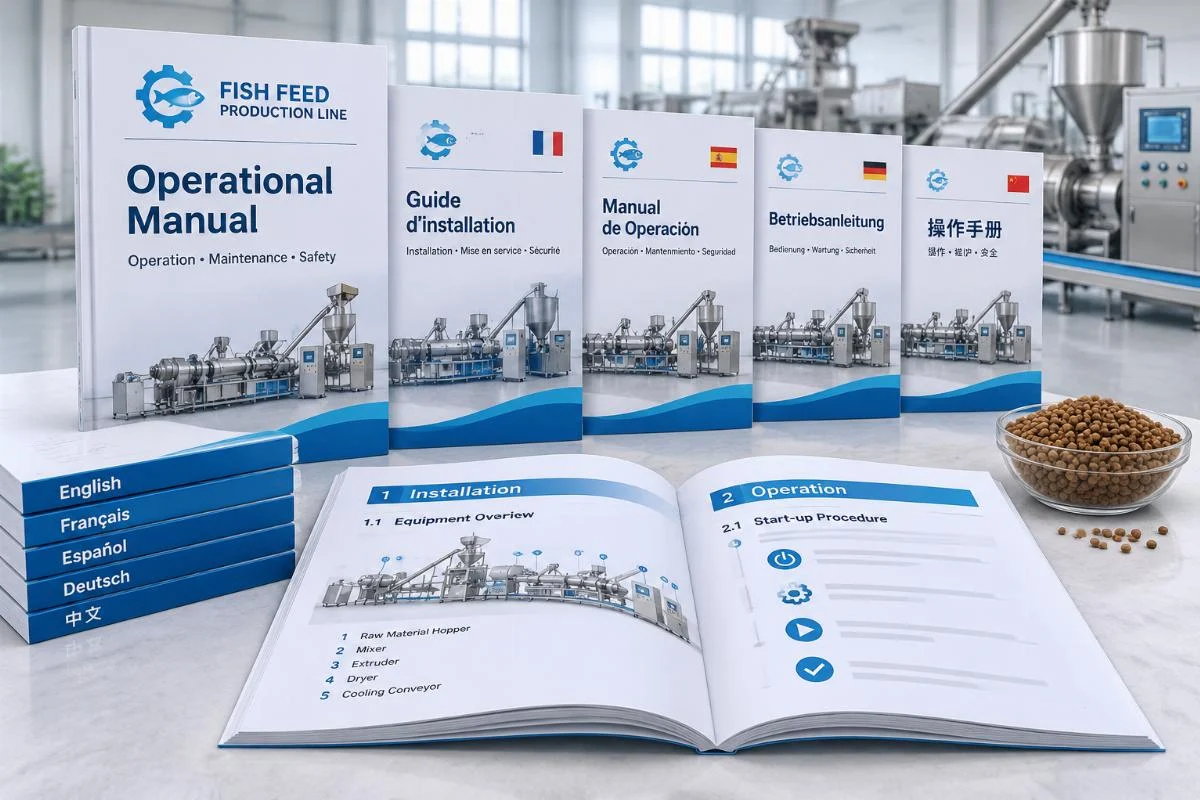
The operational exported fish feed production line documents must include comprehensive, multi-language technical manuals covering installation, commissioning, and operator training to ensure immediate functionality upon arrival.
Technical compliance gets the machine through customs, but operational documentation gets the line running. A turnkey aquaculture feed line is a complex integration of grinding, mixing, extruding, drying, and coating systems. If the operator training manuals are only available in the manufacturer’s native language or basic English, the commissioning phase will stall. Local technicians need clear, multi-language guides to understand the hydration and texturization parameters for textured vegetable protein or the specific die specifications for floating versus sinking fish feed.
These manuals must also include detailed maintenance schedules, lubrication points for the twin-screw barrels, and troubleshooting guides for the ring die and pellet forming customization. Missing sanitary certificates for food-grade stainless steel parts can also delay installation if local health inspectors require proof that the contact surfaces meet specific hygiene standards. Providing comprehensive, localized documentation demonstrates a commitment to the buyer’s long-term operational success, not just the initial sale.
A startup in Africa struggled for weeks to calibrate the flavor coating system because the provided manual lacked specific diagrams for their local voltage setup and omitted the local language translation for the control panel interface. The production of their extruded snacks was delayed until remote diagnostic assistance and updated multi-language manuals were provided.
Risk Checklist for Operational Manuals:
- Lack of multi-language support for the local operator workforce.
- Missing maintenance schedules for critical wear parts like ring dies and screws.
- Absence of sanitary compliance declarations for food-grade contact surfaces.
Conclusion
Paperwork is the invisible machinery that dictates whether your investment operates or sits rotting at the port. Exported fish feed production line documents demand absolute precision across commercial invoices, CE certificates, and nameplate data to guarantee smooth customs clearance. By treating technical compliance and multi-language manuals with the same rigor as the extrusion process itself, buyers ensure their turnkey lines transition seamlessly from the shipping container to full-scale production.