Fish Feed Technical Article
Fish Feed Extruder for Ghana Farms: DS70/DS85 Wholesale Supplier Guide
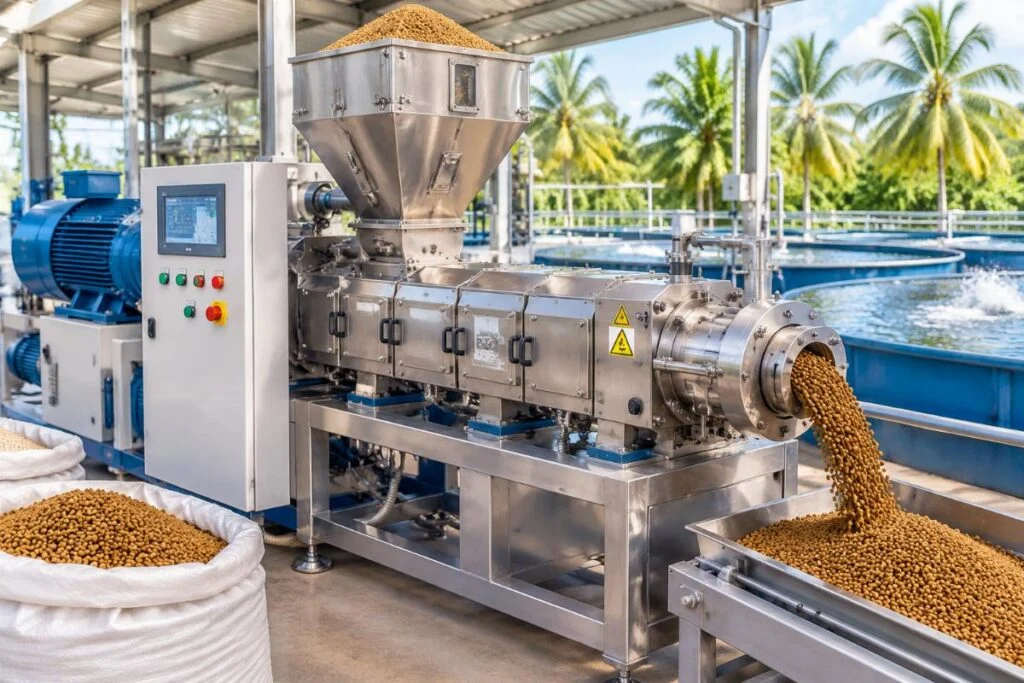
Bigger extruders often destroy pellet density and waste power on unstable grids.
For Ghanaian aquaculture producers, selecting the right Fish feed machine Ghana requires matching extruder capacity to pond scale, adapting voltage cabinets to local grid fluctuations, and choosing between DS70 and DS85 models based on floating or sinking feed requirements. A properly sized turnkey line prevents inverter burnout and ensures consistent protein gelatinization.
Walking through a humid production facility years ago, I used to think that as long as a twin-screw extruder hit its nameplate output, the job was done. That illusion shattered during a tilapia sinking feed project in the Middle East. We shipped a standard configuration without verifying the severe voltage drops at the site. The moment the main drive engaged, the inverter burned out instantly. We ended up replacing the entire electrical cabinet at a mid-six-figure cost. Since that expensive lesson, I never approve a Fish feed machine Ghana order without scrutinizing the local water quality, grid stability, and raw material protein ratios. Machines deployed in tropical, high-humidity environments must withstand severe electrical and mechanical stress to survive.
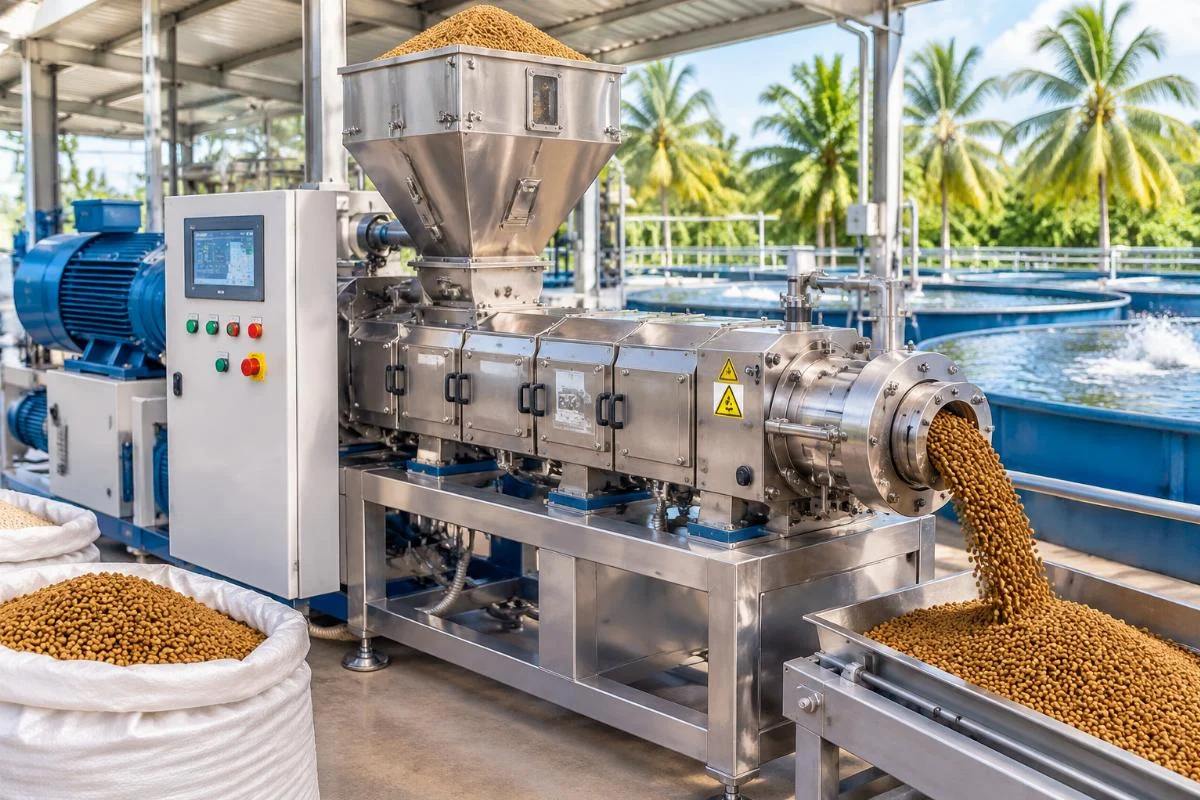
Let us break down the technical specifications and budgeting realities you need to navigate before importing your next line.
What Capacity Fits Your Farm Scale?
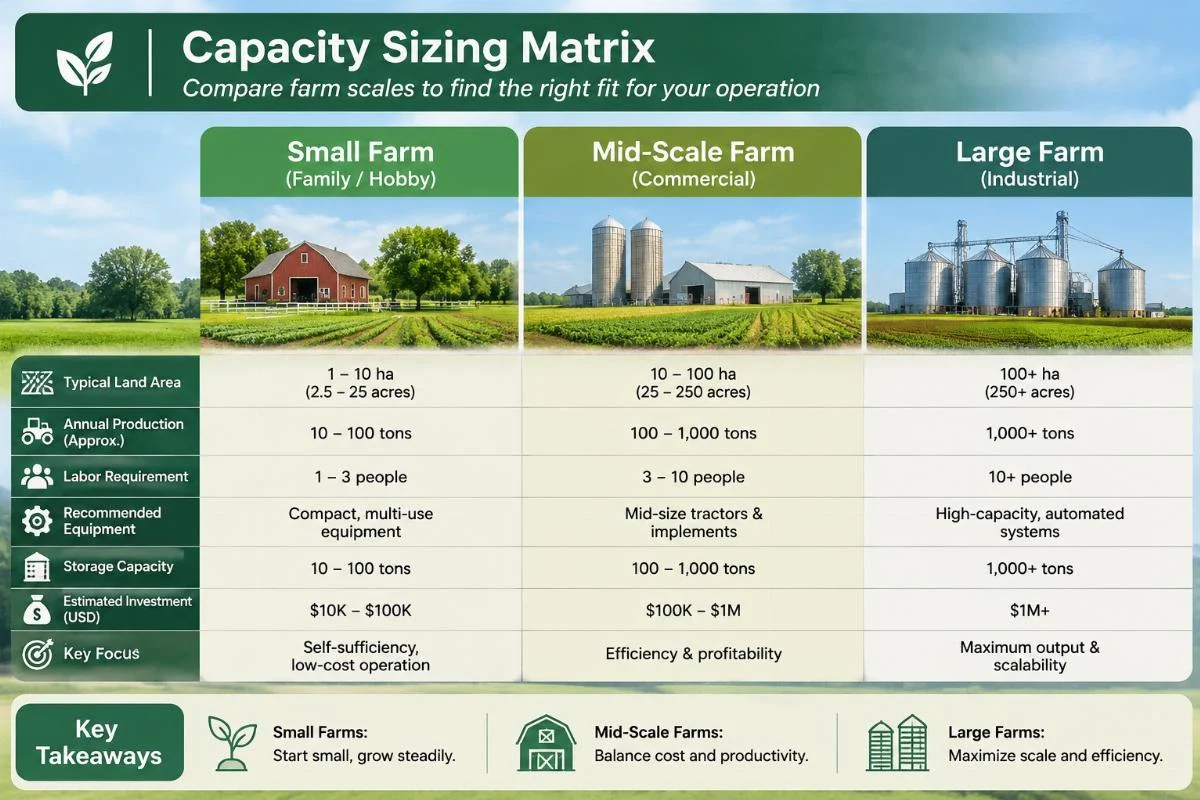
Matching extruder throughput to your actual pond biomass prevents severe energy waste and pellet quality degradation.
Many buyers assume that purchasing the highest capacity Fish feed machine Ghana available will future-proof their operation. In reality, oversized extruders operating at partial load fail to generate sufficient shear heat, resulting in poor starch gelatinization and low water stability for floating pellets.
When sizing your line, consider the daily feeding volume and the specific growth stage of your target species.
| Farm Scale | Pond Area / Biomass | Recommended Capacity Tier | Operational Focus |
|---|---|---|---|
| Small Tilapia Farm | Entry-level biomass | Entry-level capacity | Basic voltage stabilization, manual drying |
| Mid-scale Catfish Line | Commercial pond clusters | Mid-tier capacity | High-protein screw configuration, automated drying |
| Commercial Hub | Massive regional output | Large capacity | Full auto-drying integration, continuous operation |
A West African catfish producer once attempted to run a massive commercial extruder on a small-scale farm. The machine ran substantially below its designed residence time. The pellets disintegrated in the water within minutes, causing severe feed waste and ammonia spikes in the ponds. By downsizing to a mid-tier capacity model, they achieved the necessary shear force to lock in the protein matrix, drastically reducing water pollution and feed conversion ratios.
How to Budget for a Turnkey Line?
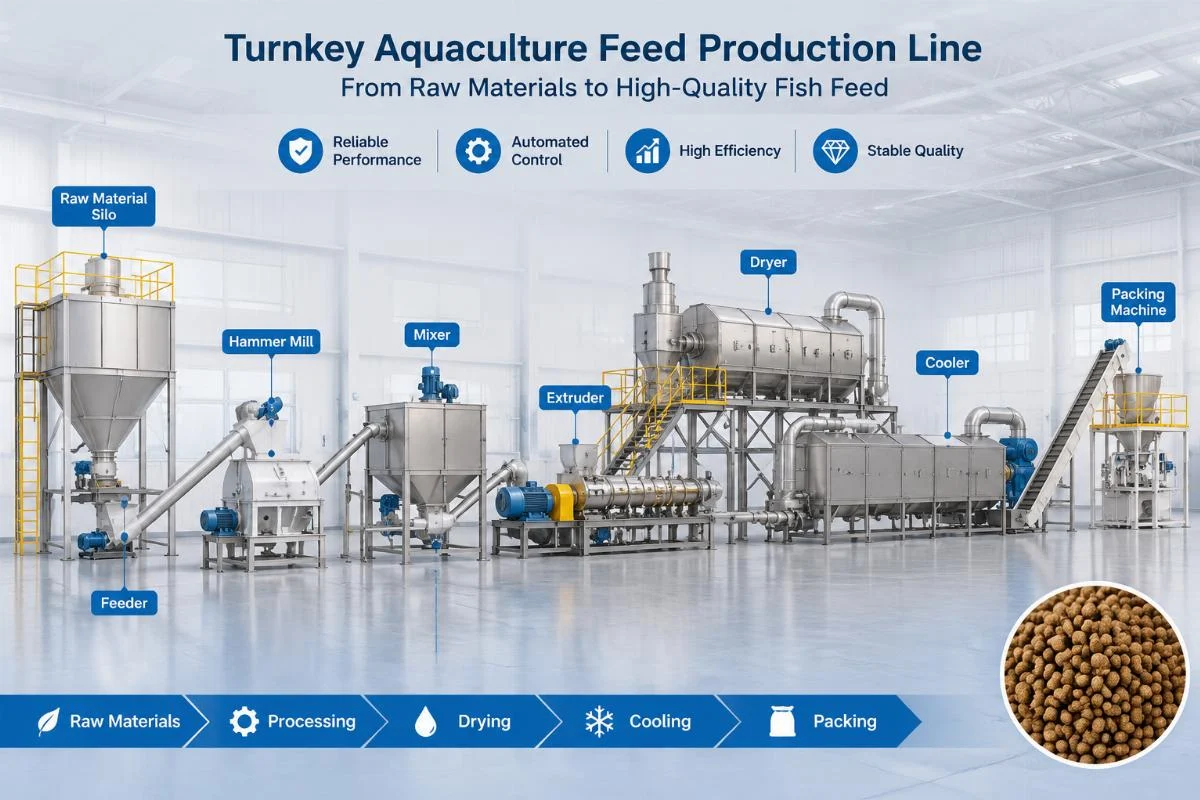
The initial invoice for the extruder is merely the baseline; true budgeting must account for the drying, cooling, and electrical adaptation ecosystem.
When evaluating the tilapia feed making machine price, buyers often fixate on the extruder barrel and motor. However, a functional Fish feed machine Ghana setup requires a complete thermal and mechanical chain. The extruder only shapes and cooks the feed; the subsequent drying and cooling stages determine the final moisture content and shelf life.
Budget allocation should follow this structural breakdown:
- Extrusion Host: The core twin-screw unit, including the barrel, screws, and main drive.
- Thermal Processing: Multi-layer mesh belt dryers and cooling silos, which consume the majority of the electrical and thermal energy.
- Electrical Adaptation: Customized control cabinets with heavy-duty stabilizers and frequency converters.
- Auxiliary Systems: Hammer mills, mixers, and packaging scales.
A buyer in East Africa once procured a bare-bones extruder to save on the initial tilapia feed making machine price. They skipped the specialized dryer and relied on sun-drying. The resulting moisture inconsistency led to massive aflatoxin contamination, destroying an entire season’s inventory. The cost of replacing the ruined feed was several times the savings from the initial equipment purchase. Investing in a full turnkey line with integrated drying ensures consistent pellet integrity and long-term viability.
Why Voltage Adaptation Matters?
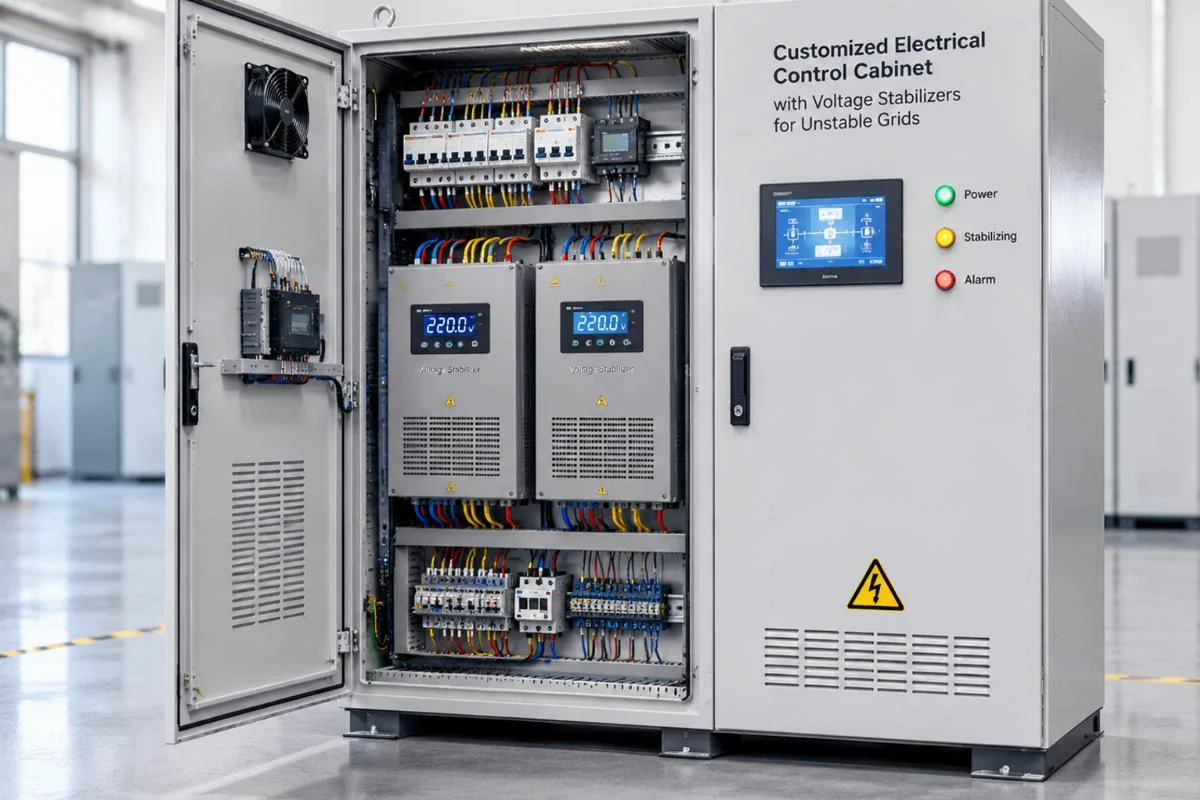
Standard electrical cabinets will fail catastrophically without customized voltage stabilization and heavy-duty inverters.
Regional grid data across Sub-Saharan Africa frequently shows severe voltage sags, harmonic distortions, and sudden phase losses. A standard Fish feed machine Ghana configuration designed for stable European or East Asian grids will instantly trip or burn out its sensitive electronic components under these conditions.
The danger lies in the screw torque requirement. During startup, a twin-screw extruder loaded with high-protein raw material demands a massive surge of current. If the grid voltage drops during this surge, the motor draws excessive amperage to compensate, melting the windings or destroying the variable frequency drive (VFD).
To mitigate this, your supplier must provide:
- Step-down/Step-up Transformers: Tailored to the exact local voltage baseline.
- Industrial Voltage Stabilizers: To smooth out rapid fluctuations before power reaches the control panel.
- Heavy-Duty VFDs: Specifically rated for high-torque, constant-torque extrusion applications, not standard fan/pump duties.
When we upgraded the electrical cabinets for a regional hub, we integrated custom CE-certified voltage adaptation modules. The site had previously experienced weekly inverter burnouts. After the upgrade, the electrical failures dropped to zero, and the equipment achieved extended service life meaningfully.
Which Model Suits Your Feed Type?
The choice between the DS70 and DS85 models dictates your screw speed, shear intensity, and final pellet buoyancy.
Selecting the correct Fish feed machine Ghana depends entirely on whether your market demands floating or sinking feed. The physical architecture of the screws and the barrel length-to-diameter ratio must align with your raw material’s protein ratio.
| Feature | DS70 Model | DS85 Model |
|---|---|---|
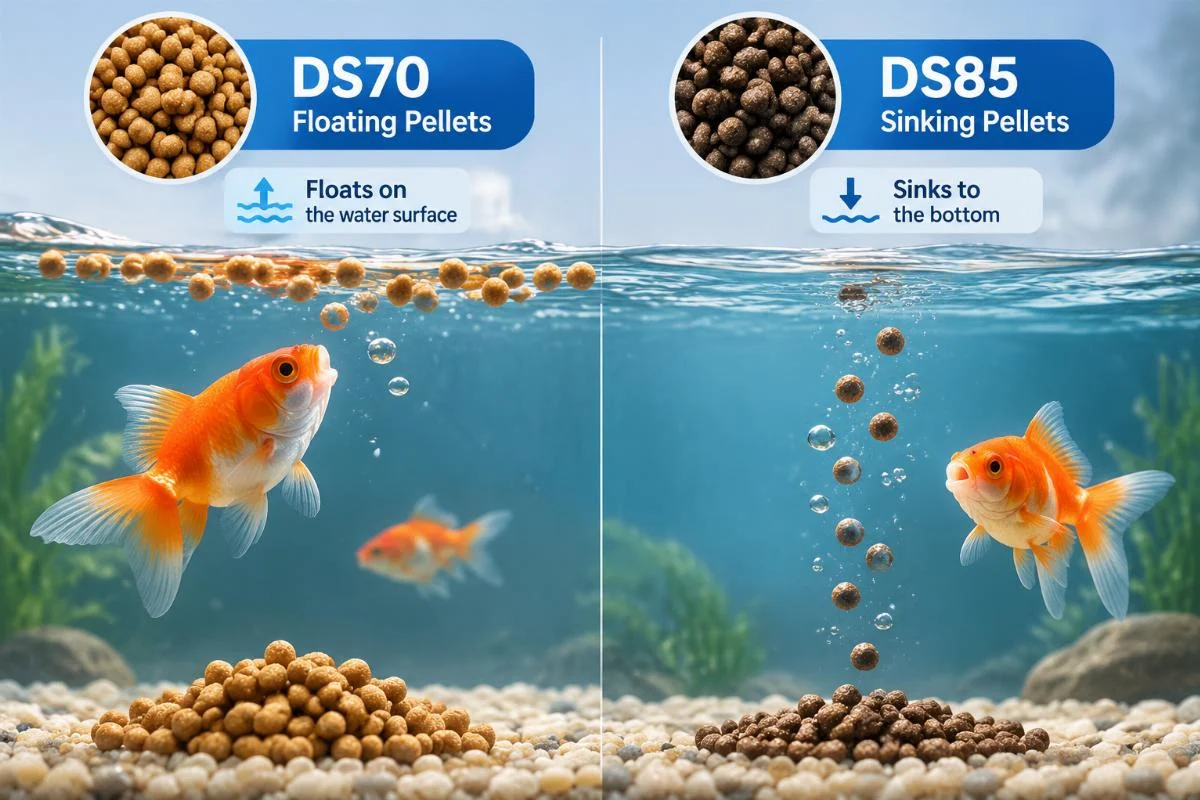
| Target Feed Type | Floating / Slow-sinking | Sinking / Fast-sinking |
| Screw Configuration | Moderate shear, high expansion | High shear, dense extrusion |
| Protein Ratio Handling | Standard plant-based ratios | High fishmeal / high-protein ratios |
| Pellet Density | Low density (expands significantly) | High density (minimal expansion) |
The DS70 excels at producing floating tilapia feed. The screw design allows for sufficient steam injection and pressure buildup at the die face, causing the moisture to flash off and expand the pellet upon exit.
Conversely, the DS85 is engineered for sinking catfish feed. High-protein recipes lack the starch required for natural expansion. The DS85 utilizes a high-shear screw configuration that mechanically compresses the dense protein matrix, ensuring the pellet remains heavy enough to sink rapidly while achieving complete cooking.
A commercial operator once tried to run a high-fishmeal sinking diet through a standard floating configuration. The pellets floated uselessly on the surface, leading to severe feed waste and water fouling. Switching to the DS85 with its specialized high-protein screw profile solved the density issue immediately, producing robust, fast-sinking pellets that stayed intact in the water column.
Conclusion
Sizing and adapting your extrusion line to local realities guarantees operational survival.
Selecting a Fish feed machine Ghana requires aligning extruder capacity with your pond biomass, budgeting for the complete thermal drying ecosystem, and enforcing strict voltage adaptation to protect against grid instability. Whether deploying the DS70 for floating tilapia diets or the DS85 for dense sinking catfish feed, matching the screw configuration to your protein ratios ensures consistent pellet quality and long-term profitability.