Fish Feed Technical Article
Fish Feed Extruder Factory Acceptance Test: Meiteng Manufacturer Checklist
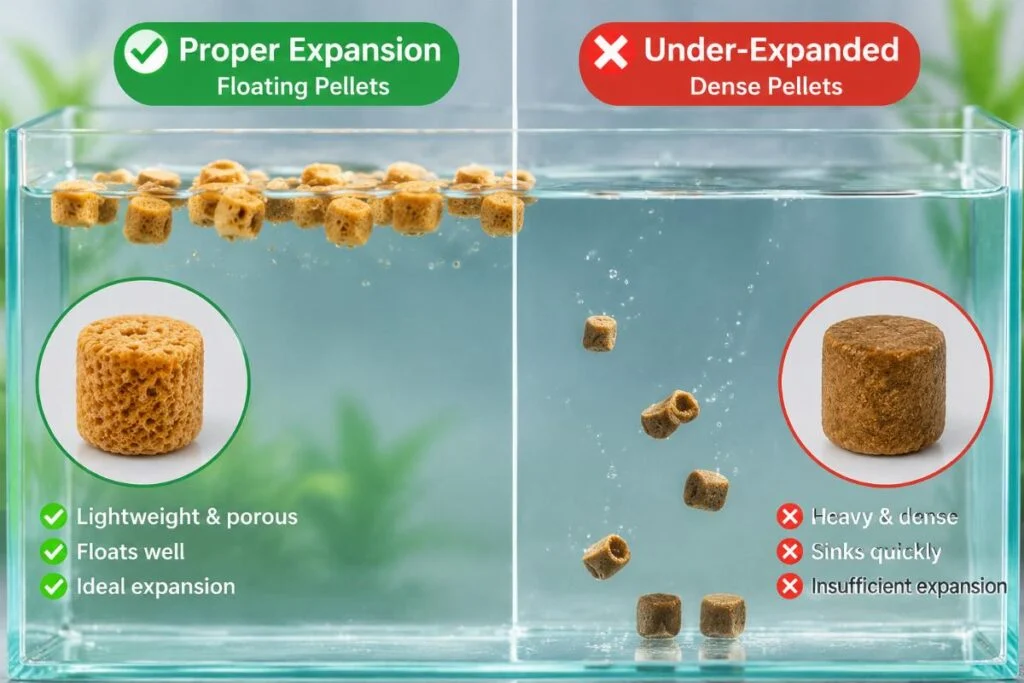
An empty-load run only proves the motor spins; it tells you absolutely nothing about whether your feed will float.
A successful Fish Feed Extruder FAT must go beyond empty-load runs; it requires rigorous loaded testing with actual formulas to verify floating rates, temperature uniformity, and screw clearances before the machine leaves the factory floor.
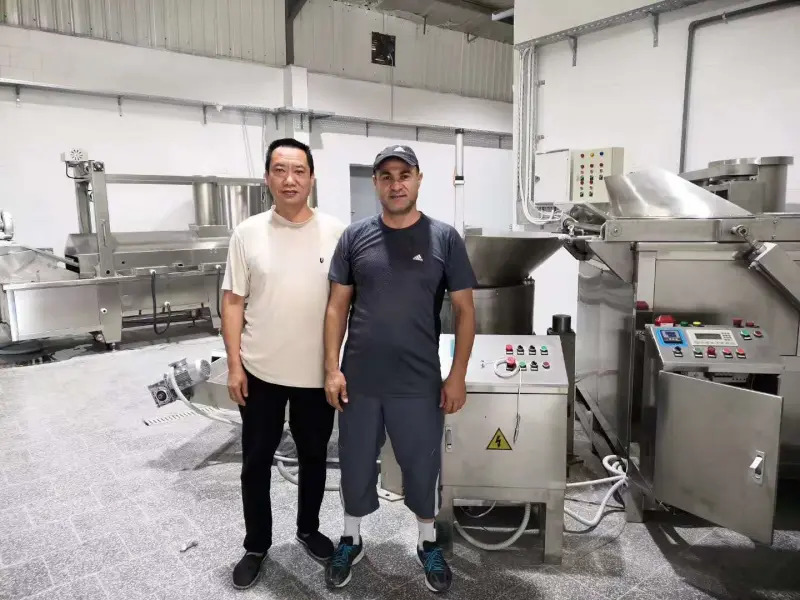
Years ago, at a trade show in Chicago, a North American buyer was highly interested in our twin-screw equipment. Before signing the contract, he grilled me on the details of the Fish Feed Extruder FAT. Having just transitioned from quality inspection to sales, I naively assumed that as long as the machine could run, it was fine. My checklist only included an empty-load test. When the equipment arrived in Texas and the client added raw materials, a substantial portion of the fish feed sank to the bottom, and the expansion degree completely missed the mark. The client rejected the shipment outright. I had to fly over overnight to reconfigure the die molds and recalibrate the thermal controls, costing the company a small fortune in travel and rework. That painful lesson burned into my mind: the temperature zone uniformity, screw gap precision, and loaded trial duration in a twin screw fish feed machine FAT checklist are not mere formalities; they are the absolute bottom line for survival.
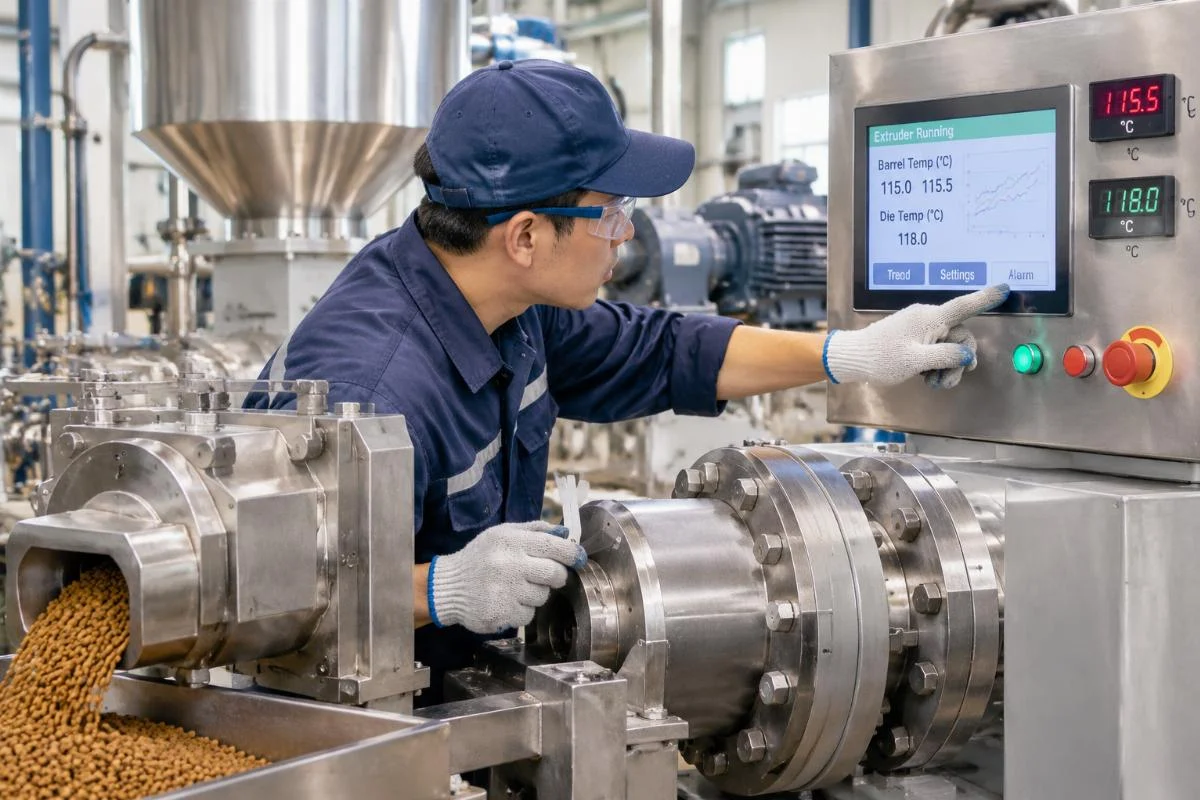
Let us break down the exact clauses and technical checkpoints you must enforce during the factory acceptance test for aqua feed extruder to ensure your investment actually produces floating feed.
Why Empty-Load Testing Fails in Fish Feed Extrusion?
Empty-load testing only verifies mechanical assembly and electrical continuity; it cannot simulate the rheological behavior of feed dough under high temperature and pressure.
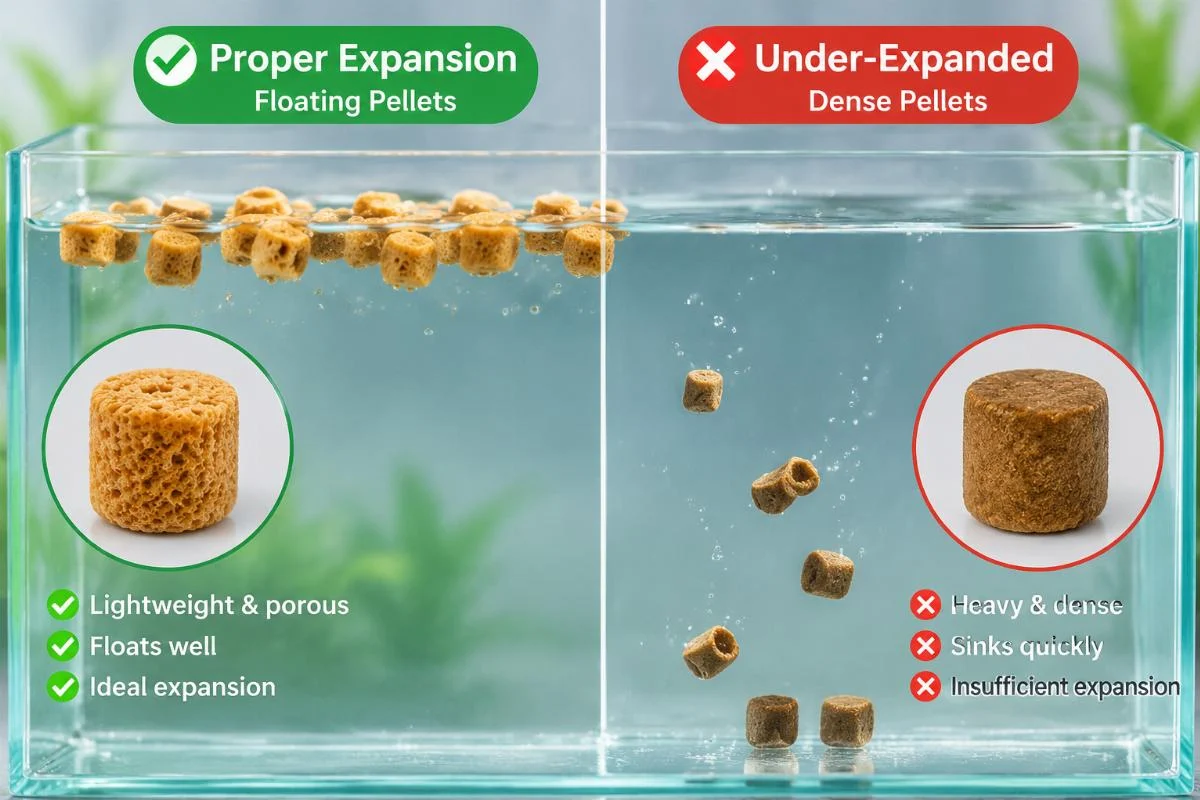
When a Fish Feed Extruder FAT relies solely on running the machine without raw materials, the internal friction, shear force, and starch gelatinization processes are entirely absent. The physical expansion of aquatic feed depends on the sudden pressure drop at the die face, which requires the dough to reach a specific plasticized state inside the barrel. Without actual feed formulas, you cannot observe the true floating rate or the structural integrity of the pellets.
Consider the Texas case I mentioned. The machine ran perfectly empty. But when the client used their specific local fish meal and corn flour blend, the material did not plasticize correctly. The result was a high sinking rate, rendering the feed useless for surface-feeding species. A proper factory acceptance test for aqua feed extruder must mandate the use of the buyer’s actual formula or a closely matched standard recipe to test the real-world expansion capability.
Risk Checklist for Empty-Load Only FAT:
- Expansion Verification: Unverifiable without actual dough viscosity.
- Floating Rate: Impossible to measure; sinking feed causes severe water quality issues.
- Die Face Flow: Uneven material distribution across the die holes cannot be detected.
- SME (Specific Mechanical Energy): Cannot be calculated without load.
What Are the Critical Temperature & Clearance Checks?
Uniform heating zones and precise screw gaps are the non-negotiable parameters that dictate consistent gelatinization and buoyancy.
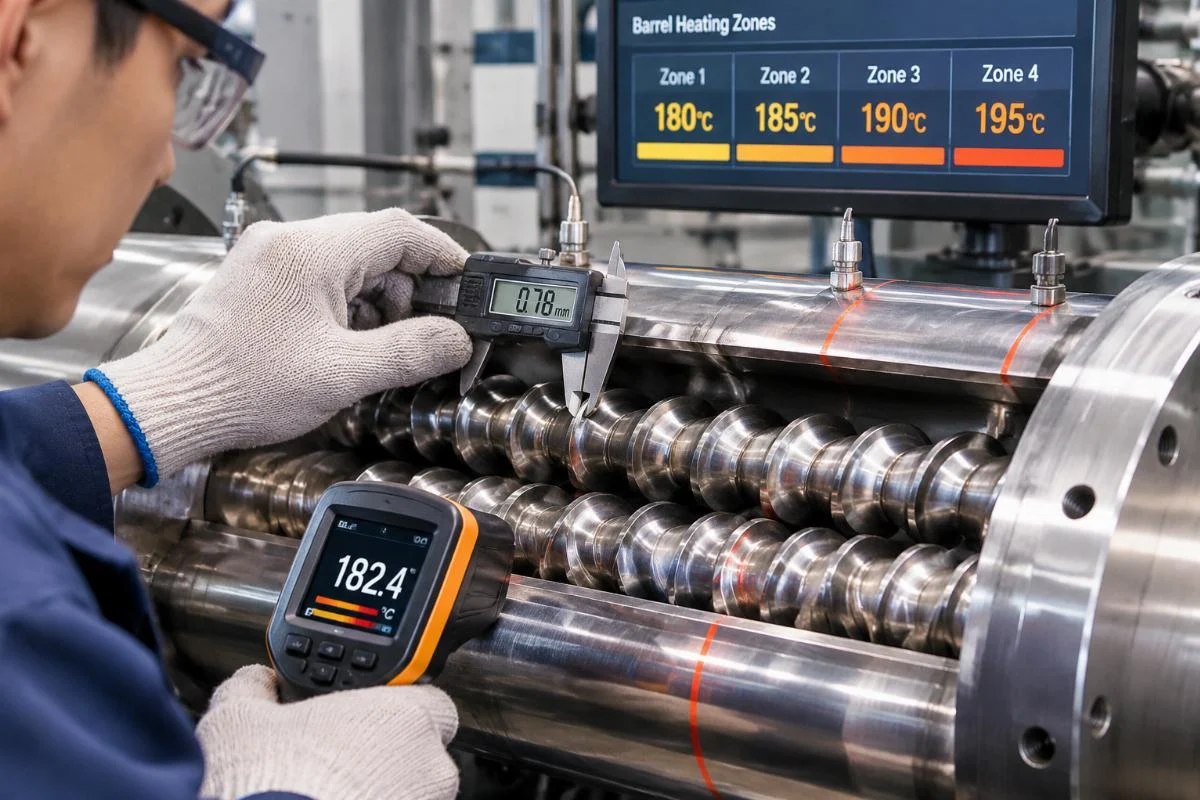
In a twin screw fish feed machine FAT checklist, you must scrutinize the thermal profile and mechanical tolerances. The barrel is divided into multiple heating zones. If the temperature variance across these zones is noticeable, the starch will not gelatinize uniformly, leading to pellets that are either too hard or too porous.
Furthermore, the clearance between the twin screws and between the screws and the barrel liner directly affects the shear force. If the gap is too wide, the material slips, and the necessary pressure for expansion is never built. If it is too tight, it causes excessive wear and overheating. During the Fish Feed Extruder FAT, the manufacturer must use feeler gauges to document these clearances at cold state, and then verify the thermal expansion compensation settings.
Critical Parameter Verification Matrix:
| Check Item | Basic Workshop Practice | Rigorous FAT Standard (Required) |
|---|---|---|
| Temperature Uniformity | Uncontrolled | Controlled (Zone-by-zone PID verification) |
| Screw Clearance | Self-reported | Verifiable (Measured with gauges, documented) |
| Die Hole Alignment | Sample-level | Full batch-level (Laser or optical check) |
| Thermal Insulation | None | Robust (Minimizes heat loss and energy waste) |
During my time troubleshooting in Texas, we found that the heating rings in the front zones were failing to maintain the setpoint once the cold dough entered, causing a massive temperature drop. The gelatinization degree plummeted. We had to upgrade the heating elements and adjust the PID parameters on-site. A thorough factory acceptance test for aqua feed extruder would have caught this thermal lag during the loaded run.
How Long Should the Loaded Trial Run Last?
A minimum continuous loaded run of several hours is mandatory to validate thermal stability, capacity, and pellet durability.
Rushing the loaded trial is a common mistake. Some factories run the machine with feed for merely an hour, declare it a success, and pack it up. However, a true Fish Feed Extruder FAT requires the machine to reach thermal equilibrium, which takes time. The metal components expand as they heat up, and the screw clearances change dynamically.
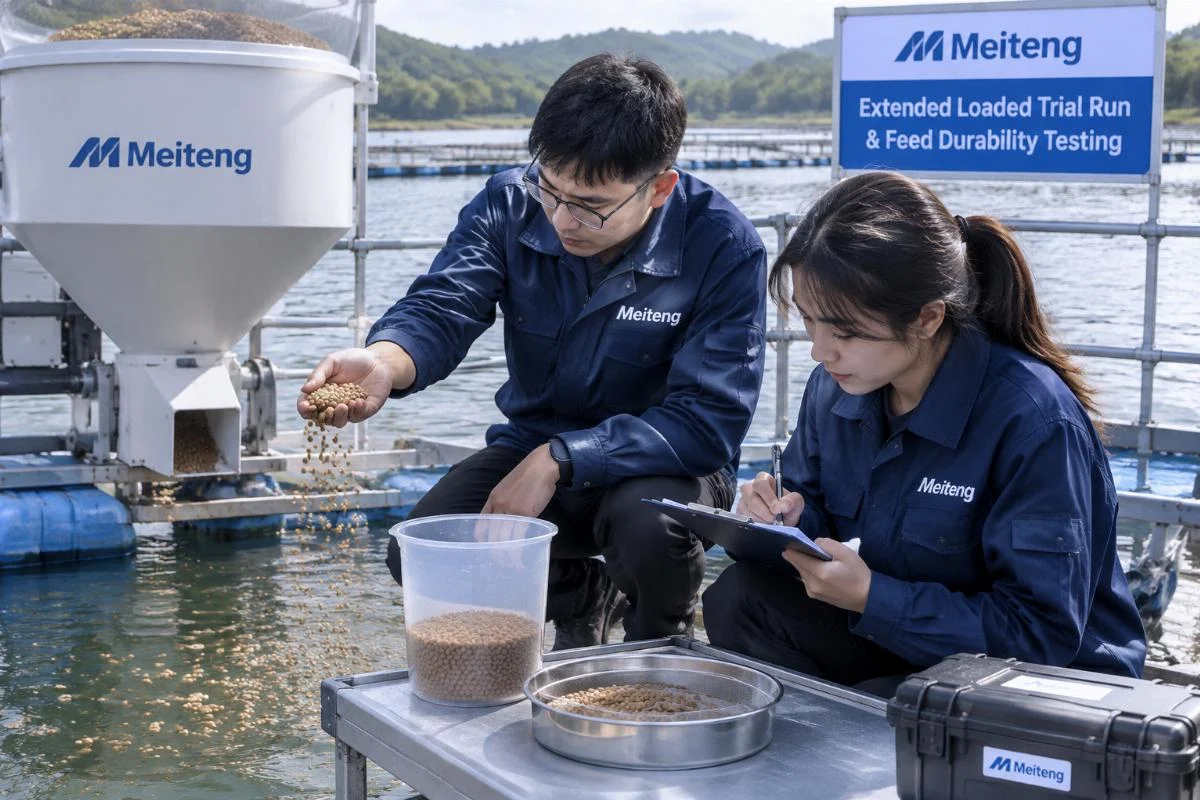
At Meiteng, our turnkey FAT process insists on extended continuous runs with real formulas. This is not just about proving the motor can handle the load; it is about verifying the entire system’s stability. We run the extruder long enough to produce multiple batches of pellets, allowing us to measure the floating rate after the drying process and check the durability index.
During this phase, we also conduct on-site formula debugging. If the local raw materials in your region have different moisture or protein contents, our engineers adjust the preconditioning parameters and steam addition right there on the factory floor. This ensures that when the machine arrives at your facility, the operators already have a proven, optimized recipe.
Loaded Trial Run Milestones:
- Cold Start & Feeding: Verify the feeder’s volumetric accuracy and preconditioner steam integration.
- Thermal Equilibrium: Monitor the main motor amperage and barrel temperatures until they stabilize.
- Pellet Sampling: Extract samples at regular intervals to test bulk density, floating rate, and moisture content.
- Capacity Validation: Ensure the throughput meets the guaranteed output without choking or excessive ungelatinized material.
Which Documents Must Be Verified Before Shipping?
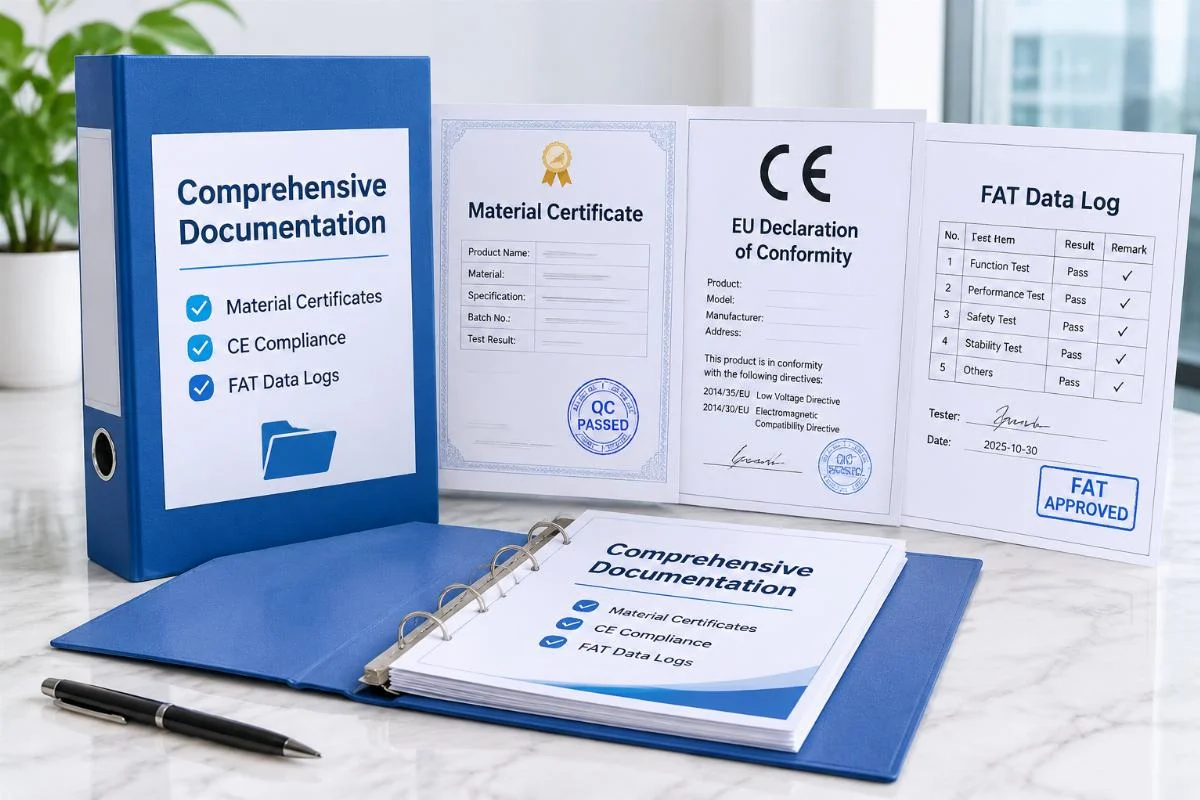
CE/ISO certificates, material traceability reports, and the signed FAT protocol are the legal and technical shields for your investment.
The physical machine is only half of the delivery. The documentation package is what clears customs, ensures food safety compliance, and provides a baseline for future maintenance. When reviewing the Fish Feed Extruder FAT dossier, you must demand verifiable proof of construction and safety.
First, the food-contact parts, especially the twin screws and barrel liners, must be made of certified food-grade stainless steel. You need the material mill certificates to prove this. Second, the electrical cabinets must comply with international safety standards, complete with wiring diagrams and CE compliance declarations.
Finally, the FAT sign-off sheet is crucial. This document must contain the actual recorded data from the loaded trial run—not just a blank template. It should include the motor load percentages, the final floating rate percentage of the sampled pellets, and the temperature logs from the data logger. If the manufacturer refuses to provide the raw data from the loaded run, consider it a massive red flag.
Mandatory Document Checklist:
- Material Certificates: 304/316 stainless steel mill test reports for food-contact parts.
- Safety Compliance: CE declaration of conformity and electrical schematics.
- FAT Data Log: Recorded temperature, amperage, and throughput data from the loaded run.
- Wear Parts List: Detailed manual with part numbers for screws, barrels, and die molds.
Conclusion
A rigorous Fish Feed Extruder FAT is the only reliable barrier between a profitable production line and a costly on-site rejection. By demanding loaded testing with actual formulas, verifying thermal and mechanical tolerances, and securing complete data-backed documentation, you ensure the equipment will deliver the required floating rates and capacity from day one. Do not settle for empty-load promises; insist on proven performance before the machine is crated.