Fish Feed Technical Article
DS65 Floating Fish Feed Extruder Manufacturer for Small Farm

Most buyers assume the extruder barrel alone dictates whether feed floats, but final moisture control is the real hidden factor.
Selecting the right floating fish feed extruder for a small farm requires matching twin-screw extrusion parameters with a complete drying system, rather than just purchasing the cheapest main host.
Running aquaculture feed lines out of Jinan for years, I have seen countless small farm owners trip over the exact same issue. A client in West Africa bought a standalone machine to save budget, skipped the integrated drying setup, and relied on sun-drying. When the rainy season hit, the feed moisture stayed dangerously high, causing massive mold growth and fish mortality. The core issue is that starch gelatinization and moisture reduction must work in tandem. If you only focus on the main unit, your final product will sink or spoil.
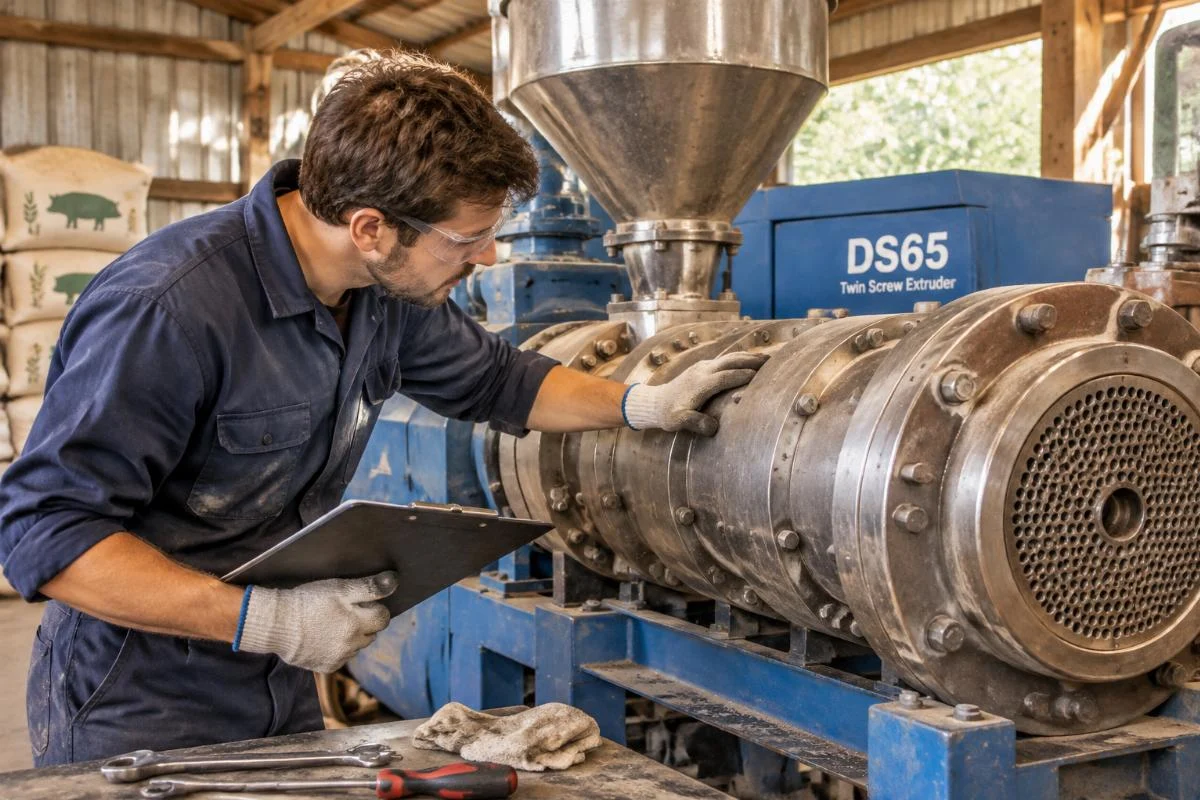
Getting the floating fish feed extruder setup right means looking beyond the host price and understanding the entire thermal and mechanical process.
Why Does Fish Feed Sink? The Hidden Role of Moisture and Extrusion
Feed sinkage is rarely a machine failure; it is almost always a moisture and gelatinization mismatch.
Many startup producers blame the floating fish feed extruder when pellets drop to the bottom, but the root cause usually lies in inadequate starch expansion and poor post-processing moisture control. During the extrusion process, high shear and temperature are required to melt the starch matrix. If the thermal energy is insufficient, the starch does not fully gelatinize, meaning the pellet lacks the internal porous structure needed to trap air upon cooling.
Furthermore, even if the pellet expands perfectly inside the barrel, improper drying ruins the buoyancy. A Southeast Asian startup initially struggled with sinking feed until they realized their sun-drying method left the core moisture too high. By upgrading to a controlled drying environment, they stabilized the floatability. The moisture content must drop to a specific low threshold to lock in the expanded structure and prevent water absorption during storage.
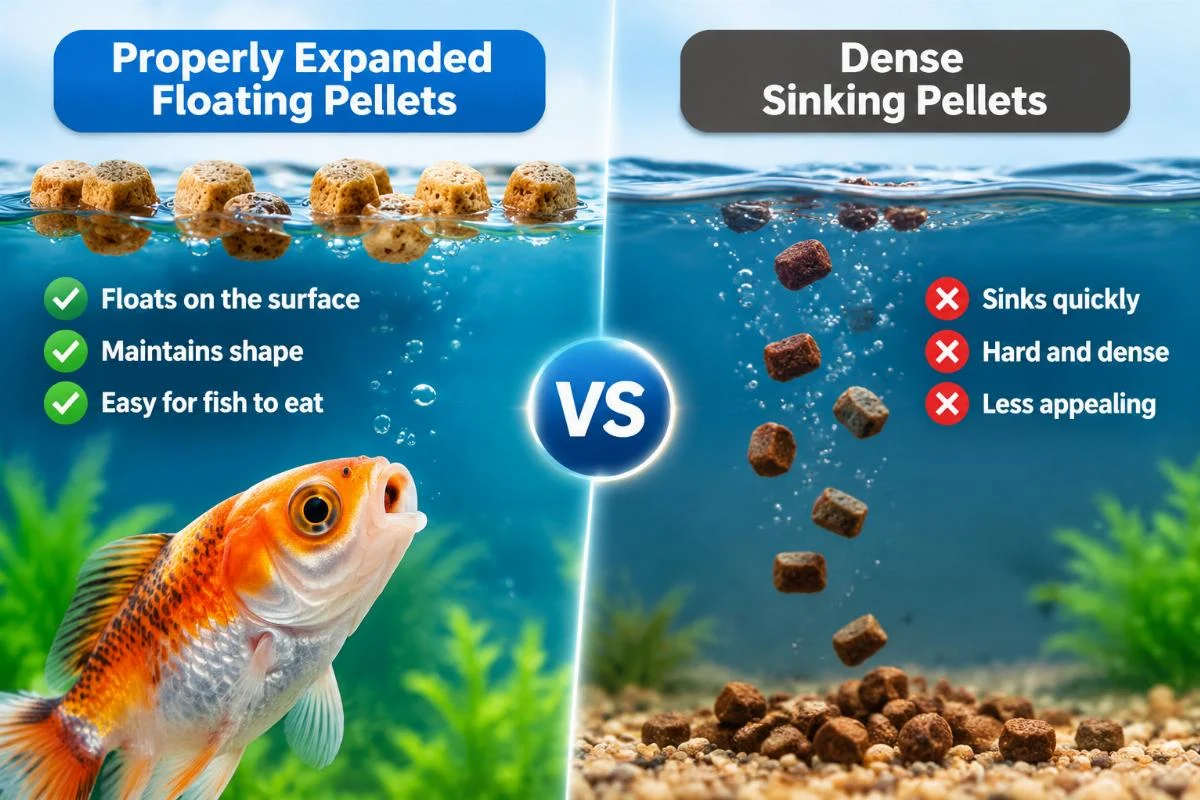
Ultimately, achieving perfect buoyancy relies on the synergy between the floating fish feed extruder’s thermal profile and the subsequent drying efficiency, not just the barrel pressure.
DS65 Twin-Screw vs. Single-Screw: Which Fits a Small Farm?
Twin-screw technology provides the precise shear and temperature control necessary for high-starch floating recipes, which single-screw models simply cannot match consistently.
When sizing a small fish farm feed extruder, the choice between screw configurations dictates your recipe flexibility. Single-screw machines rely on friction and basic compression, making them suitable for simple sinking feeds but highly unstable for floating formulations. The DS65 twin screw extruder, however, uses intermeshing screws to generate controlled shear, ensuring uniform cooking even with varying raw material moisture.
| Parameter | Single-Screw Setup | DS65 Twin-Screw Setup |
|---|---|---|
| Shear Control | Uncontrolled | Controlled |
| Starch Gelatinization | Sample-level | Full batch-level |
| Recipe Flexibility | Basic | Robust |
| Moisture Tolerance | Vulnerable | Resistant |
| Floating Feed Stability | Unstable | Noticeably extended |
A Latin American small farm initially tried a single-screw setup for a high-starch recipe. The feed consistency varied wildly, and the floating rate dropped noticeably during humid weeks. After switching to a DS65 twin screw extruder, the shear temperature stabilized, ensuring every pellet achieved the required expansion. The self-wiping action of the twin screws also prevents material stagnation, which is critical when processing sticky, high-moisture aquaculture formulas.
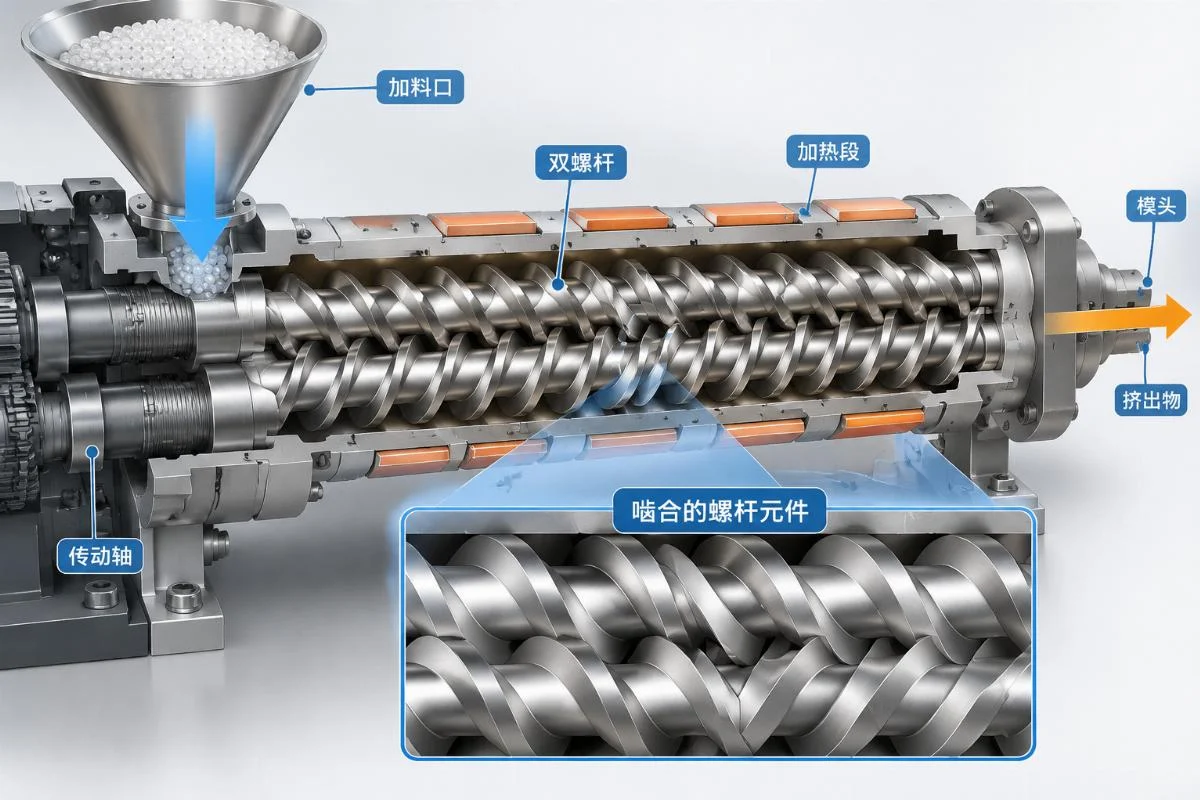
For any small farm aiming to produce reliable floating feed, the DS65 twin screw extruder is the only logical choice to guarantee consistent gelatinization and buoyancy.
The Drying Line: Why You Cannot Skip It to Save Budget
Skipping the integrated dryer to save upfront costs will inevitably destroy your final product quality and shelf life.
The most common trap for new buyers is treating the floating fish feed making machine as a standalone purchase. They assume the extruder does all the work. However, extruded pellets exit the die with high internal moisture. Without immediate and controlled drying, the pellets will collapse, lose buoyancy, and become breeding grounds for mold. Sun-drying is entirely unviable in humid climates, as ambient conditions fluctuate wildly, preventing the moisture from dropping to the safe threshold.
A Middle East aquaculture startup learned this the hard way. They bought a high-capacity host but relied on open-air drying. During summer, the surface dried quickly, trapping moisture inside. The pellets looked fine initially but absorbed water rapidly in the pond, sinking within hours. By integrating a multi-layer continuous dryer, they achieved uniform moisture reduction. The drying line ensures that the internal structure of the pellet is locked in, preserving the air pockets created by the floating fish feed extruder.
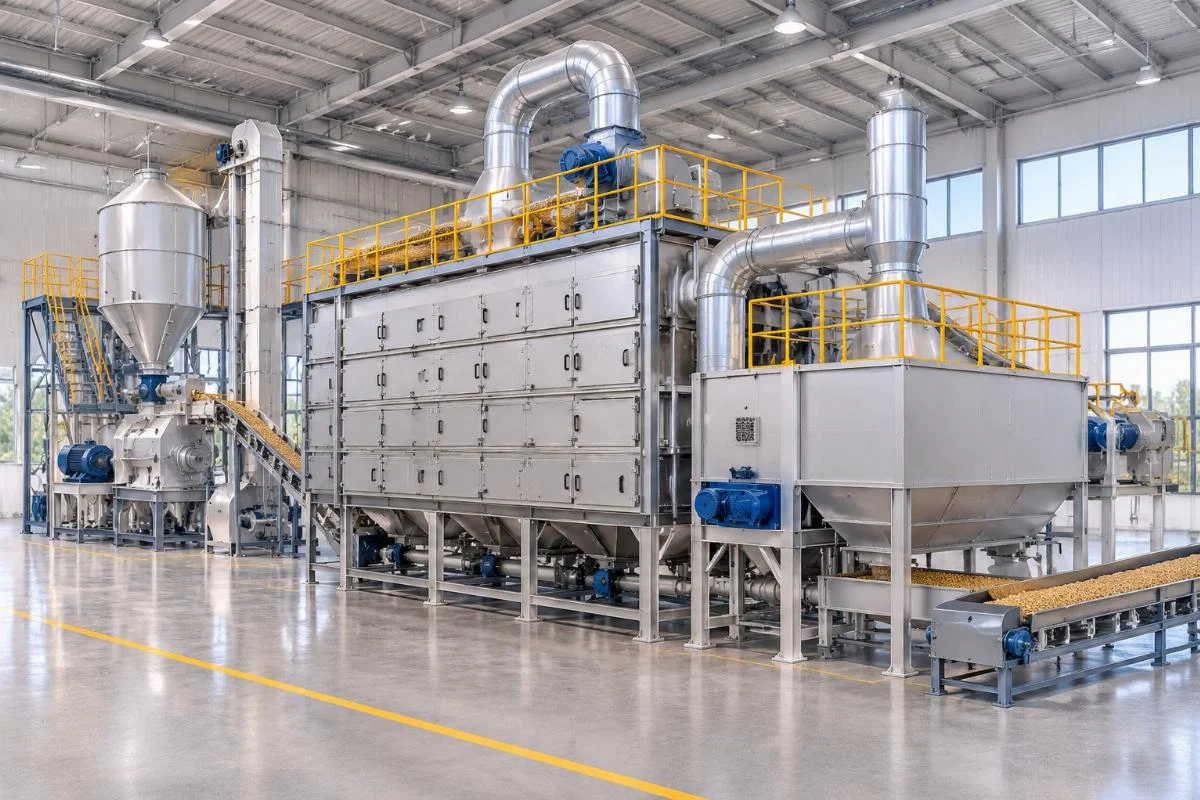
Investing in a complete drying and cooling line alongside your floating fish feed making machine is non-negotiable for producing stable, floatable, and safe aquaculture feed.
How to Match Die Holes and Formulas for Perfect Pellets
Die diameter and barrel temperature must strictly align with your specific raw material moisture to achieve the correct pellet size and expansion rate.
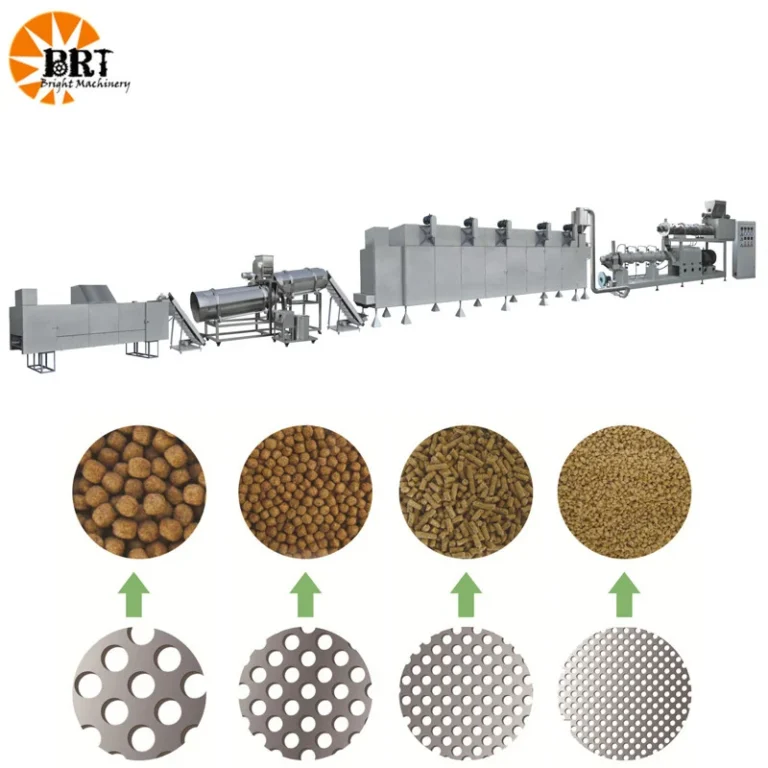
Operating a floating fish feed extruder is not a set-and-forget process; it requires precise calibration between the hardware and the recipe. The ratio of the die hole diameter to the final pellet size, combined with the barrel temperature profile, determines how the starch matrix expands upon exiting the die. If the temperature is too low for a given formula, the pellet will be dense. If the die holes are mismatched with the formula’s viscosity, the machine will choke or produce irregular shapes.
Consider a scenario where a farm switches from a fishmeal-heavy formula to a high-plant-protein mix. The new formula requires higher shear and a different temperature zone setup to achieve the same gelatinization. Adjusting the barrel temperature and selecting the correct die plate ensures the floating fish feed extruder maintains the necessary pressure. Furthermore, the raw material moisture entering the machine must be tightly controlled; if the preconditioner adds too much water, the extruder cannot generate enough frictional heat, resulting in poorly expanded, sinking feed.
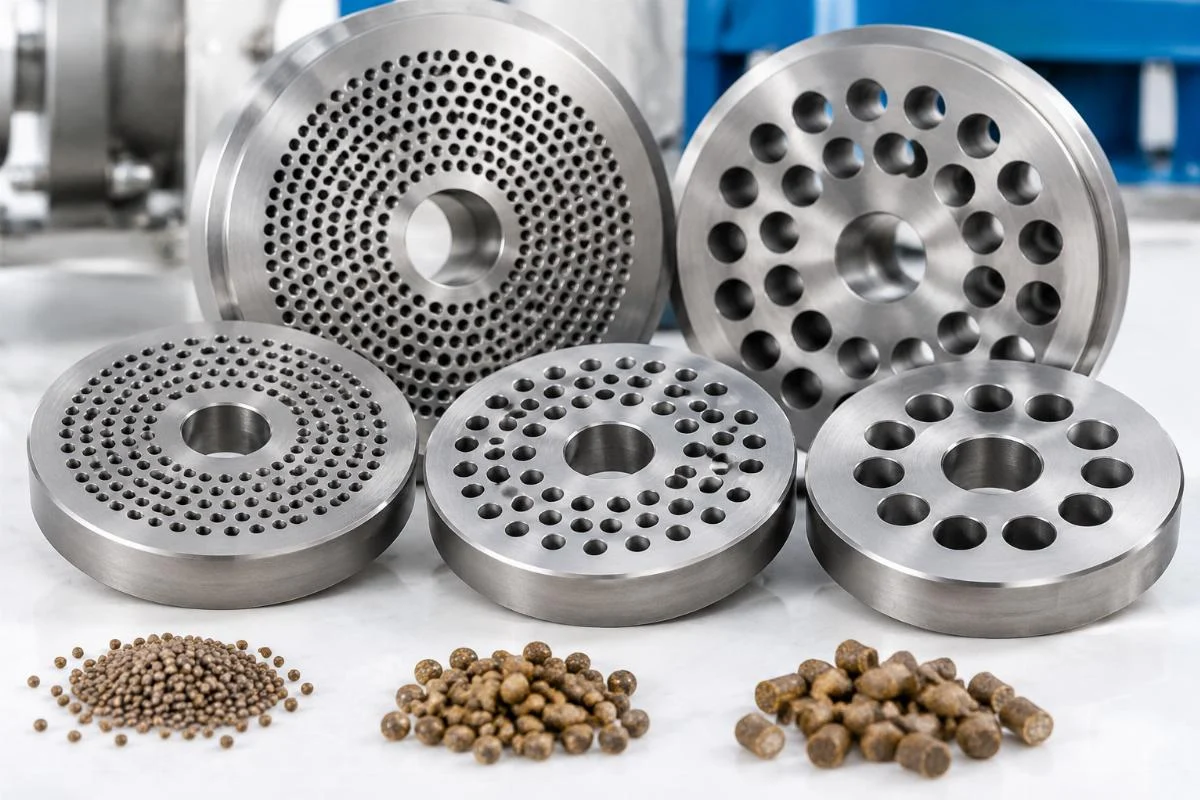
Mastering the floating fish feed extruder means continuously balancing die specifications, temperature zones, and formula moisture to guarantee every pellet floats perfectly.
Conclusion
Buoyancy is born from thermal precision and moisture control, not just barrel pressure.
Selecting the right equipment requires matching twin-screw extrusion parameters with a complete drying system to ensure starch gelatinization and safe moisture levels. By understanding these hidden variables, small farm producers can avoid costly spoilage and produce consistently floating feed.