Fish Feed Technical Article
Do Fish Feed Line Suppliers Send Engineers for Installation Abroad?

Saving on dispatch fees is the fastest way to bankrupt a new aquaculture project.
Yes, reputable providers of fish feed line installation abroad absolutely send engineers overseas. Top-tier manufacturers include on-site dispatch in turnkey packages to guarantee precise temperature control, screw alignment, and formula calibration, preventing catastrophic line failures and ensuring immediate operational success.
I spent years overseeing extruder quality inspections in Jinan workshops before transitioning to foreign trade. The hardest pill to swallow was watching buyers intentionally skip installation fees, only to face total operational paralysis. I recall a West African buyer who purchased a medium-capacity floating feed line and strictly refused engineer dispatch. When the equipment arrived, their local team attempted assembly without professional guidance. The barrel temperatures were set incorrectly, causing the screws to jam and the dies to block completely. The entire production line was paralyzed for weeks, resulting in a mid-six-figure loss before the manufacturer was forced to fly a technician over. I spent half a month in a sweltering, forty-degree Celsius factory troubleshooting the thermal profiling and mechanical alignment to restore production. That现场救火 experience cemented my belief that turnkey engineering is never just a marketing phrase; physical tuning requires tactile, on-site expertise.
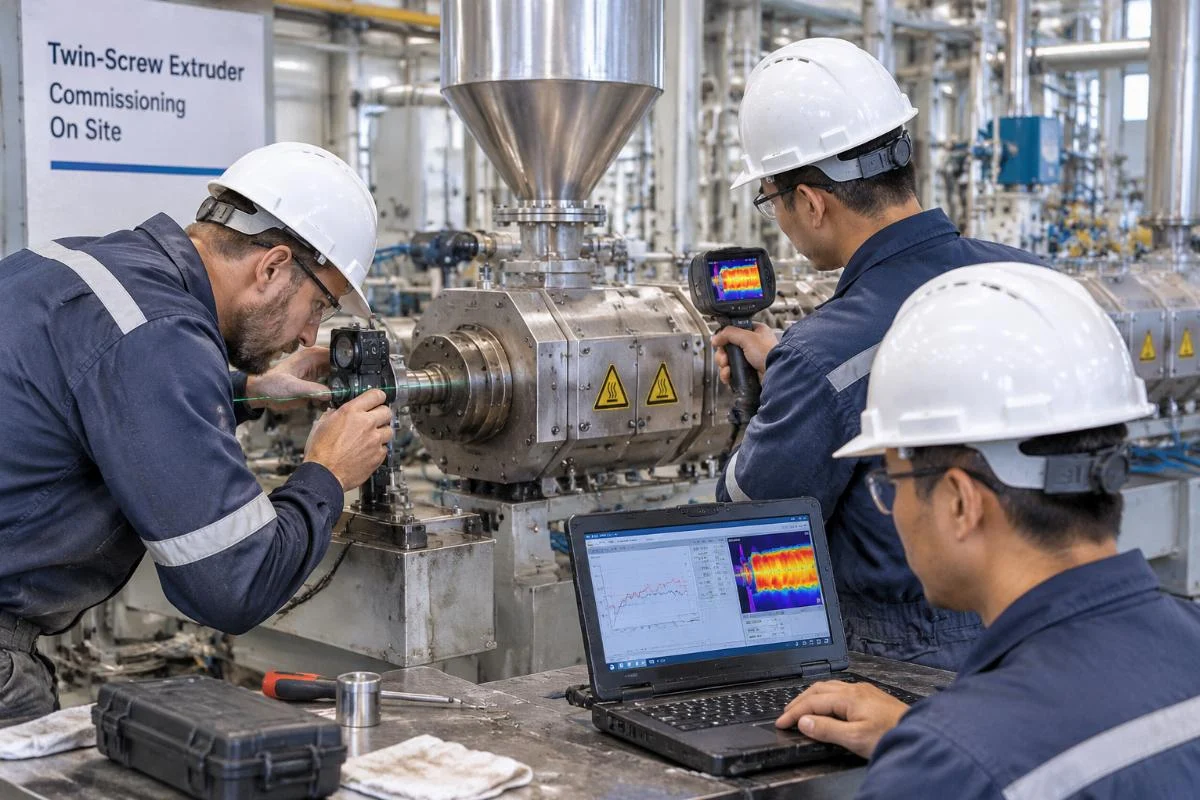
Let us break down the realities of overseas dispatch, the hidden risks of DIY assembly, and the long-term financial impacts of professional commissioning.
Do Suppliers Actually Send Engineers Overseas?
Yes, dispatching technicians is a standard component of comprehensive turnkey packages for serious manufacturers.
When sourcing a fish feed line installation abroad, buyers often encounter varying levels of support. Some suppliers merely offer remote video guides, while others commit to physical presence. The decision to dispatch engineers is heavily tied to the complexity of twin-screw extrusion technology. Unlike simple single-shaft machines, twin-screw systems require precise synchronization of screw elements, barrel heating zones, and die pressure.
Reputable manufacturers understand that a machine sitting in a container is useless if it cannot produce viable pellets. Therefore, they include engineer dispatch to handle mechanical alignment, electrical safety checks, and thermal profiling. This ensures that the equipment operates within the strict parameters required for aquaculture feed production.
| Support Level | Mechanical Alignment | Thermal Profiling | Formula Calibration | Operator Training |
|---|---|---|---|---|
| Remote Guide Only | Uncontrolled | Uncontrolled | Uncontrolled | None |
| Basic Dispatch | Standard | Standard | Uncontrolled | Basic |
| Full Turnkey | Controlled | Controlled | Controlled | Intensive |
A Southeast Asian startup recently opted for a full turnkey service for a medium-capacity floating feed line. The dispatched engineers spent several days on-site, smoothly calibrating the thermal zones and mapping the formula moisture-to-temperature requirements. The result was a high first-pass yield right from the initial trial runs.

What Happens If You Skip Professional Installation?
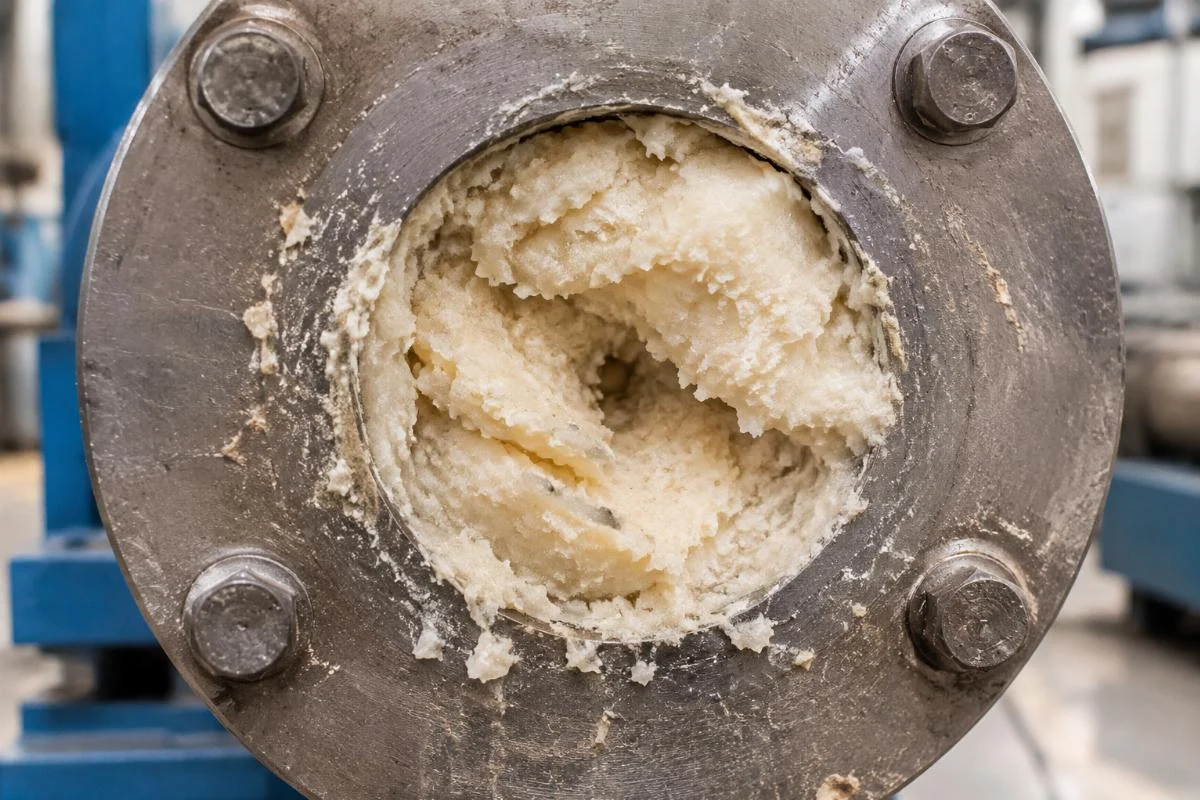
DIY assembly of complex extrusion lines frequently leads to screw jams, die blockages, and extended paralysis due to improper thermal tuning.
The most common counter-intuitive view in procurement is that saving installation fees cuts costs. The reality is that it causes massive revenue loss from line paralysis. Remote video guides simply cannot replace the physical tuning of barrel temperatures and die pressure, which requires on-site tactile experience.
When local teams attempt to install a fish feed line installation abroad without expert supervision, several critical errors occur:
- Screw Element Misalignment: The internal configuration of screw elements dictates the shear and cooking process. If placed in the wrong order or not seated perfectly, the motor will overload, or the material will degrade inside the barrel.
- Die Pressure Mismatch: Floating fish feed requires specific expansion ratios. Without an engineer to adjust the die face pressure and cutter speed, the pellets will either sink when they should float, or shatter into dust.
- Thermal Zone Imbalance: Aquaculture formulas are highly sensitive to starch gelatinization. Incorrect heater band placement or sensor calibration leads to undercooked feed, which causes severe digestive issues for the fish.
A Latin American expansion project initially attempted to bypass professional dispatch to save on upfront capital. The local staff managed to assemble the physical components, but the thermal profiling was entirely off. The starch never fully gelatinized, resulting in a massive batch of wasted raw material and a water stability test failure. They eventually had to call in experts for an intensive training and recalibration period to salvage the investment.
What Does the On-Site Commissioning Process Involve?
Engineers handle mechanical alignment, thermal profiling, and formula-specific die pressure calibration to ensure the line meets international hygiene and performance standards.
A proper fish feed line installation abroad goes far beyond bolting machines to the floor. It is a systematic process governed by strict commissioning checklists.
The process typically follows these critical phases:
- Mechanical and Electrical Verification: Engineers verify the concentricity of the main motor, gearbox, and screw shafts. They also test all electrical safety interlocks and grounding systems to prevent catastrophic short circuits in humid factory environments.
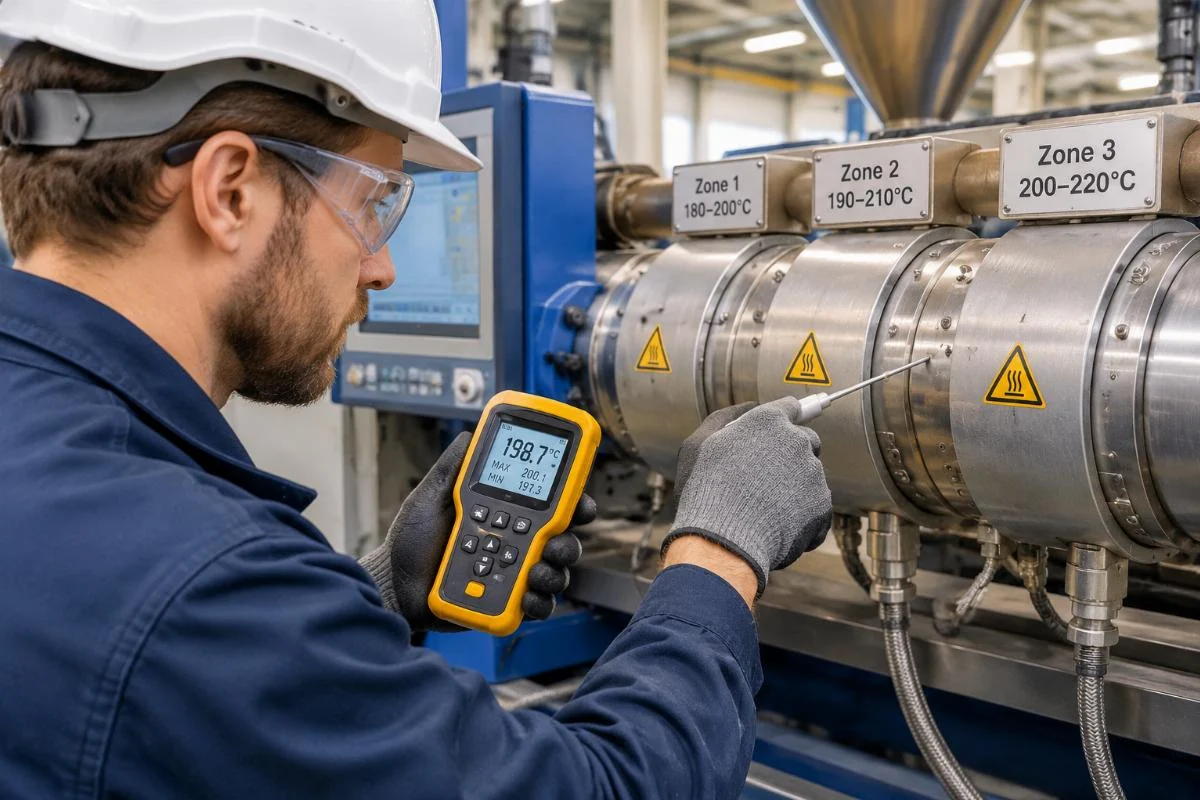
- Thermal Profiling and Sensor Calibration: Every heating zone on the barrel is tested. Engineers use pyrometers to verify that the actual barrel temperature matches the PLC display, adjusting PID parameters to eliminate thermal lag.
- Formula Moisture-to-Temperature Mapping: This is the core of aquaculture feed production. Engineers run trial batches, adjusting the steam conditioning and barrel temperatures based on the specific moisture content of the local raw materials (like cassava or corn meal).
- Die Pressure and Cutter Synchronization: For floating feed, the engineer adjusts the die plate temperature and cutter shaft speed to ensure uniform pellet size and air-cell expansion.
Meiteng’s approach to this phase reflects deep industry expertise. With CE and ISO certified twin-screw extruders, the on-site commissioning includes rigorous formula development support. The engineers do not just start the machine; they work with the client’s nutritionists to adapt the recipe to the machine’s specific shear profile, ensuring optimal pellet durability and water stability.
How Does Engineer Dispatch Impact Long-Term ROI?
Upfront installation costs are offset by immediate stable production, reduced waste, and trained local operators who can maintain the line efficiently.
Procurement teams often focus on the initial capital expenditure, viewing engineer dispatch as an optional luxury. However, when analyzing the total cost of ownership, the return on investment becomes undeniable.
First, consider the cost of raw material waste. A single day of failed trial runs due to improper calibration can waste tons of expensive fishmeal, soybean meal, and vitamins. The financial bleed from ruined batches quickly eclipses the cost of a flight and hotel for a technician.
Second, the speed to market is crucial. A professionally commissioned fish feed line installation abroad achieves stable commercial production within days, rather than weeks or months of frustrating trial and error. This allows the producer to start fulfilling contracts and generating revenue immediately.
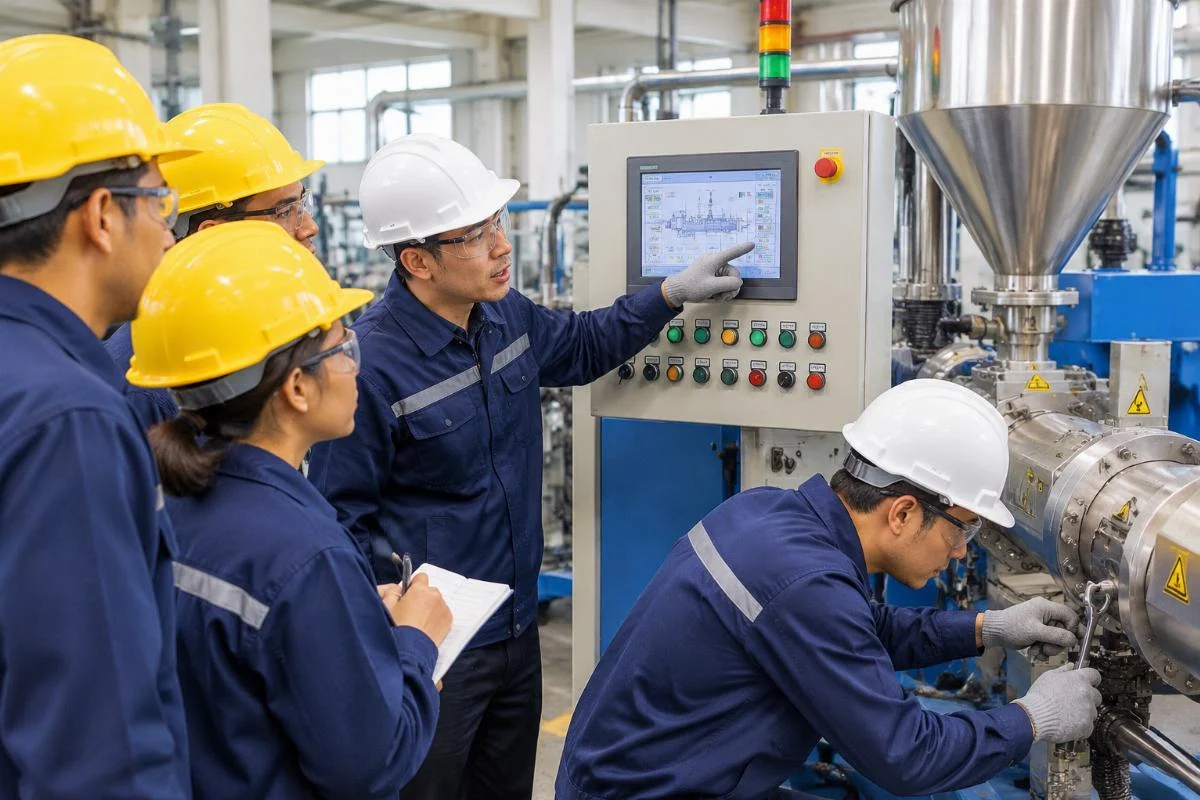
Finally, the human element. The most valuable asset left behind after the engineers depart is a highly trained local team. Meiteng’s turnkey service includes intensive operator training, covering not just how to run the PLC, but how to listen to the gearbox, smell the cooking process, and perform preventative maintenance. This knowledge transfer significantly extends the service life of the equipment and reduces reliance on expensive external support for minor issues.
Conclusion
Professional dispatch is the only reliable bridge between equipment delivery and commercial aquaculture feed production.
Attempting to bypass on-site engineering for a fish feed line installation abroad inevitably leads to mechanical failures, thermal miscalibration, and severe financial losses. Reputable manufacturers integrate comprehensive commissioning and operator training into their turnkey packages, ensuring that the complex physics of twin-screw extrusion are mastered on day one. Investing in expert dispatch is not an added expense; it is the fundamental insurance policy for your production line’s profitability and longevity.