Fish Feed Technical Article
Catfish Feed Production Line for Sale in Nigeria: DS70/DS95 Twin-Screw Extruder Manufacturer

Most buyers assume higher nameplate capacity guarantees better returns, but oversized equipment routinely collapses under local grid fluctuations and raw material inconsistencies.
Setting up a successful catfish feed production line Nigeria requires prioritizing voltage tolerance for unstable grids, moisture adaptability for local cassava flour, and precise thermal management for high-ambient workshops, rather than simply chasing maximum throughput.
I still remember the sweltering heat of a workshop in Lagos during a late-night equipment rescue mission. A local aquaculture operator had just received a massive batch of feed that was sinking straight to the bottom of the ponds, completely defeating the purpose of buying floating pellets. The local grid voltage was swinging wildly, and the moisture content of their cassava flour batch was entirely uncontrolled. We spent several sleepless nights adjusting the barrel temperatures and die heads, tweaking the shear heat until the gelatinization finally stabilized and the floating rate was saved. That specific field reality shapes how I evaluate every catfish feed production line Nigeria project today. You cannot rely solely on factory test reports; the equipment must survive the actual environmental and infrastructural extremes of the region.

Understanding these ground-level variables is the only way to avoid costly setup failures and ensure long-term profitability.
What are the real power and utility requirements for a feed line in Nigeria?
Grid instability is the primary silent killer of extrusion consistency, demanding motors and heating elements with wide voltage tolerance ranges.
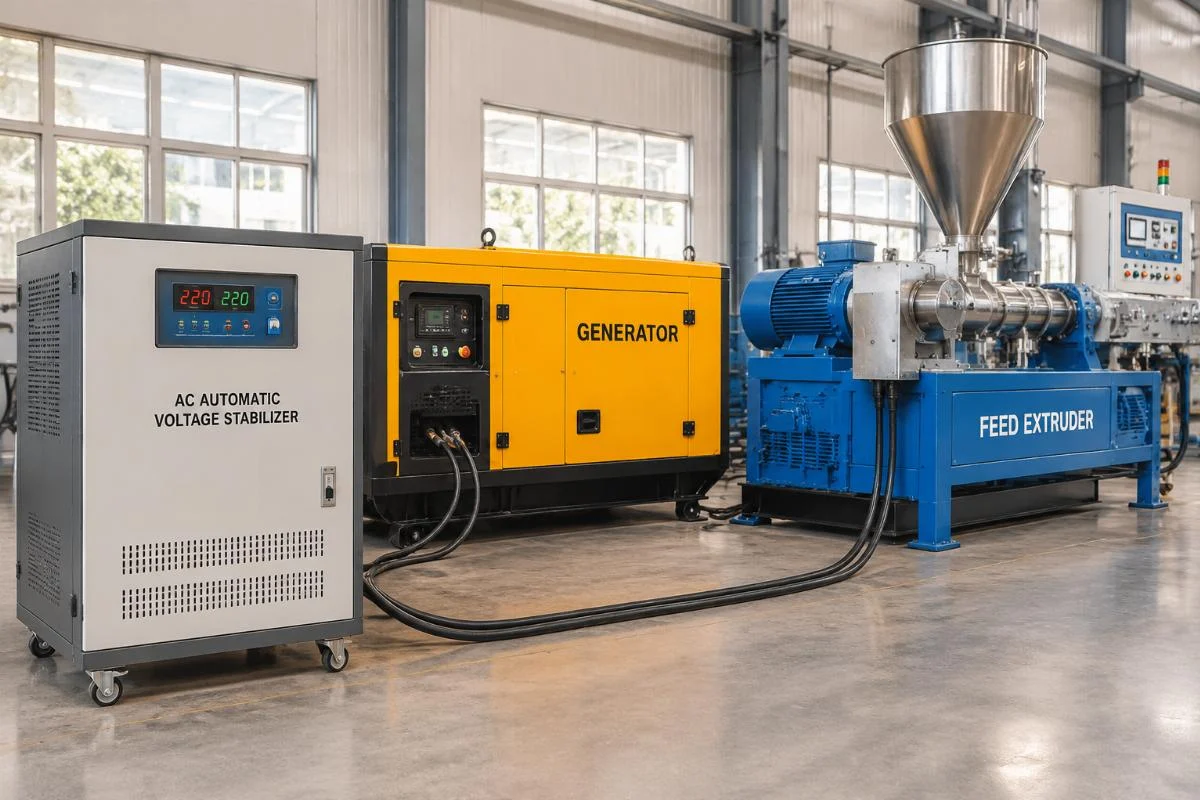
When evaluating a catfish feed production line Nigeria, the first question should never be about peak output, but rather how the extruder handles power drops. Extrusion relies on maintaining a precise specific mechanical energy to achieve the necessary starch gelatinization. If the voltage dips, the main motor slows down, and the barrel heaters lose efficiency, leading to undercooked, sinking pellets.
During my time troubleshooting in West Africa, I observed that standard single-phase or poorly protected three-phase systems would trip constantly. A robust setup requires heavy-duty voltage stabilizers and properly sized backup generators. The heating zones must be able to recover temperature rapidly after a power sag. Furthermore, the control systems need to tolerate harmonic distortions common in local industrial zones.
A West African feed mill operator once upgraded their facility without addressing the local transformer capacity. The result was frequent thermal trips during peak production hours, destroying entire batches of raw material. By integrating a dedicated generator synchronization panel and selecting extruders with wider voltage acceptance bands, the facility eventually achieved continuous operation.
How do local raw materials like cassava affect the extrusion process?
Cassava flour is a cost-effective energy source, but its extreme moisture variance directly dictates the floating rate and accelerates barrel wear if not properly managed.
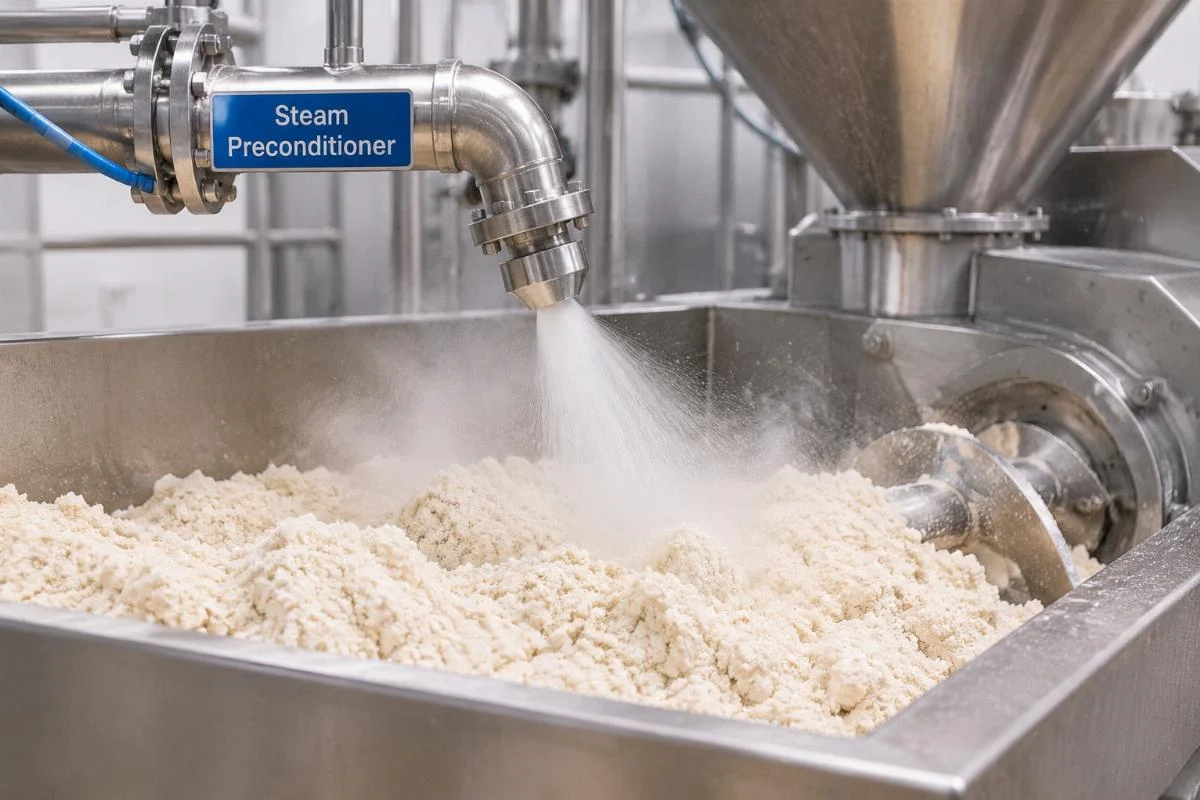
Many formulators view cassava as a cheap filler, but its high starch and unpredictable moisture content make it a highly reactive variable. If the moisture entering the preconditioner is too high, the material slips inside the barrel, failing to generate enough friction heat. If it is too low, the mixture becomes too abrasive, wearing out the screw elements rapidly.
For a catfish feed production line Nigeria, the preconditioner must be highly adjustable. It needs to inject steam precisely to raise the material temperature before it even enters the main barrel. This pre-gelatinization reduces the mechanical load on the screws and ensures a stable floating rate. The moisture-to-temperature mapping is critical; the system must compensate for raw material batches that vary wildly in water content from one delivery to the next.
I worked with a producer whose floating rate dropped noticeably whenever a new batch of cassava arrived from a different supplier. By upgrading to a twin-screw system with an advanced preconditioner that allowed real-time steam and water injection adjustments, they maintained consistent pellet buoyancy regardless of the raw material source.
Single-screw vs. Twin-screw: Which extruder fits your catfish feed formula?
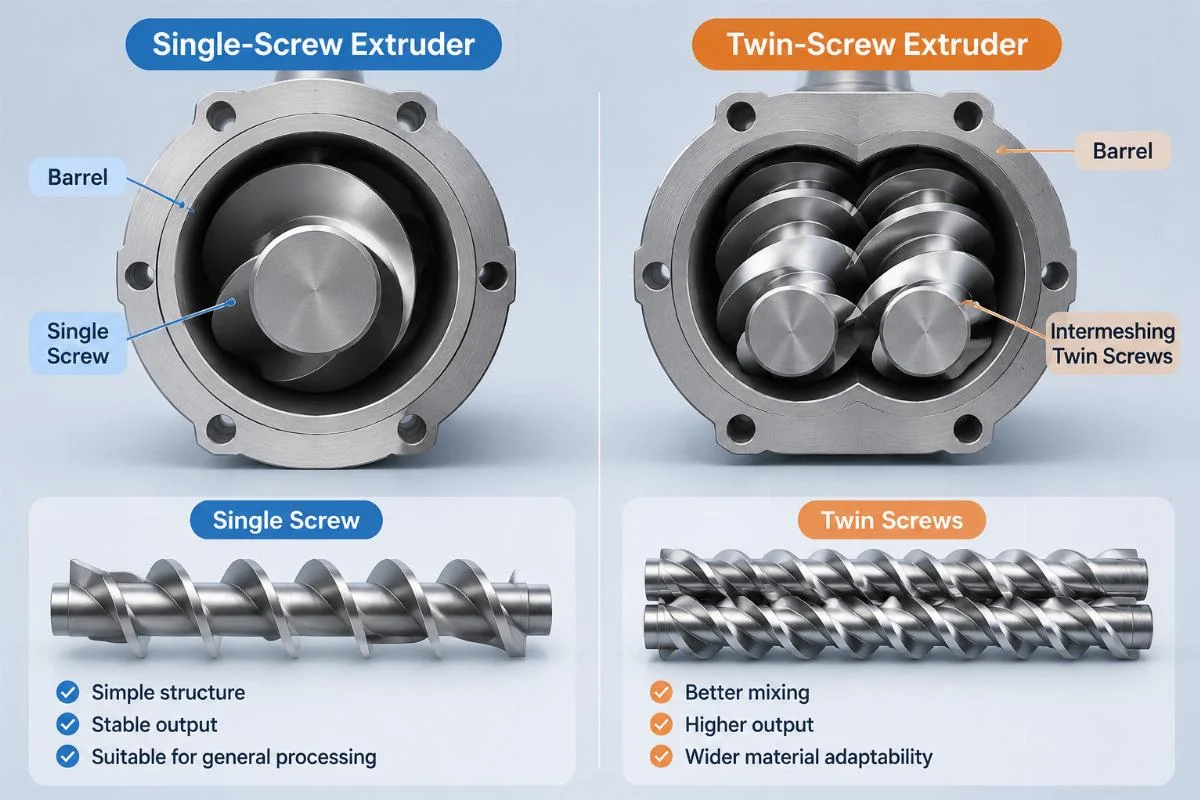
Twin-screw technology provides superior shear heat control and adaptability to local raw materials compared to traditional single-screw designs.
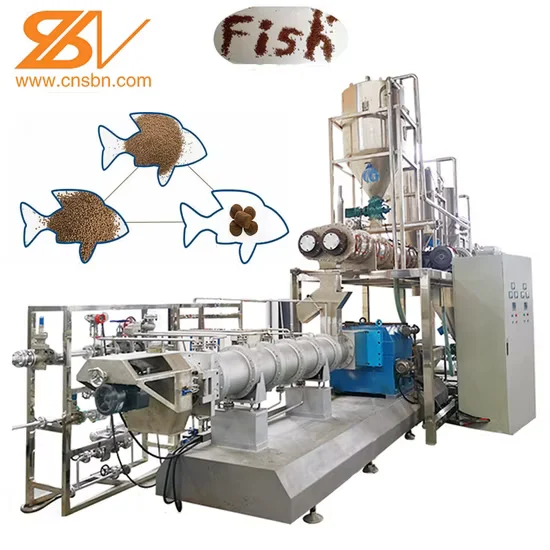
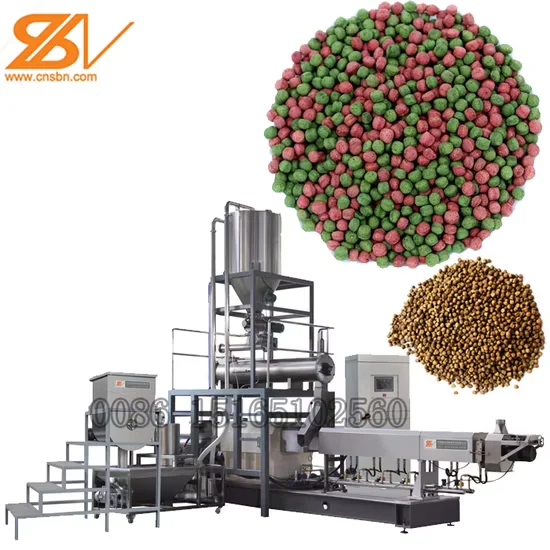
When selecting the core machinery for a catfish feed production line Nigeria, the debate between single-screw and twin-screw extruders is fundamental. Single-screw machines rely heavily on friction between the screw and the barrel, making them highly sensitive to moisture and配方 changes. Twin-screw extruders, like the DS70 or DS95 models, use intermeshing screws to actively pump and shear the material, generating controlled heat through mechanical energy rather than just friction.
| Feature | Single-Screw Extruder | Twin-Screw Extruder (DS70/DS95) |
|---|---|---|
| Moisture Tolerance | Narrow / Vulnerable | Wide / Robust |
| Floating Rate Control | Uncontrolled / Inconsistent | Controlled / Highly Stable |
| Cassava Adaptability | Poor / High Wear Risk | Excellent / Optimized Shear |
| Self-Cleaning Capability | None / Frequent Downtime | Full / Minimal Residue |
| Specific Mechanical Energy | Variable / Hard to Measure | Precise / Verifiable |
A Middle East aquaculture startup initially opted for a cheaper single-screw setup to save on capital expenditure. However, when they tried to incorporate local high-starch ingredients, the machine constantly choked, and the pellets lacked the necessary water stability. Transitioning to a twin-screw configuration resolved the choking issue and drastically improved the pellet durability in water.
What cooling and drying specs prevent mold in high-humidity climates?
Ambient temperatures exceeding standard limits require multi-pass drying and oversized cooling airflow to guarantee pellet shelf life.
The extrusion process is only half the battle; drying and cooling are where many operations fail in tropical climates. Freshly extruded floating pellets contain significant moisture. If not dried properly, they will develop mold within days, ruining the batch and posing severe health risks to the fish.
In a workshop where the ambient temperature regularly climbs above standard comfort levels, standard coolers are entirely inadequate. The temperature delta between the hot pellets and the surrounding air is too small for effective heat exchange. A reliable catfish feed production line Nigeria must feature multi-pass dryers with precise humidity exhaust systems and coolers with substantially extended airflow capacity. The cooling section must pull moisture out of the pellet core, not just dry the surface.
A facility in a coastal region struggled with mold outbreaks during the rainy season despite using adequate dryers. The issue was the cooling bin; the hot, humid ambient air was re-introducing moisture into the dried pellets. By redesigning the cooling section to include dehumidified air intake and increasing the retention time, they achieved a stable, safe moisture content for long-term storage.

Conclusion
Success in local feed manufacturing depends on environmental adaptation, not just mechanical output.
Building a profitable catfish feed production line Nigeria requires a holistic approach that respects the realities of local power grids, raw material inconsistencies, and extreme ambient climates. By prioritizing voltage tolerance, moisture adaptability, twin-screw shear control, and robust cooling systems, producers can avoid costly operational failures and ensure consistent, high-quality floating feed.