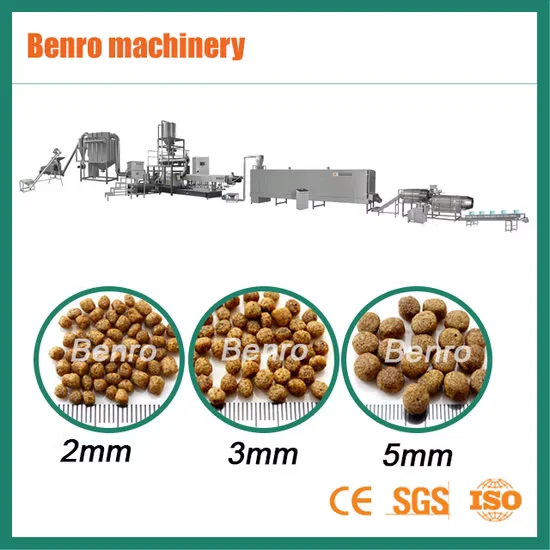
Fish Feed Technical Article
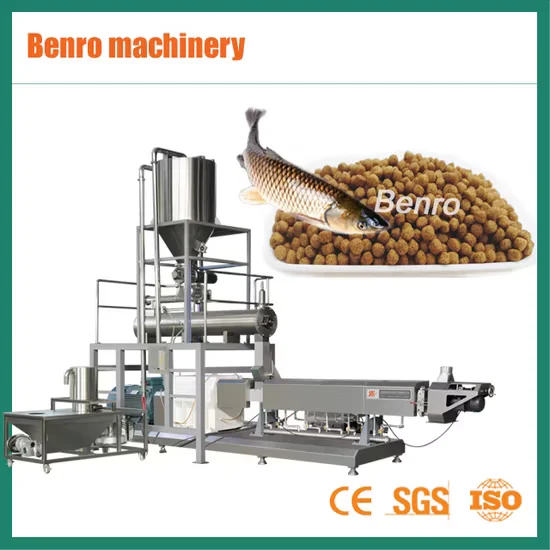
Buy Twin-Screw Fish Feed Extruder Line DS70 from Manufacturer Meiteng
Assuming the single-screw machine saves you money is the most expensive mistake a new feed producer can make.
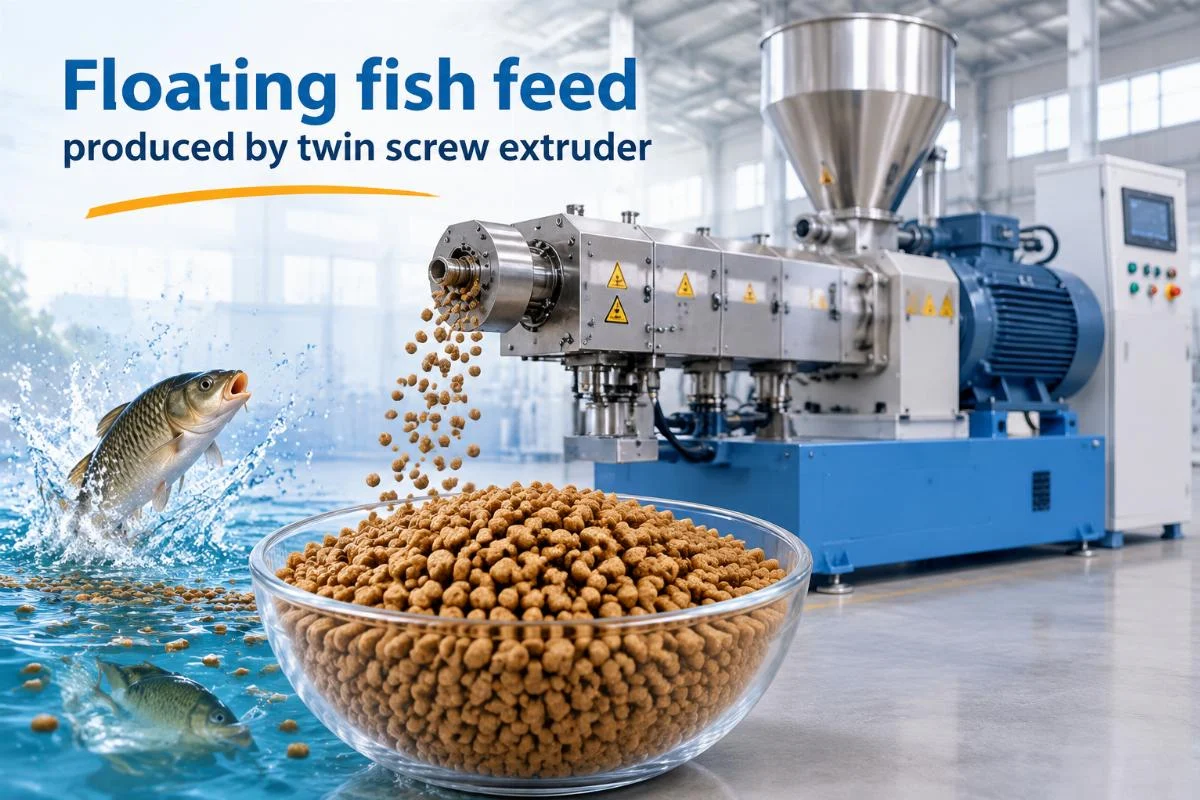
Choosing between single and twin-screw extruders depends entirely on your target feed buoyancy, gelatinization requirements, and raw material flexibility. For high-quality floating feeds, a twin-screw fish feed extruder line is not just an upgrade; it is an absolute necessity to ensure proper starch gelatinization and water stability.
When I was sourcing aquaculture feed in Vietnam years ago, I trusted a basic single-screw setup to produce floating shrimp feed. The sink rate was disastrously high, and the gelatinization degree was nowhere near the required metrics. The entire batch nearly ruined the ponds. Later, when I transitioned to selling twin-screw equipment in Jinan and started running field operations across Southeast Asia, I saw the exact same panic in buyers’ eyes when they were sizing up a DS70 fish feed extruder. The screw material was wrong, wearing out too fast; the temperature control was sloppy, causing the buoyancy to fail. I have spent years helping clients fine-tune their formulas and machine configurations to fill the gaps left by those early mistakes, ensuring the equipment runs smoothly once it hits the factory floor.
Let us break down exactly how to navigate these equipment choices without burning through your initial capital.
Single vs Twin-Screw: Which Fits Your Feed Type?
The choice between single and twin-screw configurations is dictated by the physical demands of your specific feed recipe and the required buoyancy.
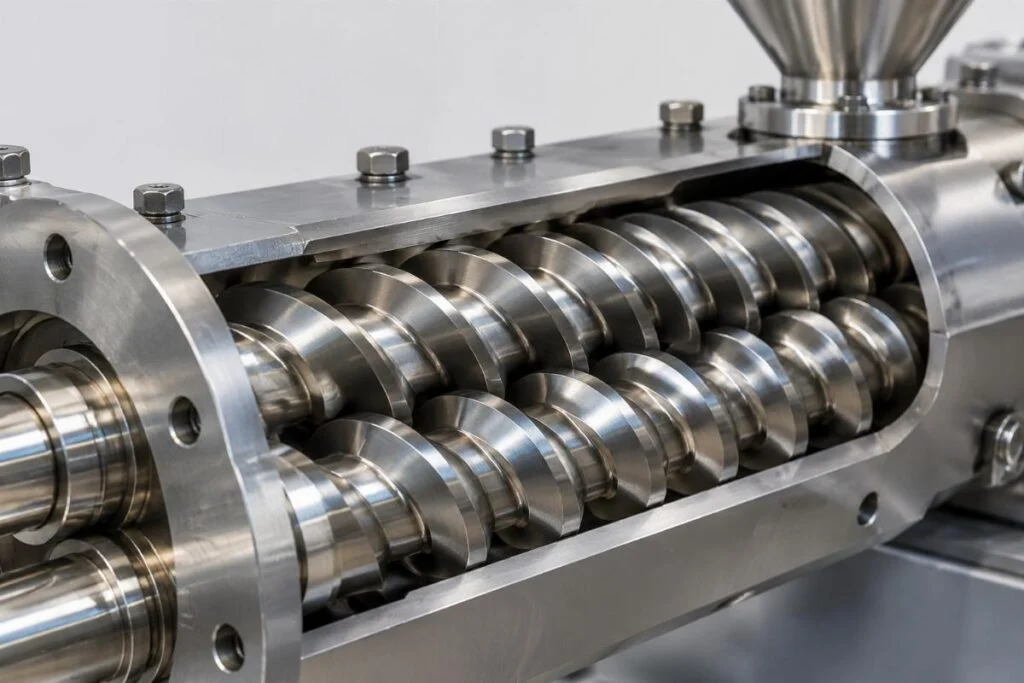
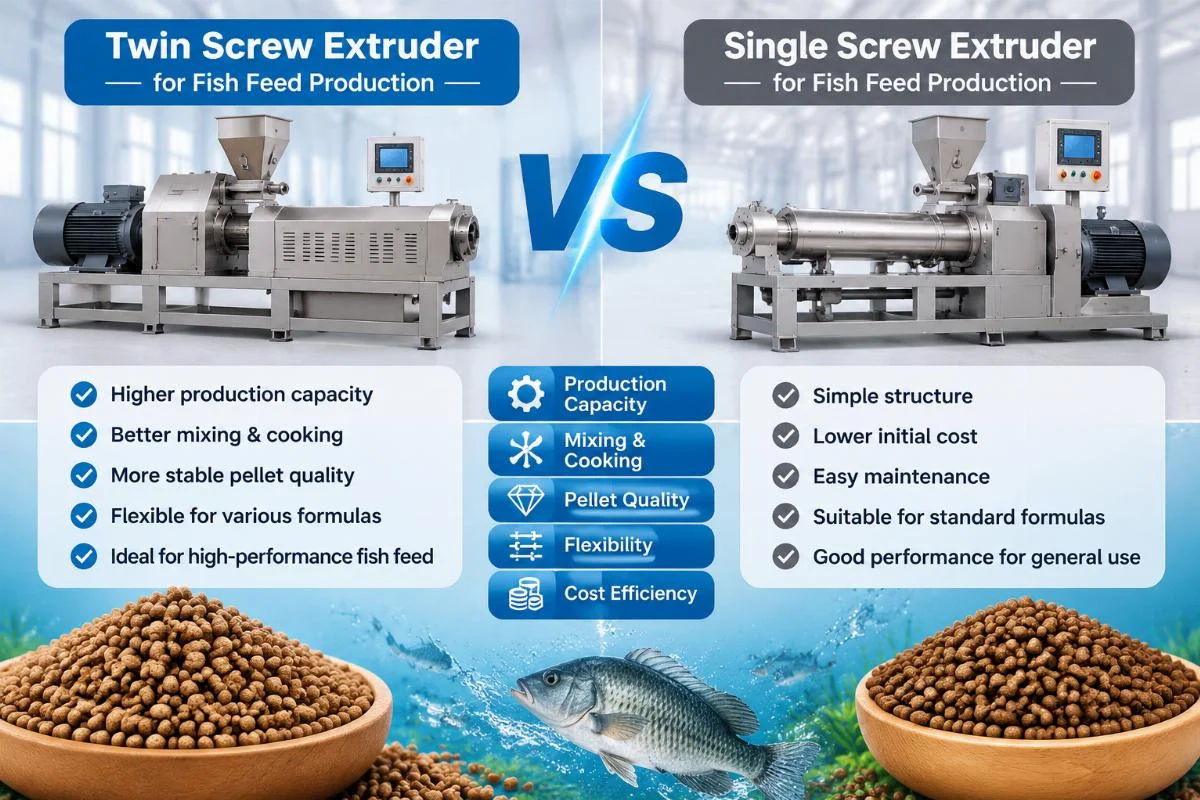
When evaluating a twin screw vs single screw fish feed extruder, you must look at the mechanical action inside the barrel. Single-screw machines rely on friction and drag, which limits their ability to handle high-moisture or high-fat recipes. Twin-screw extruders, however, feature intermeshing screws that provide positive conveying and intense shear, making them ideal for floating feeds that require high expansion.
| Parameter | Single-Screw Extruder | Twin-Screw Extruder |
|---|---|---|
| Buoyancy Control | Basic / Uncontrolled | Advanced / Controlled |
| Gelatinization Degree | Noticeably reduced | Substantially extended |
| Raw Material Flexibility | Vulnerable to high fat/moisture | Robust across diverse recipes |
| Water Stability | Basic | Full batch-level consistency |
Consider a floating feed startup in Southeast Asia that initially opted for a single-screw setup to cut costs. They faced severe sink rate issues because the single screw could not generate the specific mechanical energy (SME) required for complete starch gelatinization. They had to pivot to a twin-screw fish feed extruder line to achieve the necessary water stability metrics. Conversely, for a small-scale sinking feed entry where cost is the primary driver, a single-screw machine might suffice, provided you accept the trade-offs in feed conversion rates and higher long-term wear.
What Key Specs Dictate Extruder Performance?
Screw material, length-to-diameter ratio, and temperature precision directly determine the buoyancy and durability of your final pellet.
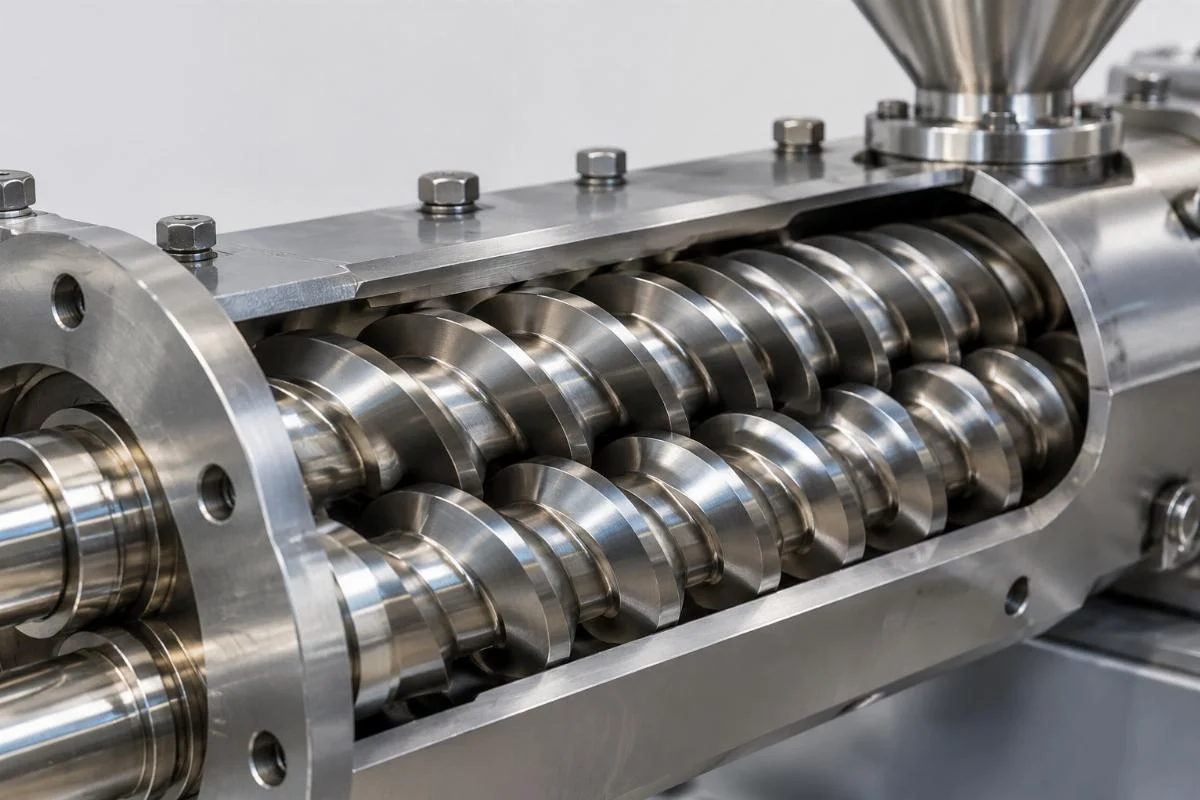
It is not just about the motor size; the internal geometry is where the real work happens. The screw L/D ratio impacts the retention time of the raw material inside the barrel. A longer ratio allows for more thorough cooking and better gelatinization, which is critical for floating feeds. Furthermore, the specific mechanical energy (SME) input must be carefully managed. Too little SME, and the feed sinks; too much, and you degrade the nutritional profile of the proteins.
Temperature zone control precision is another non-negotiable spec. Fluctuations in the barrel temperature lead to uneven expansion, resulting in a mixed batch of floating and sinking pellets. This is where food-grade 304 stainless steel construction becomes vital, not just for hygiene, but for consistent heat transfer and corrosion resistance against acidic or salty raw materials.
A multi-species feed producer I worked with in Latin America was constantly switching recipes. Their old equipment suffered from massive downtime during changeovers, and the screw wear rate was accelerating due to inferior metallurgy. Upgrading to a DS70 fish feed extruder with optimized screw elements and precise thermal zoning solved their consistency issues, allowing them to handle both high-protein floating feeds and dense sinking feeds without compromising the barrel integrity.
How to Size Your Production Line Correctly?
Matching your capacity to target market demand and integrating drying and cooling systems properly prevents bottlenecks and product degradation.
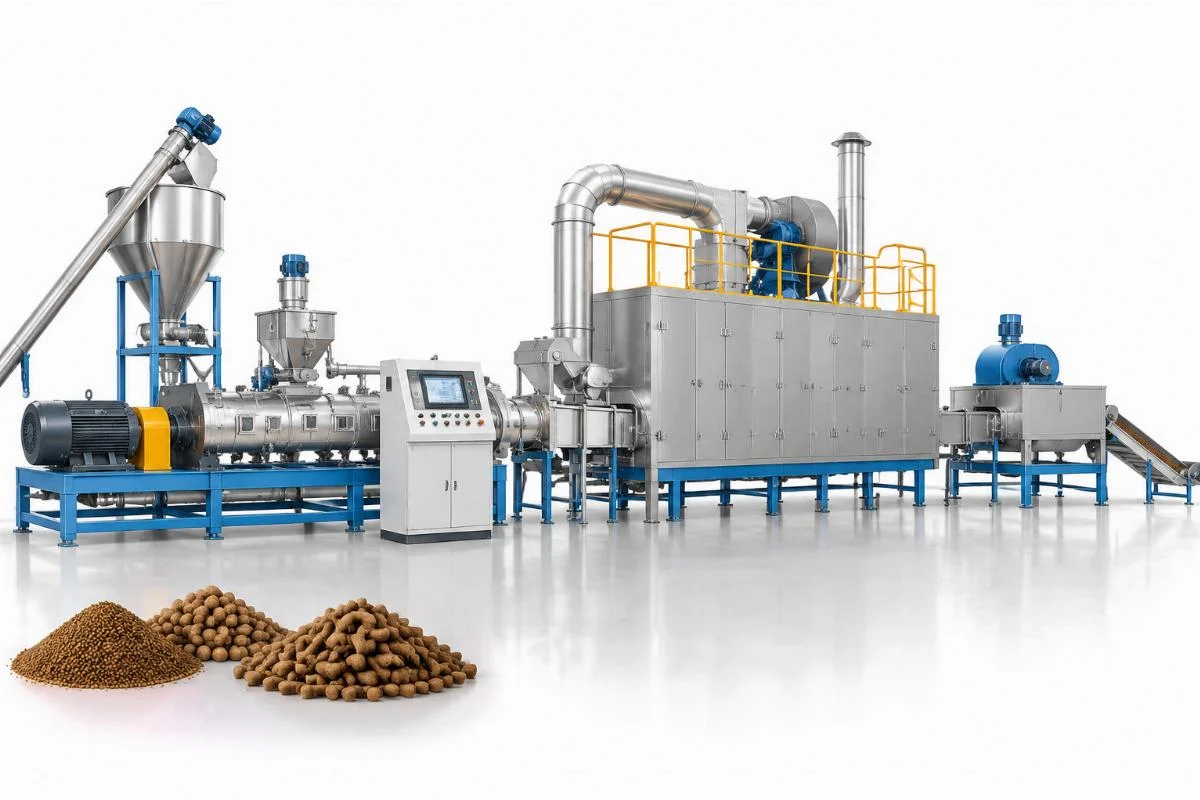
A common misconception is that buying the biggest machine available guarantees better results. In reality, an oversized machine running small batches causes uneven heating and poor floating rates because the material retention time drops below the necessary threshold. You need to align the capacity of your fish feed extruder line with your actual daily output goals, factoring in the entire downstream process.
The extruder is only the heart of the system; the drying and cooling sections are the lungs. If your dryer cannot handle the moisture removal rate of the extruder, you will end up with moldy feed or wasted energy. Proper sizing means calculating the moisture evaporation rate and matching it with a multi-layer dryer that provides even airflow.
For startups, integrating a complete fish feed extruder line that includes a flavor-coating system and a cooling bin is essential for producing a shelf-stable, attractive product. The initial CAPEX must be weighed against the energy consumption ratio of the entire line, not just the main motor. A well-balanced line ensures that the pellets exit the dryer at the exact moisture content required for safe packaging, preserving the feed conversion ratio for the end farmer.
Why Turnkey Support Matters for Startups?
Formula development and on-site training prevent costly trial-and-error during initial runs and ensure immediate production stability.
Buying a machine is easy; making a profitable pellet is hard. Many equipment suppliers will hand over the hardware and wish you luck. However, the chemistry of aquaculture feed is complex. Raw material variations in protein content, starch sources, and fat levels require constant formula adjustments. Without proper support, a startup will burn through thousands of dollars in wasted raw materials trying to find the right processing parameters.
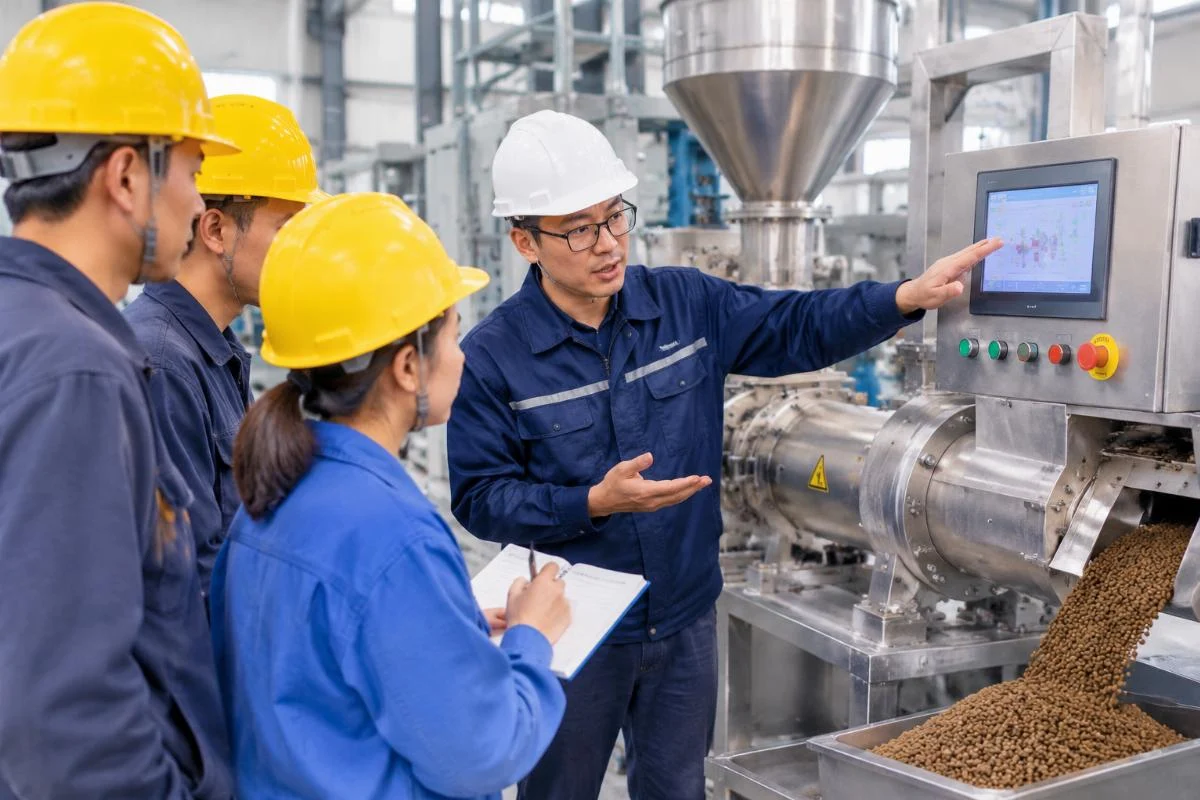
This is where comprehensive turnkey support changes the game. When you invest in a fish feed extruder line from a manufacturer that offers formula R&D support, you are not just buying steel; you are buying operational certainty. You need a partner who can provide CE-certified equipment, assist with ring die and pellet forming customization, and send technicians for on-site installation and operator training.
I have seen countless buyers struggle with a new DS70 fish feed extruder because they lacked the foundational formula knowledge to utilize the machine’s full SME potential. By partnering with a supplier that provides recipe development and multi-language technical support, startups can bypass the painful learning curve. The manufacturer’s production facilities can test your specific raw materials before shipping, ensuring that the screw configuration and temperature profiles are pre-set for your exact needs, allowing you to start producing premium feed from day one.
Conclusion
Selecting the right extrusion technology is the foundational decision that dictates your product quality and long-term profitability.
Whether you are targeting high-value floating feeds or basic sinking diets, understanding the mechanical differences, sizing your downstream equipment correctly, and securing robust formula support will separate successful operations from costly failures. Equip your facility with the right technical foundation to produce consistent, high-quality aquaculture feed.