Fish Feed Technical Article
Twin-Screw vs Single-Screw Extruder for Floating Fish Feed Manufacturer
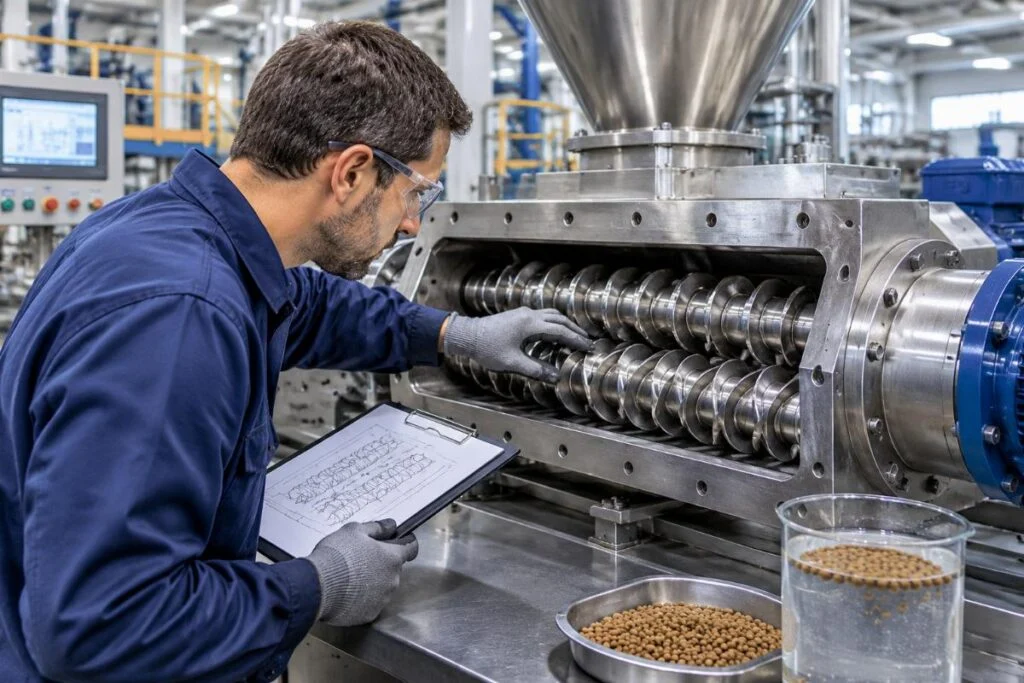
Buying the cheaper machine often costs you double in feed waste.
When evaluating a Twin-screw vs single-screw extruder for floating fish feed, the right choice depends entirely on your required gelatinization degree, raw material flexibility, and long-term operational costs, rather than just the initial equipment price.
I still remember assembling screw kits in a Jinan workshop years ago before heading to Latin America to run equipment trials. In Manaus, Brazil, a tilapia farmer decided to cut his budget by purchasing a single-screw machine to produce floating feed. Within days of running it, the pellets sank to the bottom within half an hour. The fish ignored the feed, and the gelatinization degree was completely inadequate for water stability. He eventually had to bite the bullet and reorder a twin-screw line from us. Seeing cases like this across multiple regions proves that selecting a Twin-screw vs single-screw extruder for floating fish feed requires looking past the quotation and focusing on material characteristics and final product requirements.
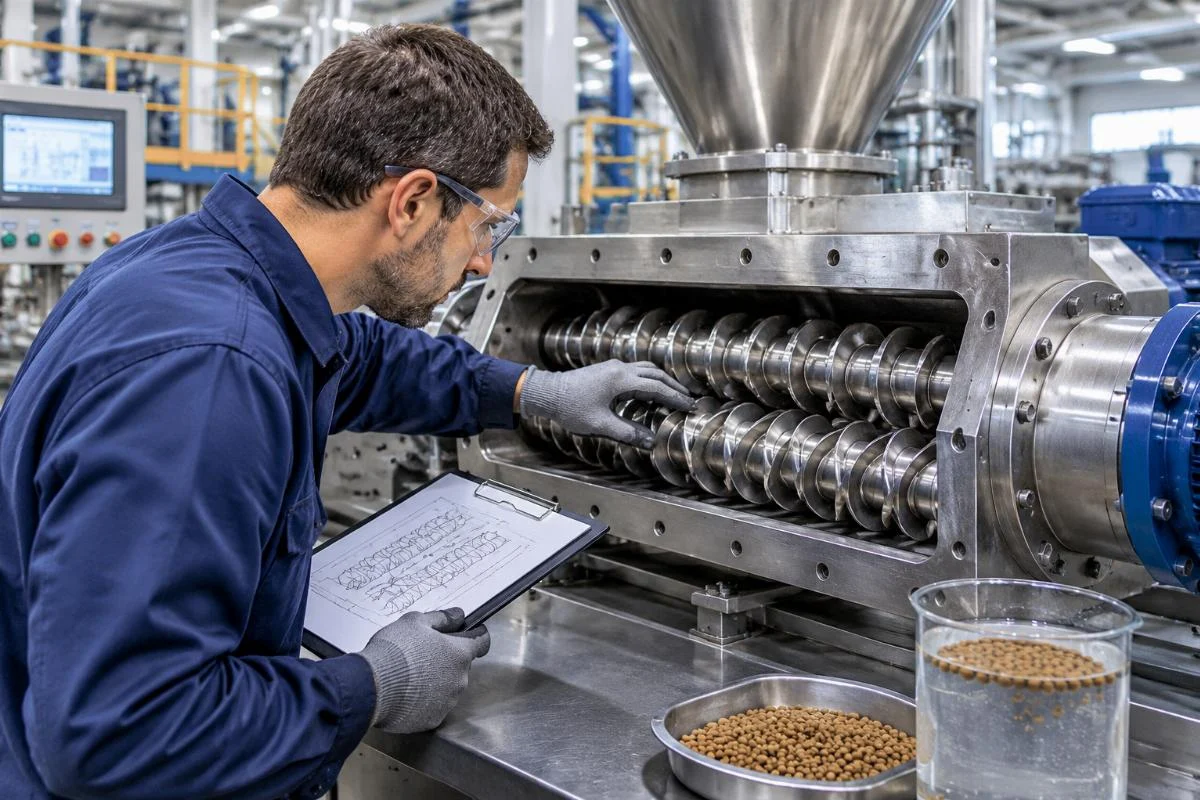
Let us break down the technical realities behind these machines to help you make a profitable decision.
What Defines the Floating Performance of Fish Feed?
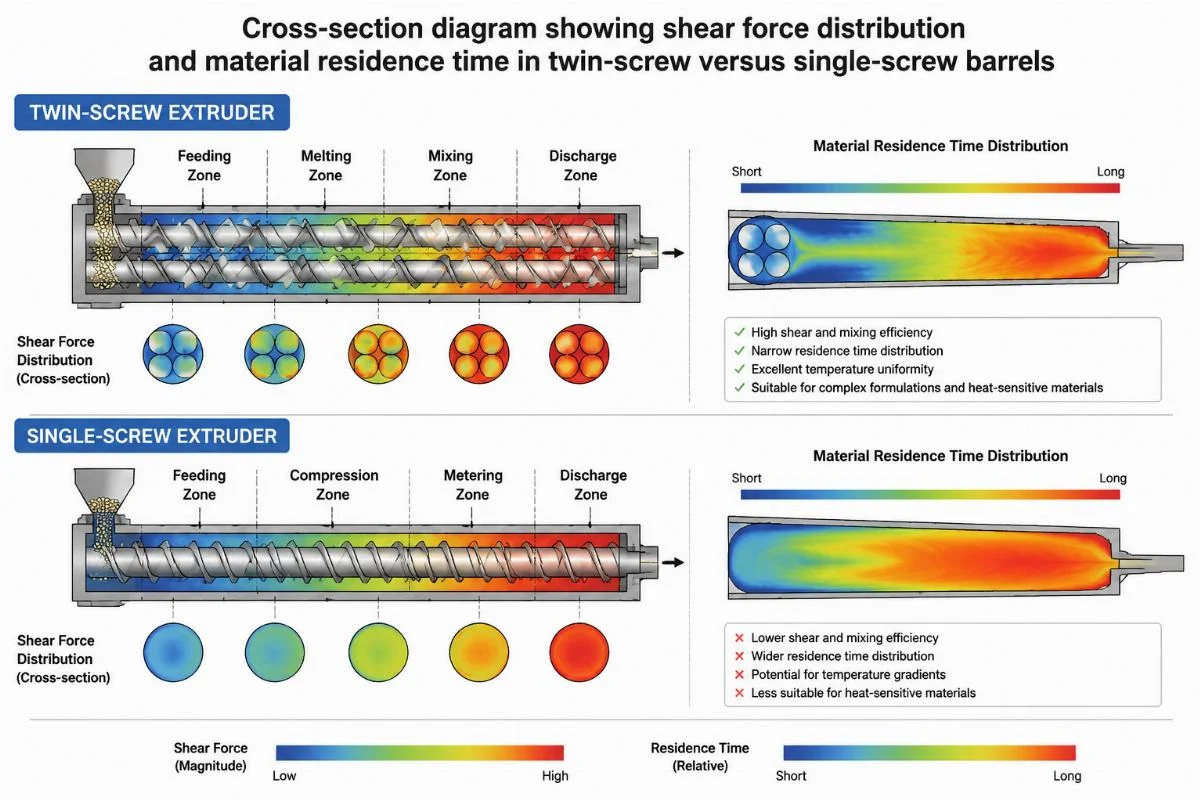
Floating performance is strictly dictated by the gelatinization degree and water stability, which are direct results of shear force and residence time inside the barrel.
When we analyze a Twin-screw vs single-screw extruder for floating fish feed, we must look at specific mechanical energy and screw L/D ratio impact. Single-screw designs rely heavily on friction between the barrel and the single rotating screw. This often leads to uneven shear distribution. In contrast, intermeshing screws in a twin-screw setup provide controlled shear and precise residence time.
A small tilapia farm in Southeast Asia switched to a twin-screw configuration specifically to fix their sinking feed issue. By adjusting the screw elements, they achieved a noticeably higher gelatinization rate. The water stability hours extended substantially, meaning the pellets remained intact on the surface long enough for the fish to consume them. This demonstrates that the core argument of choosing a Twin-screw vs single-screw extruder for floating fish feed hinges on your ability to control the thermomechanical history of the dough.
How Do Twin-Screw and Single-Screw Extruders Compare?
The specification matrix reveals that shear control, self-cleaning capability, and raw material adaptability separate the two technologies.
When buyers compare a Twin-screw vs single-screw extruder for floating fish feed, they often focus on basic throughput. However, the operational matrix tells a different story regarding formulation flexibility and maintenance.
| Parameter | Twin-Screw Extruder | Single-Screw Extruder |
|---|---|---|
| Shear Force Control | Controlled / Modular | Uncontrolled / Fixed |
| Self-Cleaning Ability | Robust / Full batch-level | Basic / Sample-level |
| Raw Material Adaptability | Resistant / High fat & fiber | Vulnerable / High starch only |
| Wear Part Replacement | Noticeably reduced cycle | Substantially extended cycle |
| Energy Efficiency per Ton | Standard / Optimized | Uncontrolled / Variable |
Consider a mid-sized catfish line that needed to upgrade capacity. They initially considered a single-screw option but realized their recipe included high levels of meat by-products and fats. A single-screw machine would struggle with material slippage and require frequent downtime for cleaning. By choosing a twin-screw line, they benefited from the self-cleaning action of the intermeshing screws. The wear part replacement cycle was noticeably reduced because the material was pushed forward positively rather than dragged by friction. This comparison highlights why evaluating a Twin-screw vs single-screw extruder for floating fish feed must include an assessment of your specific ingredient adaptation rate.
Which Extruder Fits Your Production Capacity and Budget?
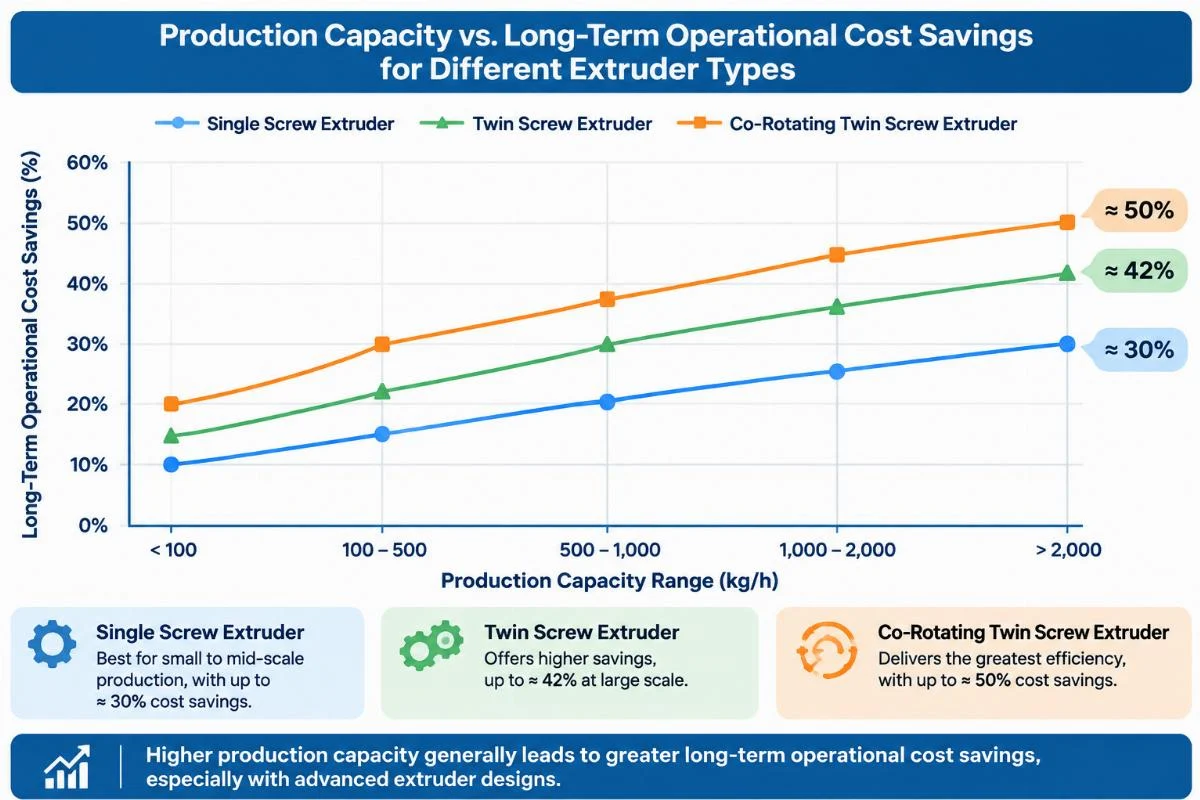
Matching your required tons per hour with initial capital expenditure and long-term operational expenditure determines your true return on investment.
A floating feed startup often faces the dilemma of budget constraints versus product quality. Most think a single-screw machine is cheaper overall. However, the true cost includes the massive feed waste generated from poor floating rates and high energy consumption per ton due to inefficient friction heating.
When sizing a Twin-screw vs single-screw extruder for floating fish feed, we look at capacities ranging from small pilot runs to large commercial outputs. For simple, high-starch sinking feed recipes, a single-screw extruder actually suffices and keeps the initial investment low. But for premium floating feeds requiring complex formulations, the twin-screw technology justifies its higher upfront cost through consistent product quality and lower specific mechanical energy consumption over time.
We recently worked with a startup in Africa that wanted to produce high-protein floating feed. They opted for a twin-screw line. Although the initial equipment price was higher, their energy consumption per ton dropped noticeably compared to their old single-screw setup. Furthermore, the formula flexibility allowed them to adapt to local ingredient shortages without compromising the floating time. This proves that the decision matrix for a Twin-screw vs single-screw extruder for floating fish feed must weigh long-term operational stability against short-term savings.
How to Ensure Long-Term Stability and Easy Maintenance?
Investing in wear-resistant materials, modular design, and comprehensive supplier training support prevents costly trial-and-error downtime.
The physical demands of extruding aquafeed are immense. Abrasive ingredients like rice bran or fish meal accelerate wear on the screws and barrels. When comparing a Twin-screw vs single-screw extruder for floating fish feed, the construction quality of the wear parts is critical.
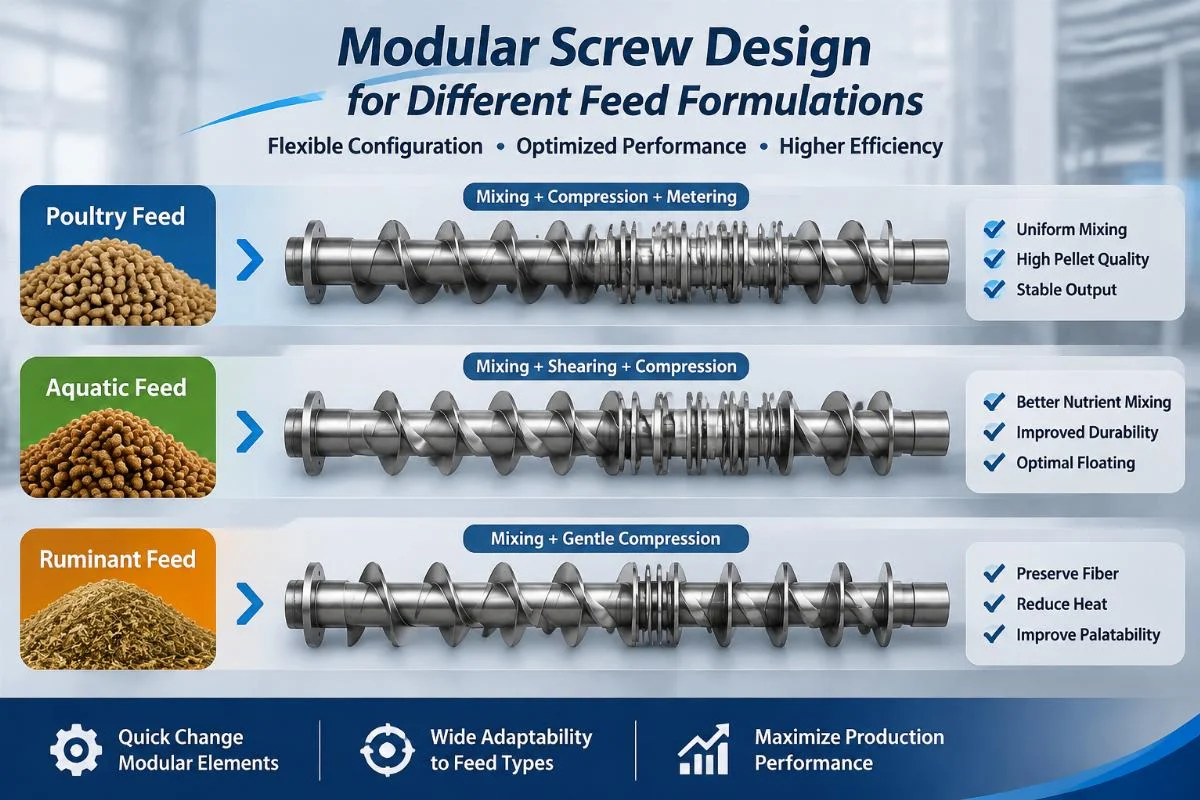
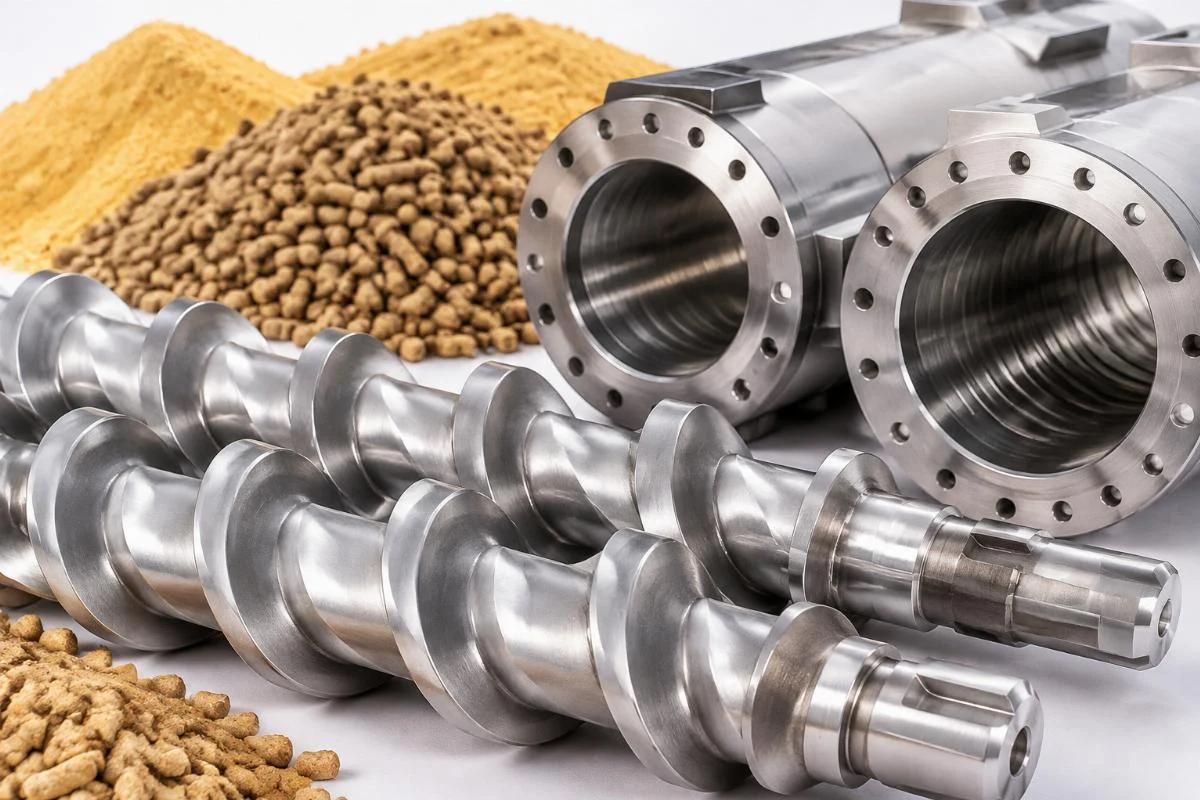
Modern twin-screw extruders utilize specialized alloy steels and surface treatments that offer substantially extended service life meaningfully. The modular screw design allows operators to reconfigure the screw profile based on the recipe, rather than replacing the entire shaft. A mid-sized producer in Latin America upgraded their line and focused heavily on the wear part replacement cycle. By utilizing a twin-screw system with advanced metallurgy, their maintenance intervals were pushed back significantly, ensuring continuous production during peak seasons.
Furthermore, the human element cannot be ignored. A machine is only as good as its operator. Turnkey line design and on-site operator training are essential to prevent costly mistakes. When our team installs a line, we do not just hand over the equipment; we develop the formula for floating feed and train the local staff to understand the thermomechanical principles. This holistic approach ensures that your investment in a Twin-screw vs single-screw extruder for floating fish feed yields consistent, high-quality results from day one.
Conclusion
Selecting the correct extrusion technology is a strategic decision that balances formulation complexity with operational economics.
Evaluating a Twin-screw vs single-screw extruder for floating fish feed requires looking beyond the initial price tag to consider gelatinization requirements, ingredient flexibility, and maintenance cycles. Whether you are running a simple high-starch recipe or a complex high-protein floating feed, matching the machine’s shear capabilities to your product goals ensures long-term profitability and feed quality.