Fish Feed Technical Article
Twin-Screw Fish Feed Extruder for Mexico Tilapia & Trout Farms Manufacturer
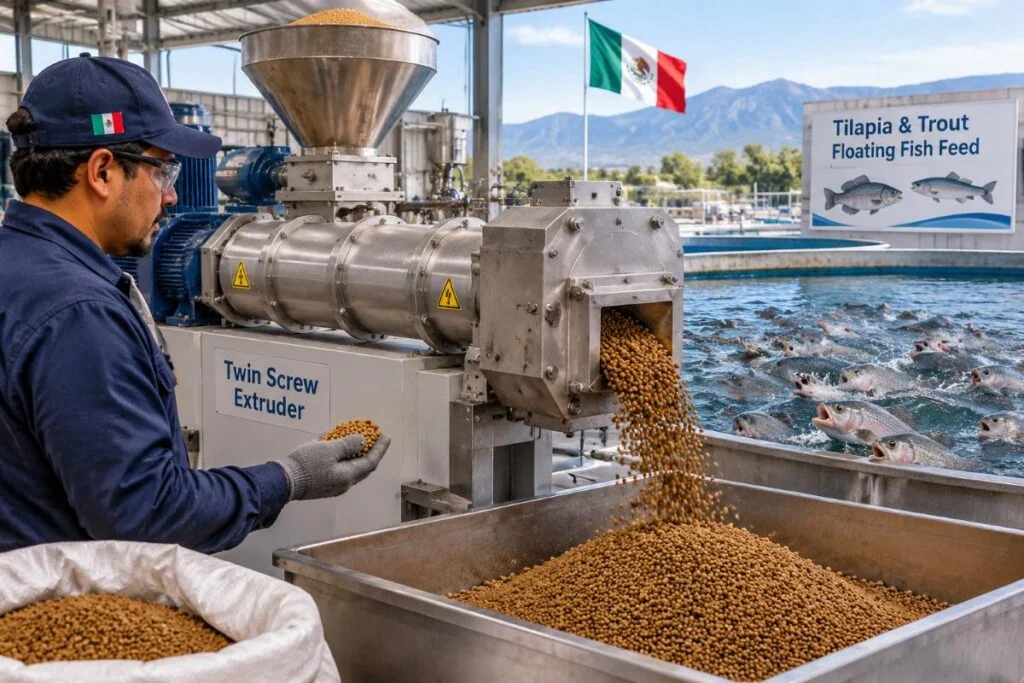
Higher screw speed does not guarantee better floating; excessive shear actually destroys starch structure, causing pellets to sink.
Successful Fish Feed Extrusion Mexico requires tailored twin-screw configurations and precise temperature control to meet the distinct gelatinization and buoyancy needs of tilapia and trout.
Back in my early days working on the shop floor in Ningbo, I spent every day wrestling with screw elements. When I transitioned to international trade, I thought understanding capacity and motor power was enough. Then came a massive order for a tilapia and trout farm in Mexico. We shipped the equipment, but during commissioning, the sinking rate of the tilapia feed exceeded acceptable thresholds, and the client nearly rejected the entire lot. The root cause was not the machine’s power, but our failure to grasp the different gelatinization degree requirements for these two species. We had applied a single screw profile for both. Tilapia needed high shear for starch gelatinization, while trout needed gentle shear to protect heat-sensitive proteins. That realization shifted my entire approach to Fish Feed Extrusion Mexico projects. You cannot just look at throughput; you must align the shear force and thermal profile with the specific fish species.
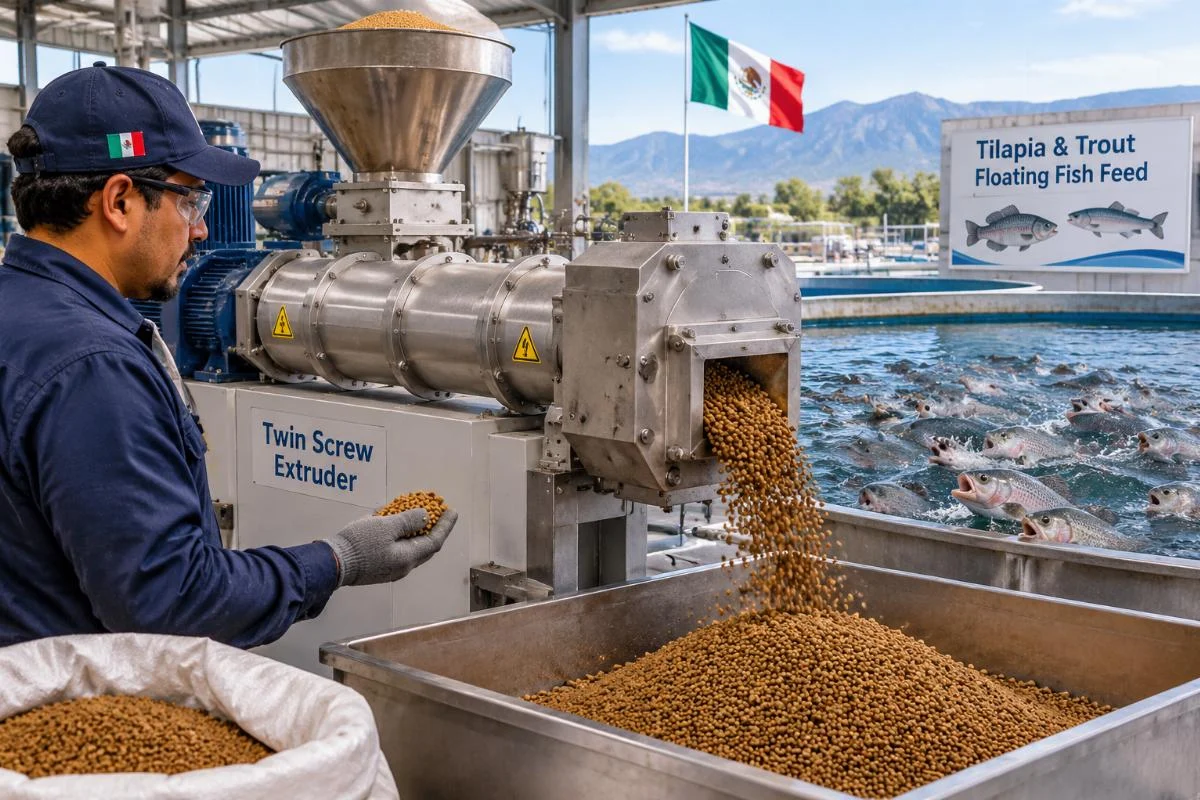
Let us break down how equipment selection and process troubleshooting make or break a production line in this region.
Why Do Tilapia and Trout Require Different Extrusion Parameters?
Distinct nutritional needs dictate specific shear and temperature profiles, making a one-size-fits-all approach a recipe for financial loss.
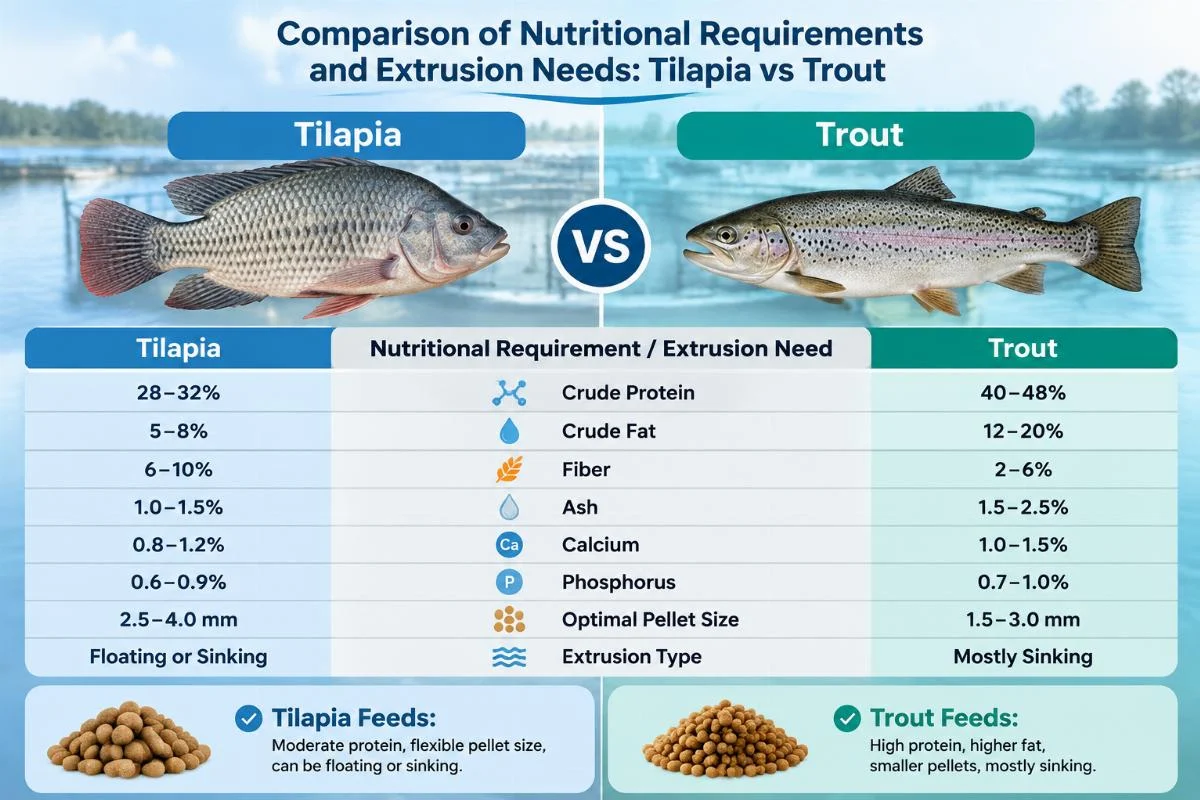
The aquaculture industry in Latin America has seen massive expansion, with producers constantly seeking to optimize feed conversion ratios. However, the biological differences between tilapia and trout demand entirely different processing mechanics. Tilapia, being a warm-water cichlid, relies heavily on gelatinized starch for energy. Achieving the required degree of gelatinization demands high specific mechanical energy. Conversely, trout are cold-water salmonids whose diets are rich in heat-sensitive proteins and lipids. Exposing trout feed to the same thermal and mechanical stress as tilapia feed destroys the amino acid profile and oxidizes the fats.
When I review formulations for a floating fish feed production line Mexico setup, I always check the raw material matrix first. Tilapia recipes require intense mechanical work to break down complex carbohydrate structures. Trout recipes, however, require a gentle touch to maintain pellet integrity without cooking the life out of the protein. Academic research consistently highlights that mismatched extrusion parameters lead to poor water stability and reduced feed intake in salmonids.
How Does Screw Configuration Impact Feed Buoyancy?
Tailored length-to-diameter ratios and element arrangements control residence time and expansion, directly dictating whether the pellet floats or sinks.
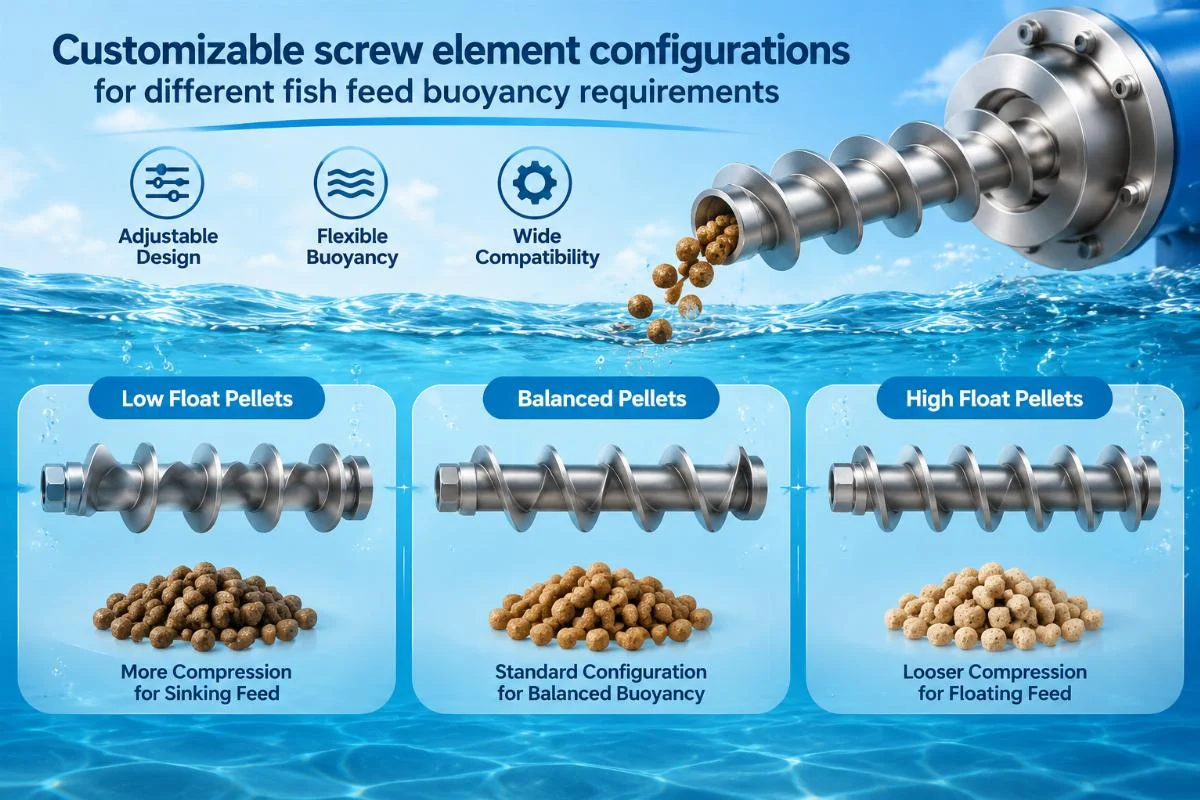
Many buyers assume that simply increasing the main motor speed will improve the floating rate. This is a dangerous misconception. Excessive shear generates uncontrolled frictional heat, which can flash-moisture the dough, causing micro-cracks that pull the pellet underwater once it hits the pond. For a twin screw fish feed extruder for tilapia, the screw elements must be arranged to build pressure gradually, ensuring the starch matrix expands uniformly upon exiting the die.
For trout, the screw configuration must minimize mechanical energy input while maintaining enough pressure to form a cohesive pellet. We achieve this by adjusting the pitch and the sequence of kneading blocks. In our DS-series twin-screw extruders, the modular screw design allows operators to swap elements to match the exact rheology of the配方. A Mexican aquaculture cooperative recently upgraded their line and switched from a generic high-shear setup to a customized gentle-shear profile for their trout segment. The result was a noticeable drop in fine generation and a substantial extension of pellet water stability.
What Are the Critical Temperature Zones for Optimal Gelatinization?
Precise barrel and die temperature management prevents nutrient loss and ensures consistent floating rates across the batch.
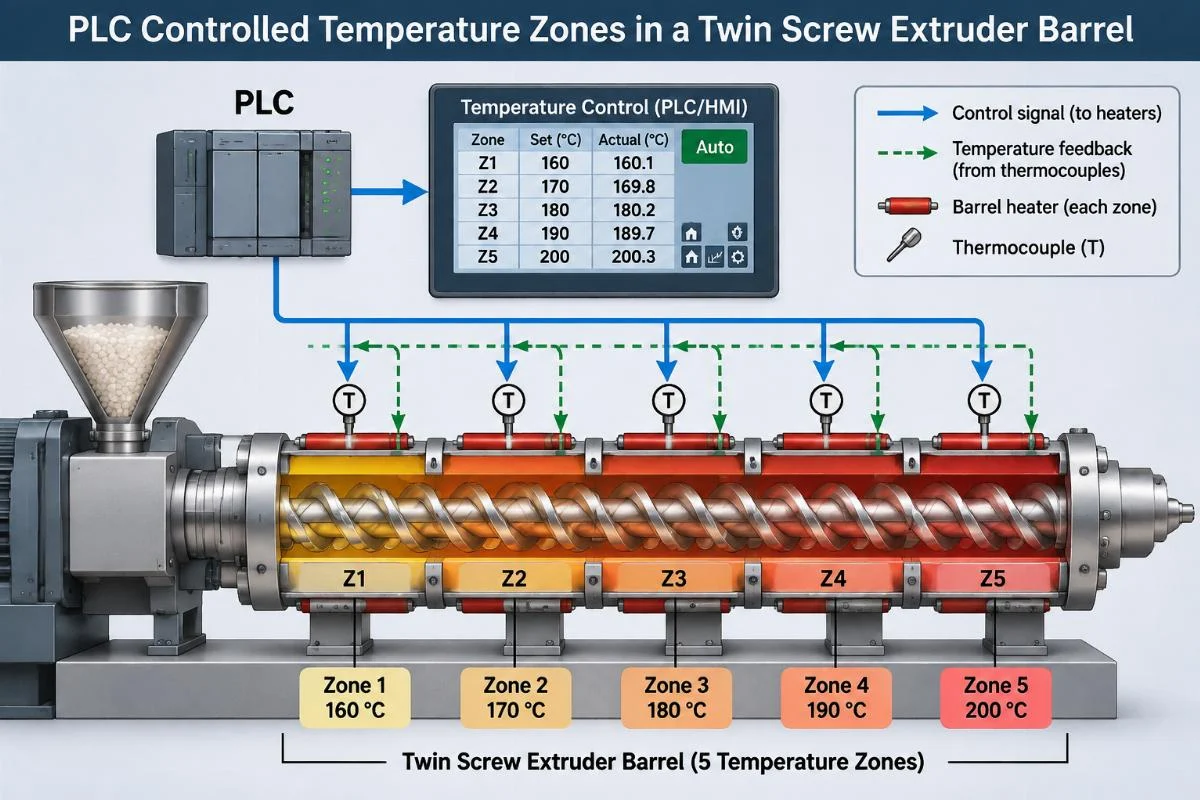
Temperature control is the invisible hand guiding the extrusion process. If the barrel zones are too cold, the starch remains raw, and the pellet sinks. If they are too hot, the Maillard reaction overcooks the proteins, reducing digestibility. The transition zones between the feeding, compression, and metering sections must be managed independently.
Modern Fish Feed Extrusion Mexico operations rely on automated systems to maintain these delicate balances. The DS-series machines utilize advanced PLC temperature control systems that adjust heating and cooling in real-time based on frictional feedback. This is crucial when processing high-fat trout diets, where friction can easily spike the temperature beyond safe limits. By maintaining precise multi-zone barrel temperature control, producers ensure that the gelatinization degree remains within the optimal window without burning the product. Industry guidelines emphasize that uniform thermal profiling is non-negotiable for producing premium aquaculture feed.
How to Integrate Extrusion with Drying for Maximum Shelf Life?
Synchronizing extruder output with dryer airflow ensures uniform moisture reduction without pellet cracking, securing long-term shelf life.
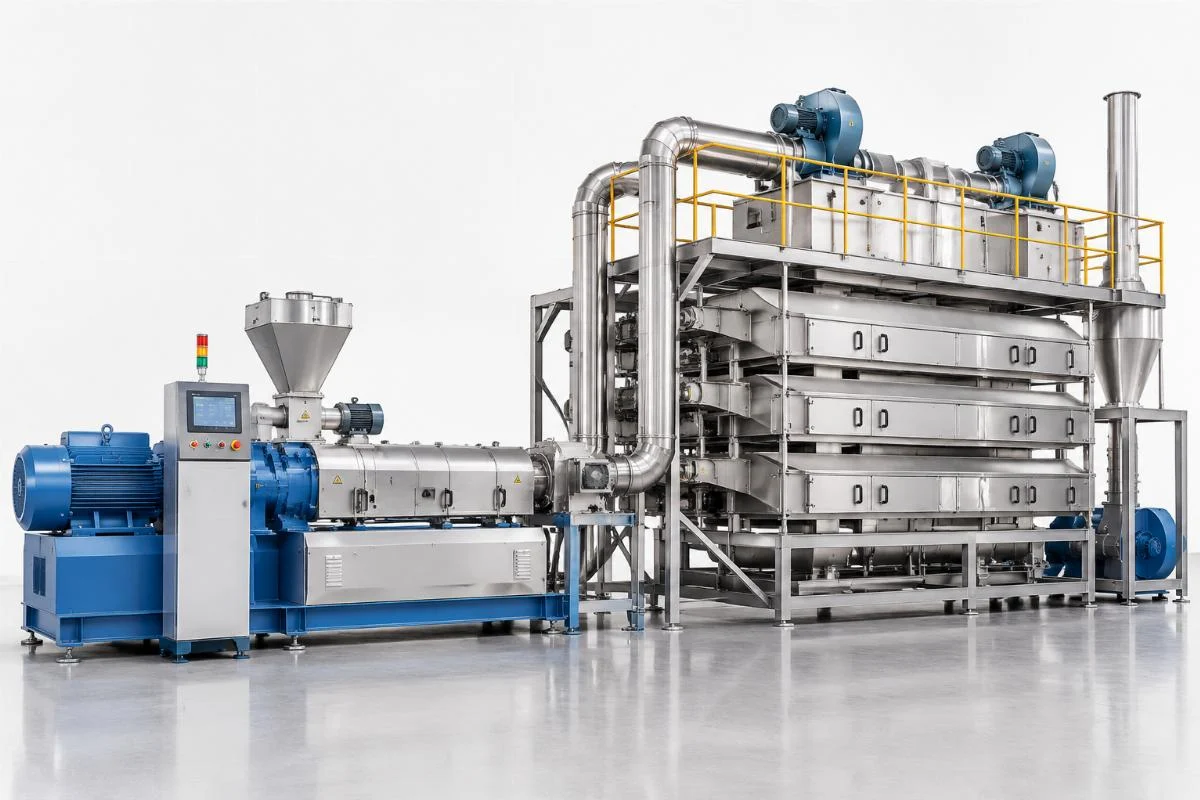
The extruder is only half the battle. If the drying process is mismatched, the pellets will either remain too moist, inviting mold, or dry too quickly on the outside while remaining wet inside, leading to cracking and dust generation. A tilapia and trout feed extruder Mexico project must include a seamlessly integrated drying system.
The moisture content exiting the die is high, and the initial drying phase must be gentle to set the pellet’s outer crust. Subsequent zones must gradually pull the internal moisture to the surface. Turnkey integration means matching the extruder’s hourly capacity with the multi-layer drying system’s airflow and retention time. We design these floating fish feed production line Mexico setups so that the dryer’s variable frequency drives communicate with the extruder’s feed rate. This synchronization prevents bottlenecks and ensures every pellet experiences the exact same thermal history. Producers who neglect this integration often face massive post-production losses due to shattered pellets and inconsistent moisture levels.
Conclusion
Mastering the nuances of species-specific extrusion is the true differentiator in the aquaculture feed market.
Navigating the complexities of Fish Feed Extrusion Mexico requires moving beyond basic capacity metrics to focus on tailored screw configurations and precise thermal management. By respecting the distinct biological needs of tilapia and trout, producers can achieve optimal gelatinization, perfect buoyancy, and maximum shelf life, turning raw ingredients into high-performance feed.