Fish Feed Technical Article
Shrimp Feed Extrusion in Thailand: Water Stability Requirements Manufacturer
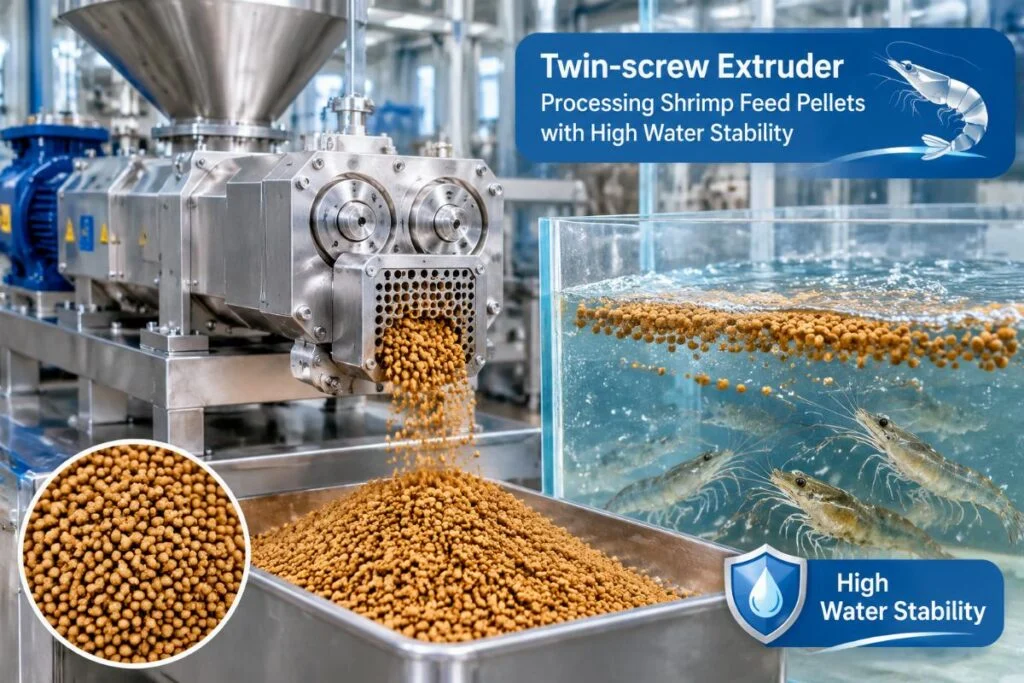
Cranking up the barrel temperature does not guarantee a pellet that survives the marine environment; in fact, excessive heat often destroys the very binders you rely on to keep the feed intact.
Achieving optimal Shrimp feed extrusion water stability requires a delicate balance of precise conditioning, specialized ring die compression, and twin-screw technology to prevent nutrient leaching in high-salinity coastal ponds.
I still remember the humid air in a Bangkok workshop years ago, standing shoulder-to-shoulder with my mentor while we tore apart a conditioner barrel. We had just shipped a high-capacity line to a coastal farm in the Gulf of Thailand, and the client was furious. The pellets were disintegrating within an hour of hitting the water, turning the pond into a cloudy mess. Back at the trade show in North America, I had proudly pitched the massive throughput and expansion ratios, completely ignoring how the feed would behave once submerged. That trip to Thailand changed everything. We spent weeks adjusting steam temperatures, tweaking the retention time, and machining new dies until the feed held firm. Now, whenever I consult on a new aquaculture line, my first question is always: how long does your feed need to stay intact in the water without sinking or dissolving?
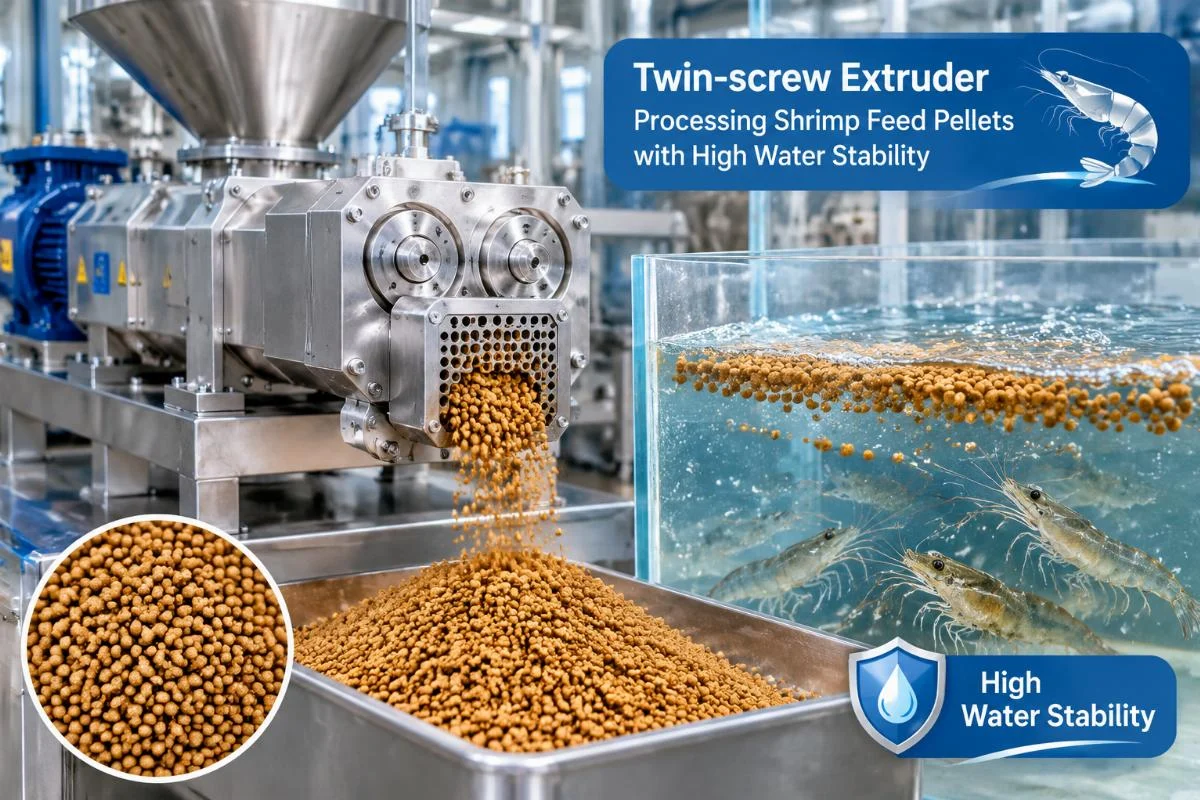
Getting the mechanics right is the only way to ensure your investment pays off, and understanding the core drivers of Shrimp feed extrusion water stability is where we must begin.
Why is Water Stability Critical for Thai Shrimp Farming?
Poor stability directly translates to nutrient leaching, degraded water quality, and severe economic losses for coastal farms.
In the intensive shrimp farming regions of Thailand, the marine environment is unforgiving. Shrimp are slow feeders, often taking hours to consume their meal. If the pellets break down prematurely, the unspent nutrients dissolve into the water column. This triggers a spike in ammonia and nitrite levels, creating a toxic environment that stresses the shrimp and invites disease. According to regional marine water quality research, excessive feed breakdown is a primary catalyst for pond eutrophication.
Furthermore, the physical structure of the pellet dictates the feed conversion ratio. When a pellet dissolves, the shrimp cannot extract the encapsulated proteins and lipids. I once worked with a startup in Southeast Asia that was struggling with a terrible feed conversion ratio. They blamed their formula, but the real culprit was their post-extrusion handling. The pellets were developing micro-cracks during cooling, allowing water to penetrate and wash away the vitamins before the shrimp could even bite them. By integrating a multi-stage drying and cooling system, we stabilized the post-extrusion moisture, and their feed conversion metrics improved noticeably.
To meet international aquaculture feed standards, shrimp pellets must maintain their structural integrity in saline water for extended periods, often requiring a Pellet Durability Index that far exceeds standard freshwater fish feeds.
How Do Extrusion Parameters Affect Pellet Durability?
Conditioning temperature, screw speed, and die compression dictate the final starch gelatinization and structural integrity of the pellet.
The foundation of Shrimp feed extrusion water stability lies in the conditioning phase. Starch gelatinization is the natural glue that holds the pellet together. If the steam injection is insufficient or the retention time in the conditioner is too short, the starch granules remain raw. When these pellets hit the water, they rapidly absorb moisture and burst apart. Conversely, over-conditioning can lead to a brittle texture that shatters under mechanical stress.
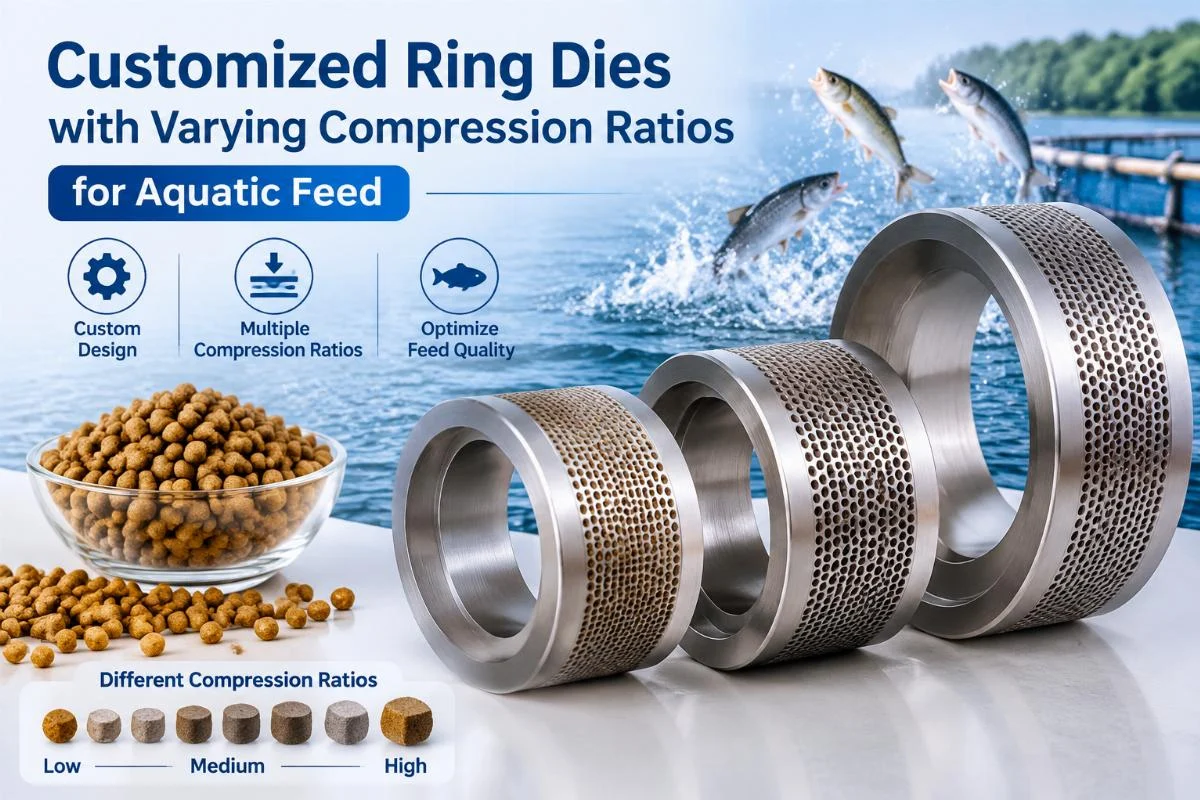
The compression ratio of the ring die is another critical variable. In high-salinity waters, standard dies often fail to provide enough density. We had to customize the compression ratios for a client dealing with severe feed breakdown in a high-salinity coastal pond. By increasing the compression ratio and adjusting the effective working length of the die, we forced the material to compact more tightly, significantly enhancing its resistance to water penetration.
It is a common misconception that higher extrusion temperatures automatically yield better stability. Actually, excessive heat degrades the functional binders and reduces the overall water durability of the final product. The goal is to reach the optimal gelatinization degree without scorching the proteins. Moisture gradient analysis post-extrusion is essential to ensure the core and the surface of the pellet dry uniformly, preventing internal stresses that lead to cracking.
Twin-Screw vs. Single-Screw: Which Suits Shrimp Feed?
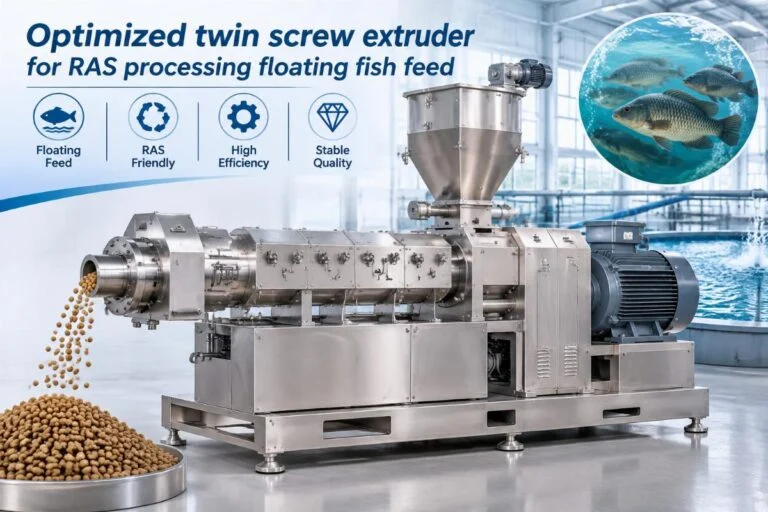
Twin-screw extruders offer superior shear and mixing capabilities, making them essential for high-protein, high-moisture aquatic recipes.
Many producers assume that a robust single-screw machine is sufficient for standard aquaculture diets. However, when formulating for shrimp, which requires high protein levels and specific lipid inclusions, the limitations of a single-screw design quickly become apparent. Single-screw extruders rely heavily on friction between the material and the barrel to convey and melt the product. This often results in uneven gelatinization, where the outer layer of the pellet is overcooked while the core remains under-processed.
Twin-screw technology fundamentally changes this dynamic. The intermeshing screws provide positive conveyance and intense, controlled shear. This ensures that every particle of the recipe is subjected to uniform thermal and mechanical energy. For Shrimp feed extrusion water stability, this uniformity is non-negotiable. It guarantees that the binders are fully activated throughout the entire matrix of the pellet, not just on the surface.
When we design turnkey lines for aquaculture feed producers, we frequently recommend the DS series twin-screw extruders for these demanding applications. The ability to precisely control the L/D ratio and screw configuration allows us to tailor the shear profile to the specific recipe. A European contract manufacturer recently switched to a twin-screw setup for their premium shrimp line. They reported a substantial extension in the time the pellets remained intact in the water, alongside a noticeable reduction in fines and dust. The twin-screw design simply provides the mechanical control required to lock in durability.

What Post-Extrusion Steps Lock in Stability?
Proper drying and cooling curves prevent micro-cracks that lead to premature disintegration in water.
The extrusion process is only half the battle. How you handle the pellet immediately after it exits the die determines whether it will survive the journey to the feed bin and, ultimately, the pond. If the pellets are dried too aggressively at the surface, the outer layer shrinks and hardens while the core remains moist. As the core eventually dries and shrinks, it pulls away from the crust, creating microscopic fissures. These micro-cracks are highways for water ingress, completely undermining all the efforts made during extrusion.
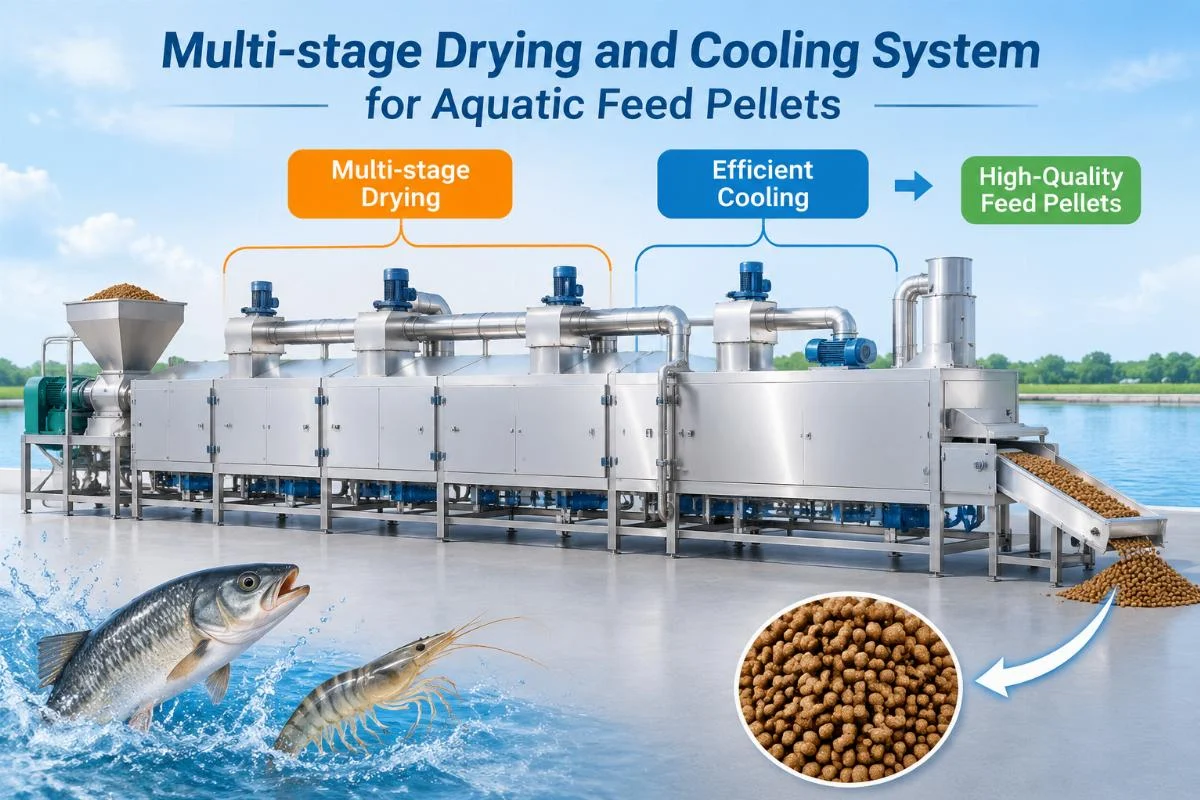
Achieving true Shrimp feed extrusion water stability requires a gentle, multi-stage approach to moisture removal. The initial drying phase must remove surface moisture without shocking the pellet. Subsequent tempering stages allow the internal moisture to migrate to the surface, followed by gentle cooling to stabilize the starch matrix.
Meiteng’s integrated drying and cooling systems are designed specifically to manage these delicate gradients. By controlling the airflow and temperature across multiple zones, we ensure that the pellets dry evenly from the inside out. This eliminates the thermal stresses that cause cracking. A startup in Latin America was facing severe durability issues despite having a great formula and a high-end extruder. Their bottleneck was a single-pass dryer that was blasting the pellets with excessive heat. After upgrading to a multi-pass drying and cooling system, the structural integrity of their pellets improved dramatically, and their water stability metrics consistently met the strictest regional requirements.
Conclusion
Mastering Shrimp feed extrusion water stability is a holistic process that extends far beyond the extruder barrel.
From precise steam conditioning and customized ring dies to the superior shear of twin-screw technology and gentle post-extrusion drying, every step must be optimized to prevent nutrient leaching in marine environments. Producers who treat durability as an afterthought will inevitably face water quality issues and poor feed conversion, while those who engineer stability into every phase of the process will secure both their margins and the health of their shrimp.