Fish Feed Technical Article
Floating Fish Feed Extruder for Tilapia Farms Egypt | Meiteng Manufacturer
Higher screw speed does not guarantee better floating; poor temperature and moisture balance leading to insufficient starch gelatinization is the real culprit behind sinking pellets.
Successful floating fish feed production in Egypt relies on controlling starch gelatinization during extrusion, integrating proper drying and cooling systems adapted to arid climates, and validating formula performance before machine procurement to ensure low sinking rates and optimal feed conversion.
Having spent years running trade shows in Hanover and Chicago, and starting my career inspecting twin-screw quality control on the workshop floor, I eventually transitioned into international trade. I remember taking over a North African order in Chicago years ago. The buyer was obsessed with extruder rotational speed and die compression ratios. I tried to steer the conversation toward starch gelatinization degrees, but he wouldn’t listen. When the machinery finally arrived in Egypt, the sinking rate of the tilapia feed they produced skyrocketed, leading to a direct claim. From that day on, I established a strict rule: selling a twin-screw fish feed extruder means passing the formula gelatinization test first. Specs look great on paper, but if the expansion degree fails, the equipment is essentially scrap metal.
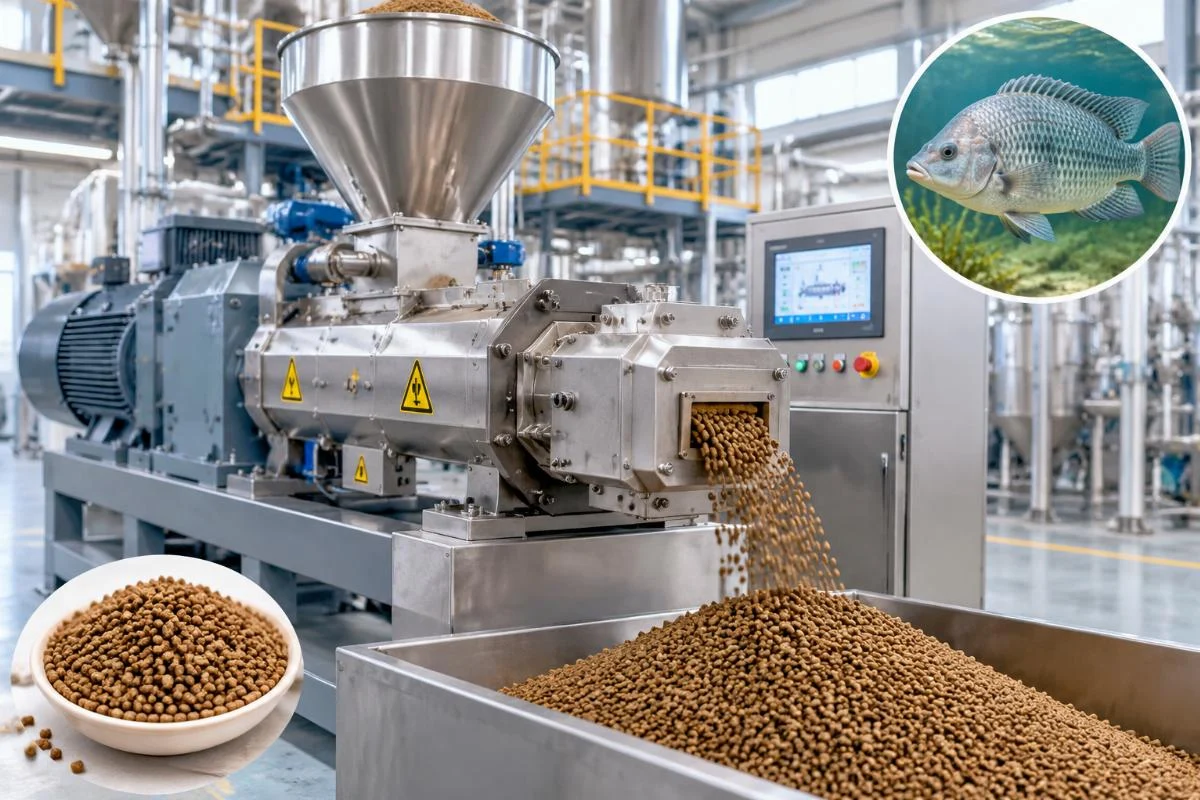
Let us break down what actually makes or breaks a production line in this specific market.
Why Tilapia Farming in Egypt Demands High-Quality Floating Feed?
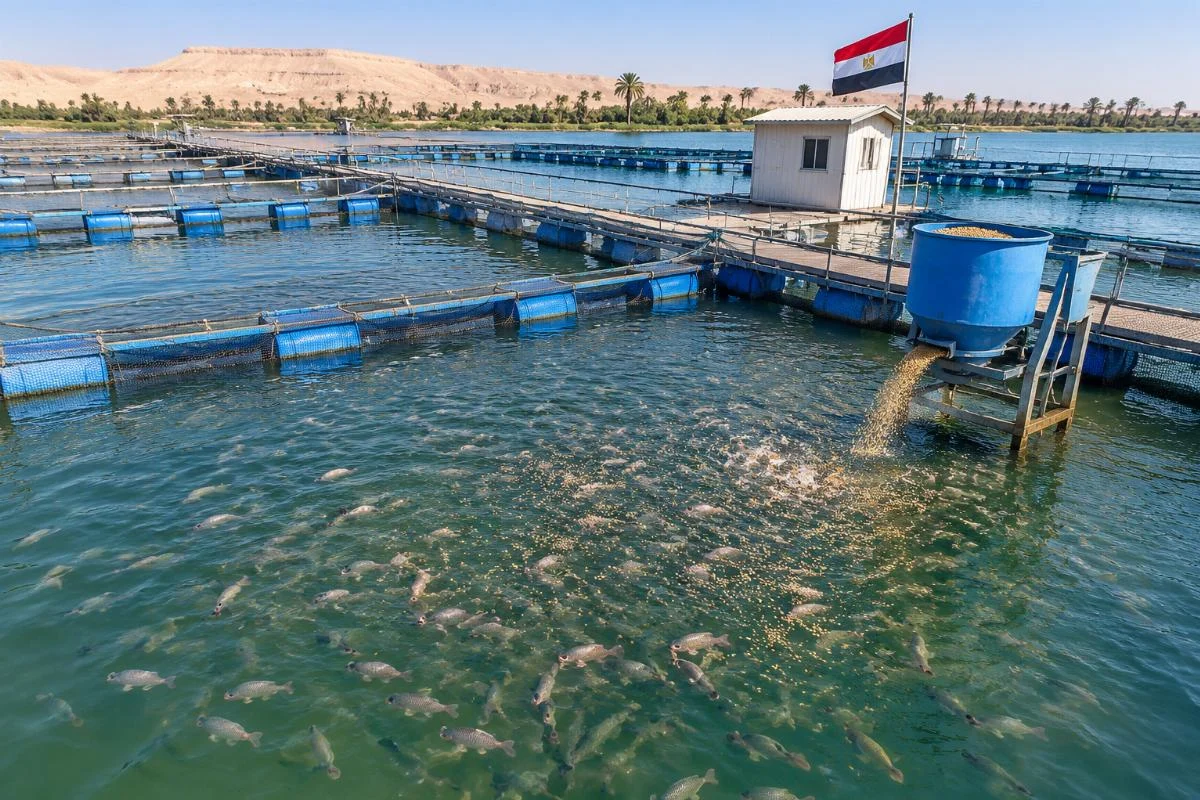
Egypt’s position as a leading aquaculture hub necessitates high-quality floating feed to maximize feed conversion ratios and minimize water pollution.
The aquaculture sector in Egypt has experienced substantial growth over the past decade, positioning the country as a dominant player in global tilapia farming. This expansion is not just about volume; it is about efficiency. Traditional sinking feeds often lead to significant nutrient loss in the water column, directly harming the aquatic environment and wasting expensive raw materials. Floating feeds allow farmers to monitor consumption visually, adjusting feeding rates in real-time to prevent overfeeding.
Industry observations show that farms transitioning from sinking to floating diets notice a substantial drop in their overall feed conversion ratios. This shift is critical because feed costs represent the majority of operational expenses in aquaculture. Furthermore, local agricultural guidelines emphasize the need for durable pellets that can withstand surface water conditions without disintegrating rapidly. The market demand is no longer just for basic extrusion; it is for precise, nutrient-dense floating pellets that support rapid fish growth while maintaining pond health.
The Core of Floating Feed: Starch Gelatinization vs. Machine Specs
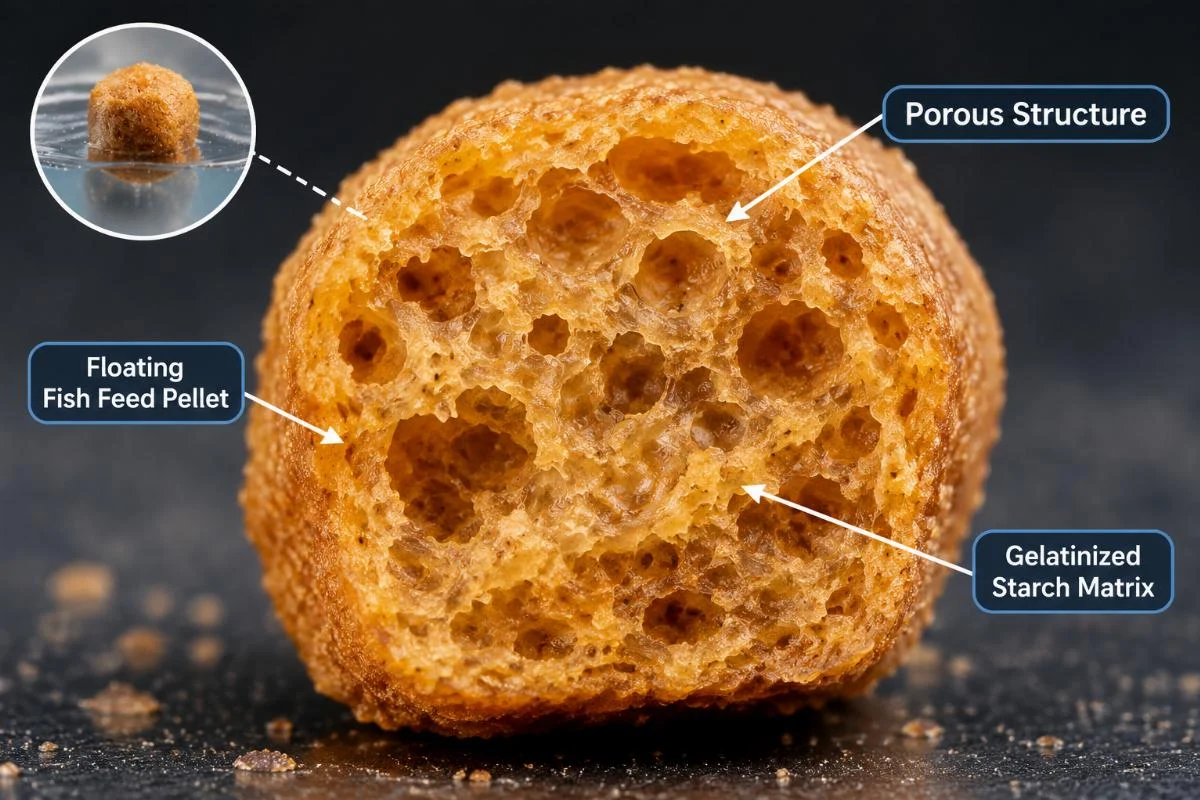
The physical mechanism that keeps a feed pellet afloat is the complete gelatinization of starch, not merely the mechanical pressure applied by the extruder.
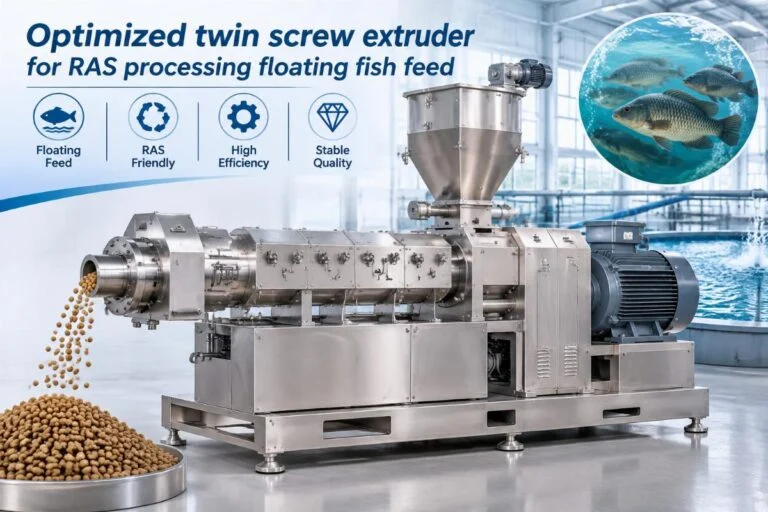
Many buyers focus solely on the extruder’s motor power or screw configuration, assuming that higher mechanical energy automatically yields better floating characteristics. This is a fundamental misunderstanding of food extrusion science. Starch gelatinization requires a precise synergy of moisture, heat, and residence time inside the barrel. If the moisture content is too high, the pellets will expand too much and become too porous, eventually absorbing water and sinking. If the temperature is insufficient, the starch matrix fails to form the necessary elastic network to trap air bubbles during the pressure drop at the die face.
I have seen entire batches of feed fail simply because the raw material moisture varied slightly from the morning to the afternoon shift, and the operators did not adjust the steam injection accordingly. The machinery was perfectly capable, but the process control was absent. Achieving the right specific mechanical energy input is about balancing these variables to ensure the starch fully gelatinizes, creating a stable, water-resistant matrix that keeps the pellet on the surface for extended periods.
Key Equipment for a Turnkey Tilapia Feed Line in Egypt
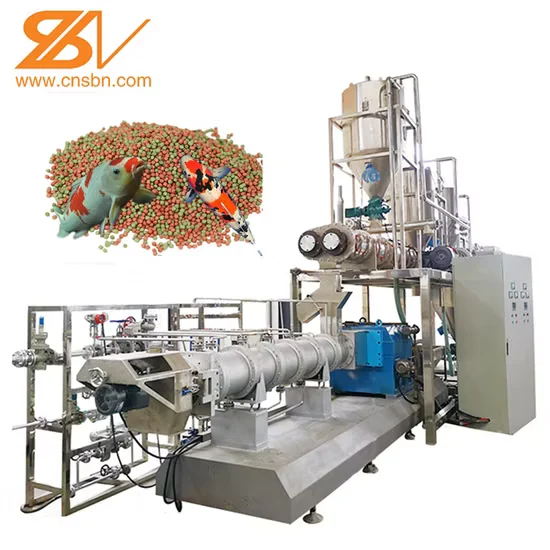
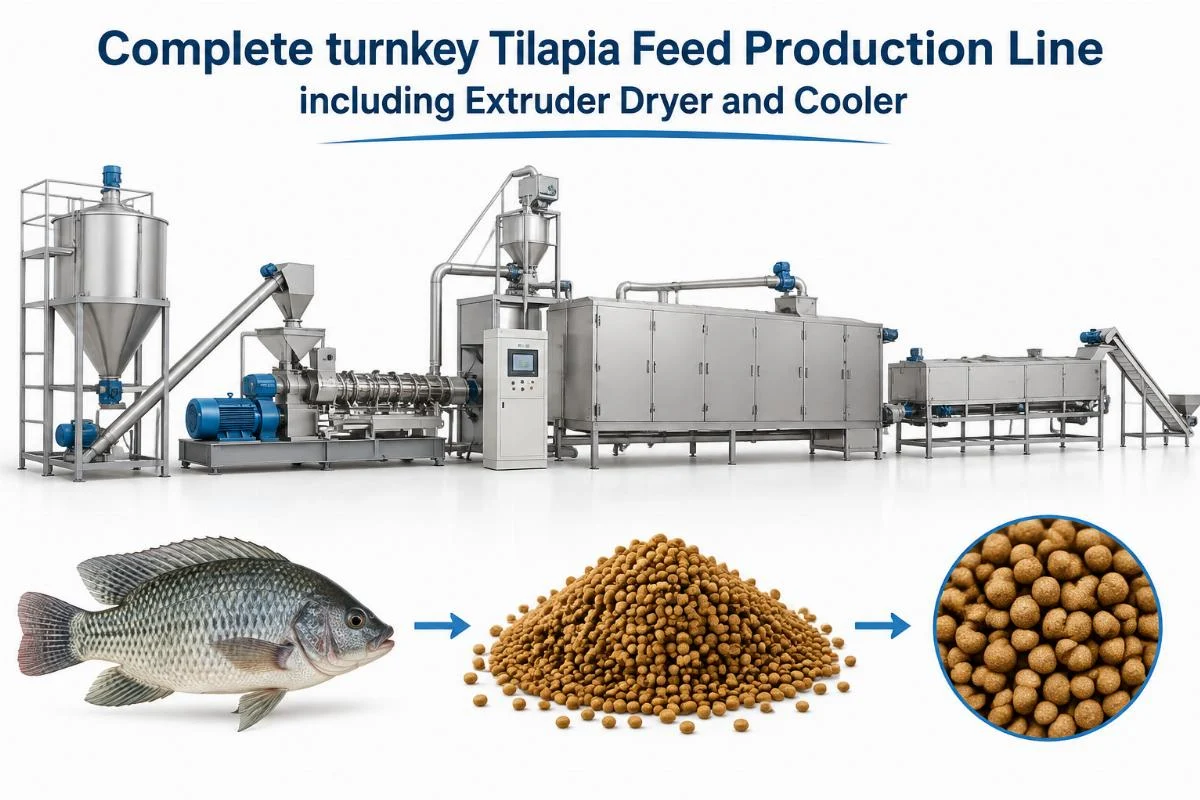
A reliable floating fish feed production in Egypt requires a synchronized turnkey line where the extruder, dryer, and cooler operate as a unified thermal system.
Purchasing a standalone extruder is a common mistake among startup producers. The extruder only forms the pellet; the subsequent drying and cooling stages dictate its final durability and sinking rate. In a turnkey setup, the dryer must carefully reduce the pellet moisture to a safe storage level without creating case hardening, which traps internal moisture and leads to cracking. Cracked pellets inevitably sink.
The cooler then brings the pellet temperature down gradually. If cooled too rapidly, thermal shock causes micro-fractures in the gelatinized starch network. When I consult on Egypt aquaculture feed machinery setups, I always emphasize the integration of these downstream systems. A well-designed line ensures that the heat and mass transfer are controlled sequentially. This holistic approach prevents the bottlenecks that occur when a high-capacity extruder is paired with an undersized or poorly designed dryer, which is a frequent cause of pellet quality claims in the field.
Overcoming Local Challenges: Climate and Raw Material Adaptation
Adapting the production process to local arid climates and alternative raw materials is essential for maintaining pellet durability and floating stability.
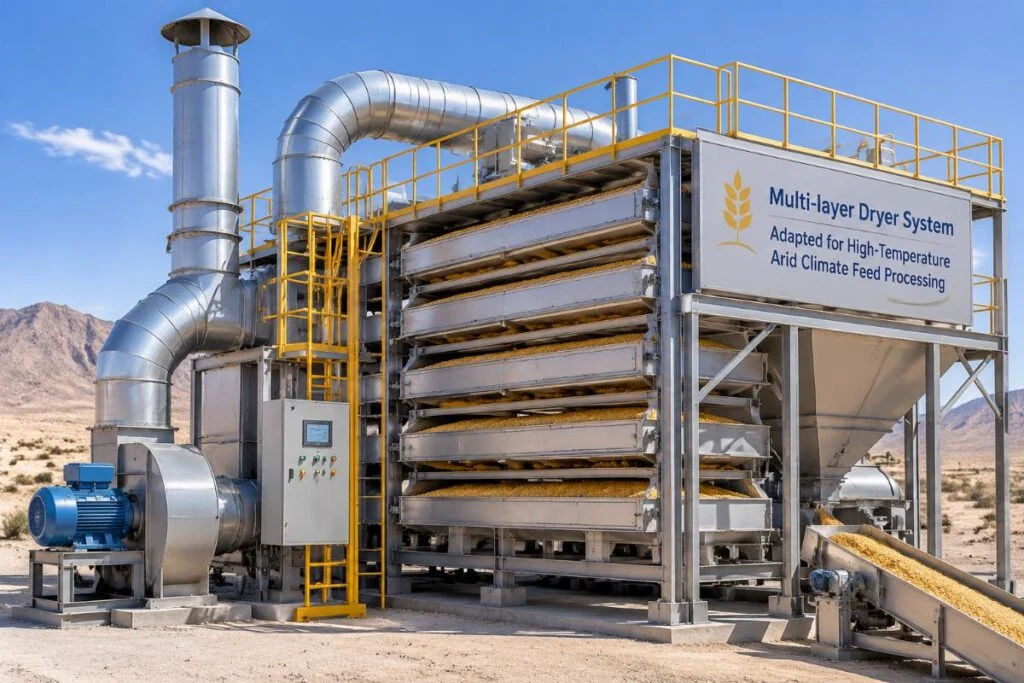
Egypt’s climate presents unique challenges for feed manufacturing. High ambient temperatures and low humidity in arid regions can drastically alter the drying and cooling dynamics. A drying profile optimized for a humid European climate will fail in the Egyptian desert, often leaving the pellet core under-dried while the surface becomes brittle. Furthermore, local producers frequently incorporate regional agricultural by-products to manage costs. These alternative ingredients have different starch compositions and fiber contents, which directly affect the extrusion behavior and the final gelatinization degree.
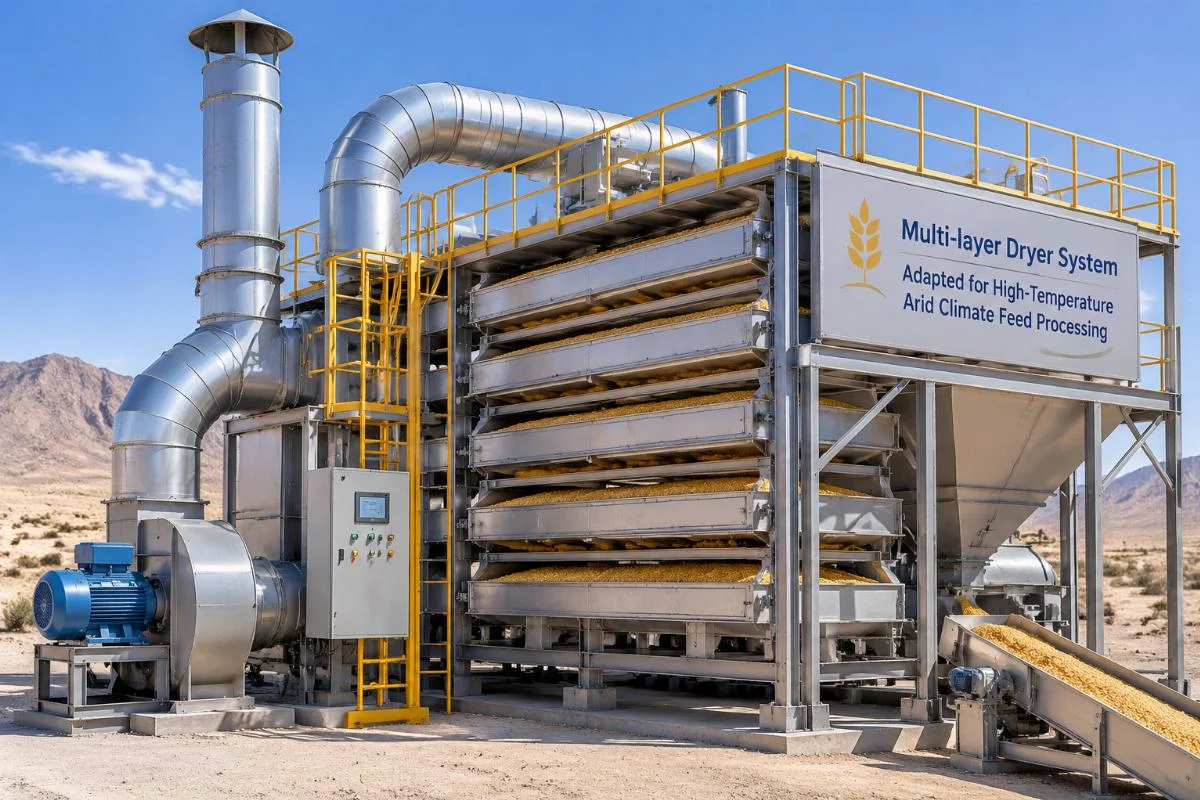
During a turnkey line installation in an arid region, we had to completely redesign the airflow and temperature zoning of the multi-layer dryer to compensate for the extreme ambient heat and low moisture in the intake air. Additionally, the screw configuration inside the twin-screw fish feed extruder had to be adjusted to handle the higher fiber content of the local raw material blend. Without these localized adaptations, the pellets would have suffered from severe surface cracking and rapid sinking upon contact with the pond water.
How to Verify Extruder Performance Before Ordering
Verifying extruder performance requires testing the specific formula under simulated production conditions rather than relying on theoretical machine specifications.
Before committing to a purchase, buyers must demand a practical validation of the extrusion process. Sending a bag of raw materials to the manufacturer’s production facilities for a live test is the only reliable way to assess performance. During this test, the focus should not be on the maximum output capacity, but on the stability of the floating rate and the physical durability of the resulting pellets.
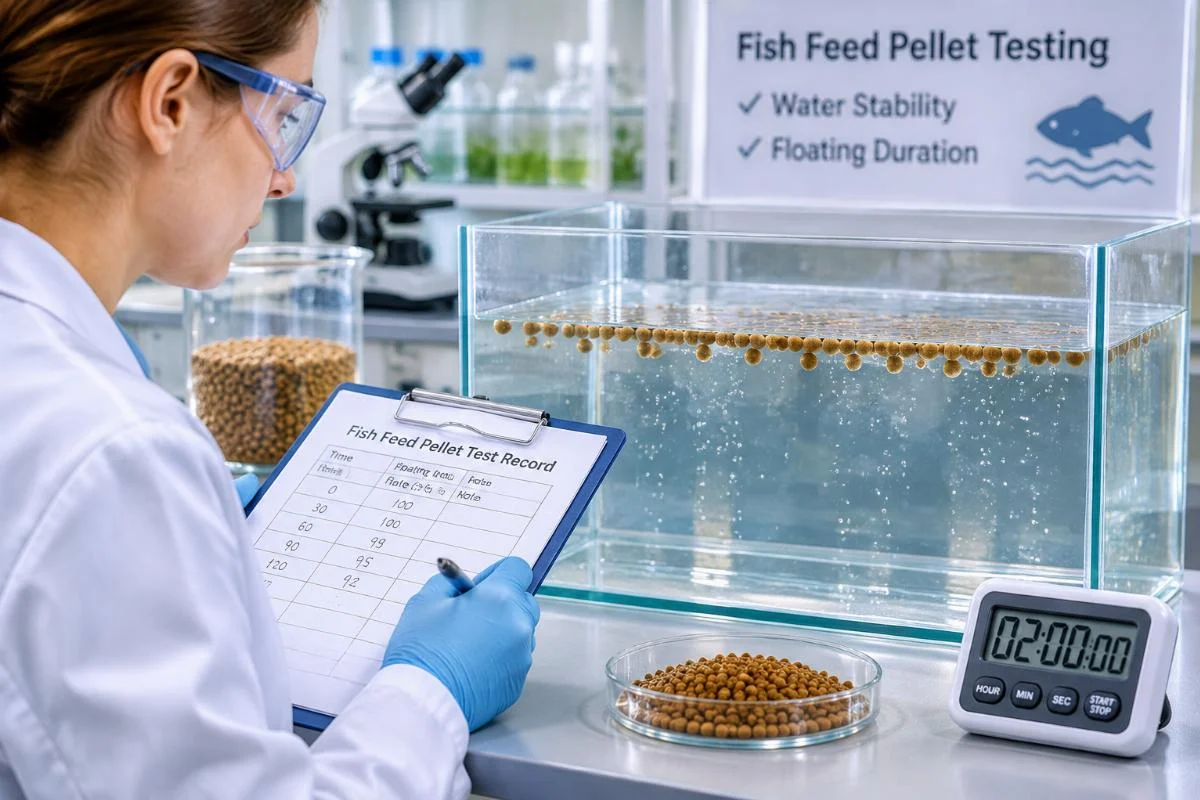
Operators should measure the starch gelatinization degree in the laboratory and conduct a simple water stability test by leaving the pellets in a water bath to observe the sinking time and structural integrity. A reputable supplier will provide detailed feedback on how the specific formula responds to different temperature and moisture profiles. This step filters out equipment that might handle standard corn-soy blends but fails completely when local, cost-effective alternative ingredients are introduced. It transforms the procurement process from a gamble based on brochures into a data-driven investment.
Conclusion
Mastering floating fish feed production in Egypt demands a shift in focus from mere machine horsepower to the precise science of starch gelatinization and integrated thermal processing. By prioritizing formula validation, adapting to local climatic conditions, and treating the extrusion line as a unified system, producers can consistently deliver high-quality floating pellets that optimize farm profitability and environmental health.