Fish Feed Technical Article
Extru-Tech vs Meiteng Floating Feed Extruder Manufacturer
Higher nameplate capacity is a trap if the floating rate collapses during minor formula tweaks.
When comparing Extru-Tech and Meiteng floating feed extruder options, buyers must look beyond brochure specs to actual floating rates, screw metallurgy, and turnkey line integration, as real-world output often deviates significantly from theoretical claims.
I still remember the sinking feed disaster that almost cost my previous company its biggest contract. The procurement paperwork promised a specific hourly throughput, but on the factory floor, the actual output barely reached the lower end of the acceptable range. Worse, the screws wore out prematurely, and the feed kept sinking, suffocating the fingerlings. When we called for after-sales support, we were stuck in endless procedural loops. Now, sitting on the manufacturing side in Jinan, I see the exact same traps catching new buyers. Specifications might claim food-grade stainless steel and turnkey solutions, but when the formula changes slightly or the screw length-to-diameter ratio is off, the floating rate fails. Today, we are tearing down the spec sheets to compare Extru-Tech and our floating feed extruder options, focusing on where the money should actually go.

Let us break down the real differences between these manufacturers.
How Do Extru-Tech and Meiteng Compare in Real-World Capacity?
Actual throughput under specific moisture and formula conditions is the only capacity metric that matters, as nameplate numbers frequently mask severe realization rate drops.
When evaluating a twin screw fish feed extruder, the gap between theoretical and actual output is where budgets bleed. Many producers focus solely on the motor power listed on the nameplate, ignoring how specific mechanical energy input affects the final yield. In real production environments, the actual output often realizes only a fraction of the nameplate capacity due to moisture content and formula viscosity.
A Southeast Asian aquaculture feed producer once faced this exact issue. They purchased a standalone machine based on peak theoretical output. However, when they adjusted the protein-to-carbohydrate ratio to improve pellet durability, the specific mechanical energy input spiked, and the actual throughput dropped noticeably. The machine choked, and the floating rate became unstable.
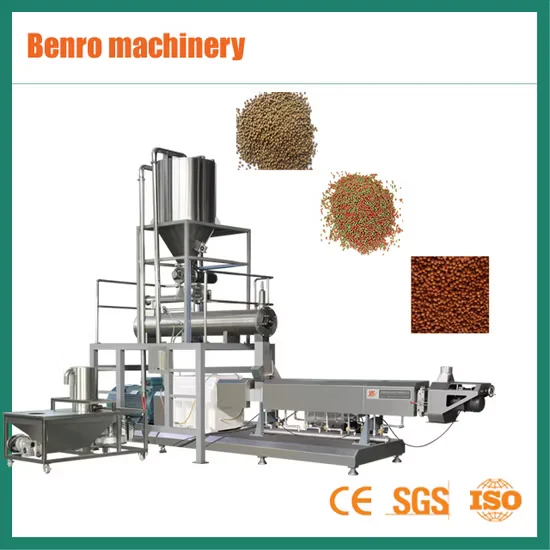
To prevent this, a proper floating feed extruder comparison must evaluate how the equipment handles formula variations. Meiteng’s twin screw series, including the DS65, DS70, and DS85 models, are engineered with optimized barrel temperature control and screw configurations that maintain stable throughput even when formula moisture fluctuates.
| Capacity Metric | Nameplate Claim Reality | Actual Formula Reality |
|---|---|---|
| Throughput Stability | Uncontrolled | Standard |
| Moisture Tolerance | Vulnerable | Robust |
| Specific Mechanical Energy | Noticeably reduced | Substantially extended |
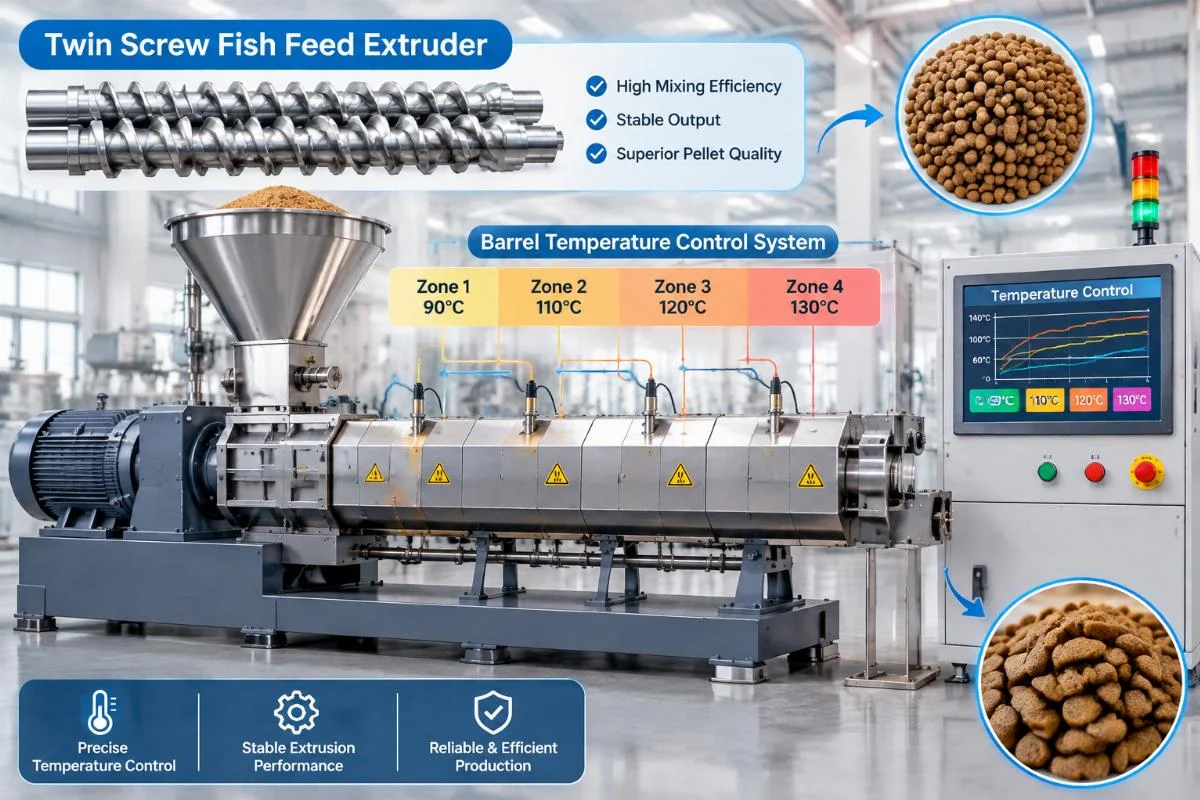
What Determines the Floating Rate Stability in Fish Feed?
Screw geometry and barrel temperature precision dictate the sinking feed percentage, making metallurgy far more critical than external stainless steel claims.
A high floating rate is non-negotiable for aquaculture feed. If the feed sinks, it pollutes the water and starves the stock. The stability of this floating rate relies heavily on the screw length-to-diameter ratio and the gelatinization degree achieved inside the barrel.
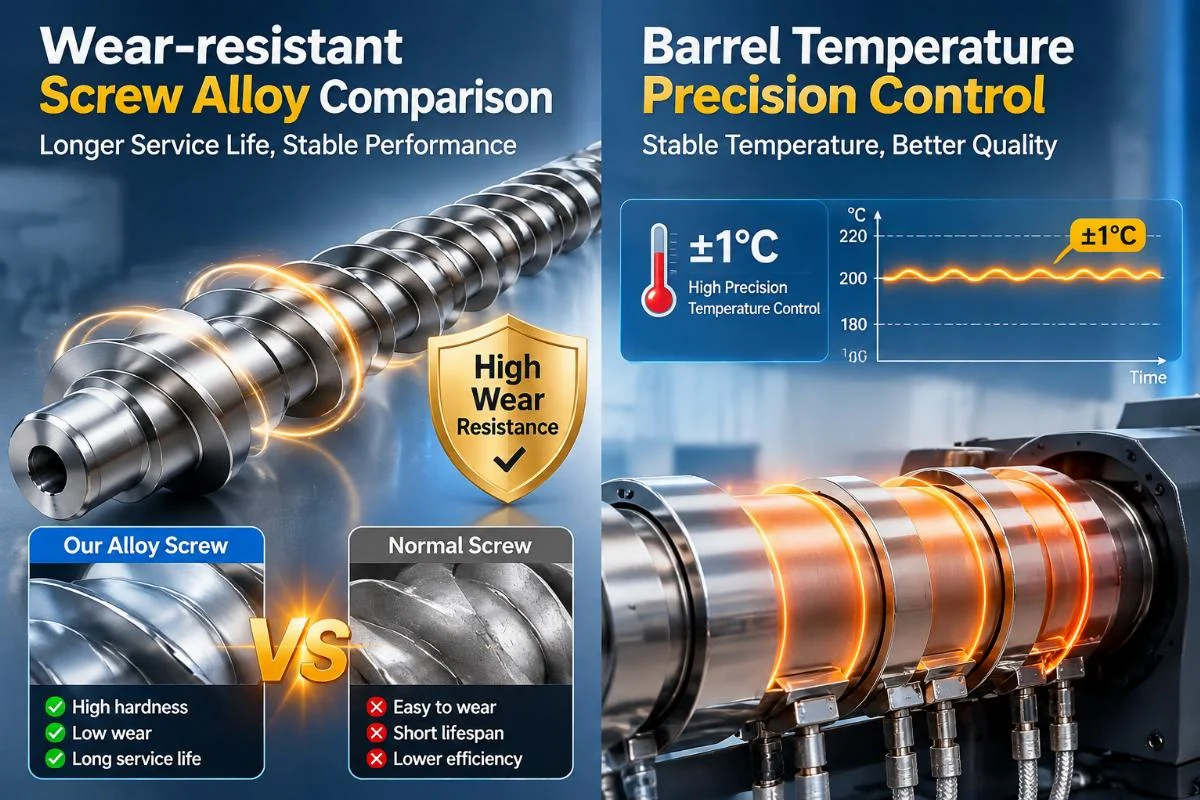
Some manufacturers boast about using stainless steel for the entire machine, but this means little if the core screw alloy and heat treatment lack wear resistance. When the screw tips wear down after a few months, the compression ratio changes, and the sinking feed ratio increases drastically.
During a site visit to a Latin American production facility, we tested their existing line. The external casing was pristine, but the internal screws showed severe wear, leading to a sinking rate variance that ruined their product consistency. By contrast, Meiteng utilizes specialized alloy steels with advanced heat treatment for the core screws in the DS65, DS70, and DS85 series. This ensures that the specific mechanical energy input remains consistent over extended service life, keeping the sinking rate variance minimal. Furthermore, our formula development support helps producers optimize their recipes to maximize gelatinization without overworking the screws.
Single Machine vs. Turnkey Line: Which Saves More Hidden Costs?
Standalone machine purchases often lead to severe integration delays and higher debugging costs compared to full line solutions with integrated drying and coating systems.
Buying a floating feed extruder is only the beginning. The real hidden costs lie in the integration of the dryer, cooler, and flavor coating systems. A standalone machine might seem cheaper upfront, but mismatched airflow in the dryer or uneven coating application can destroy the final product quality.
A Middle East feed producer initially bought just the extruder from a supplier, assuming they could source the rest of the floating feed production line locally. The result was weeks of delay in commissioning. The dryer could not handle the specific moisture output of the extruder, leading to mold issues in the final bags.
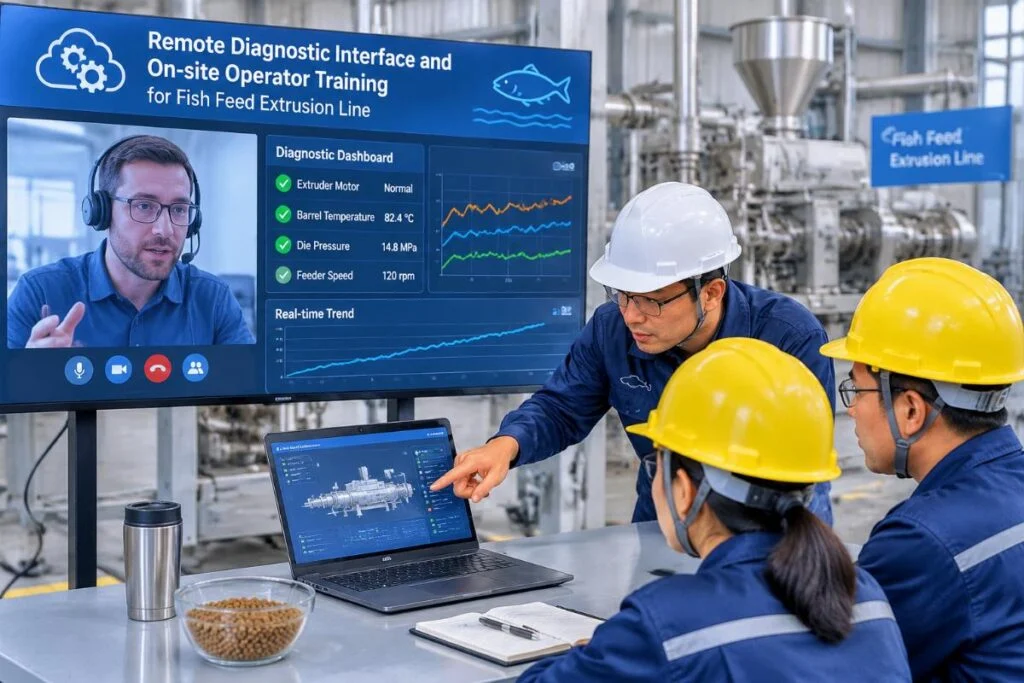
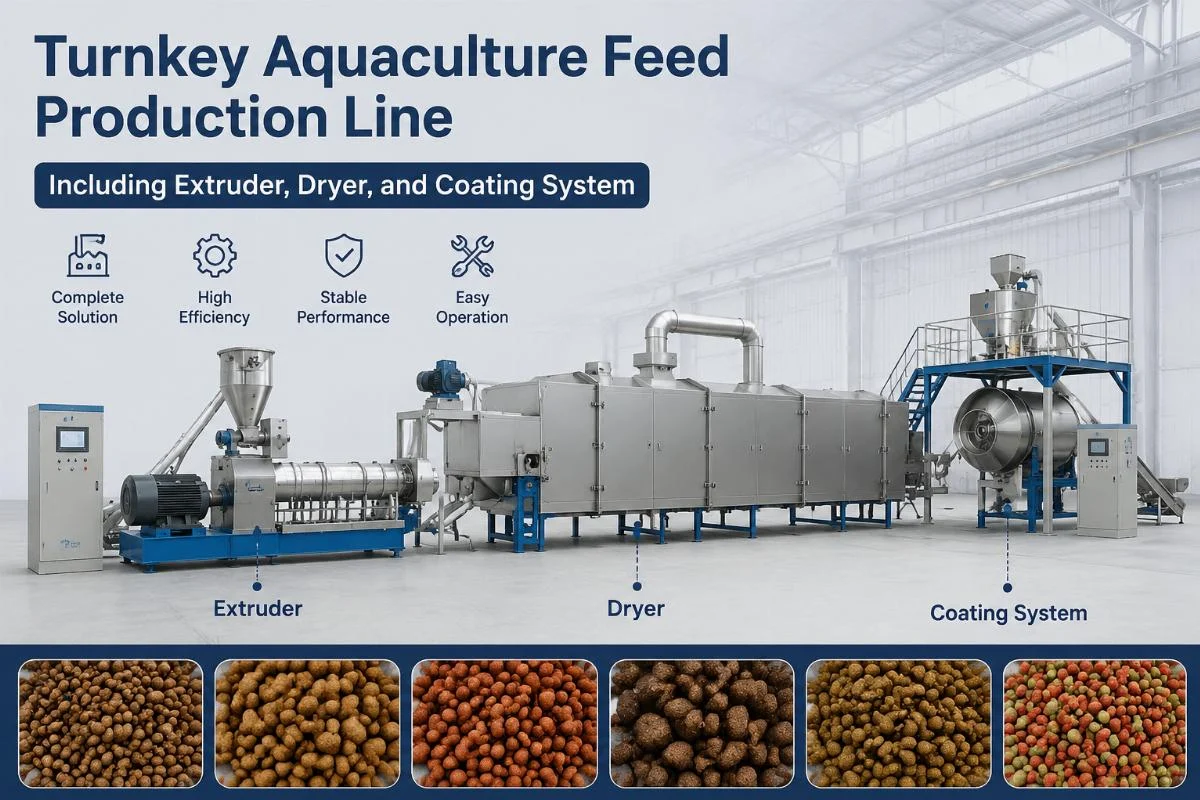
Meiteng approaches this differently by offering full turnkey aquaculture feed lines. From raw material intake to the integrated drying and cooling systems, the entire line is designed to work in harmony. The DS70 and DS85 models are seamlessly integrated with customized drying and coating systems, ensuring that the moisture removal and fat coating processes are perfectly synchronized. This eliminates the debugging nightmares and gets the facility running at optimal capacity much faster. On-site installation and operator training are included, ensuring the local team knows exactly how to manage the entire system.
How to Verify Material and After-Sales Claims Before Signing?
Requesting wear tests and checking local service response protocols prevents post-sale traps, as verbal guarantees hold no weight in production emergencies.
Before signing any contract for a floating feed extruder, buyers must verify the material claims and after-sales infrastructure. It is not enough to see a certificate for food-grade stainless steel; you need to know the specific alloy used for the wear-prone components.
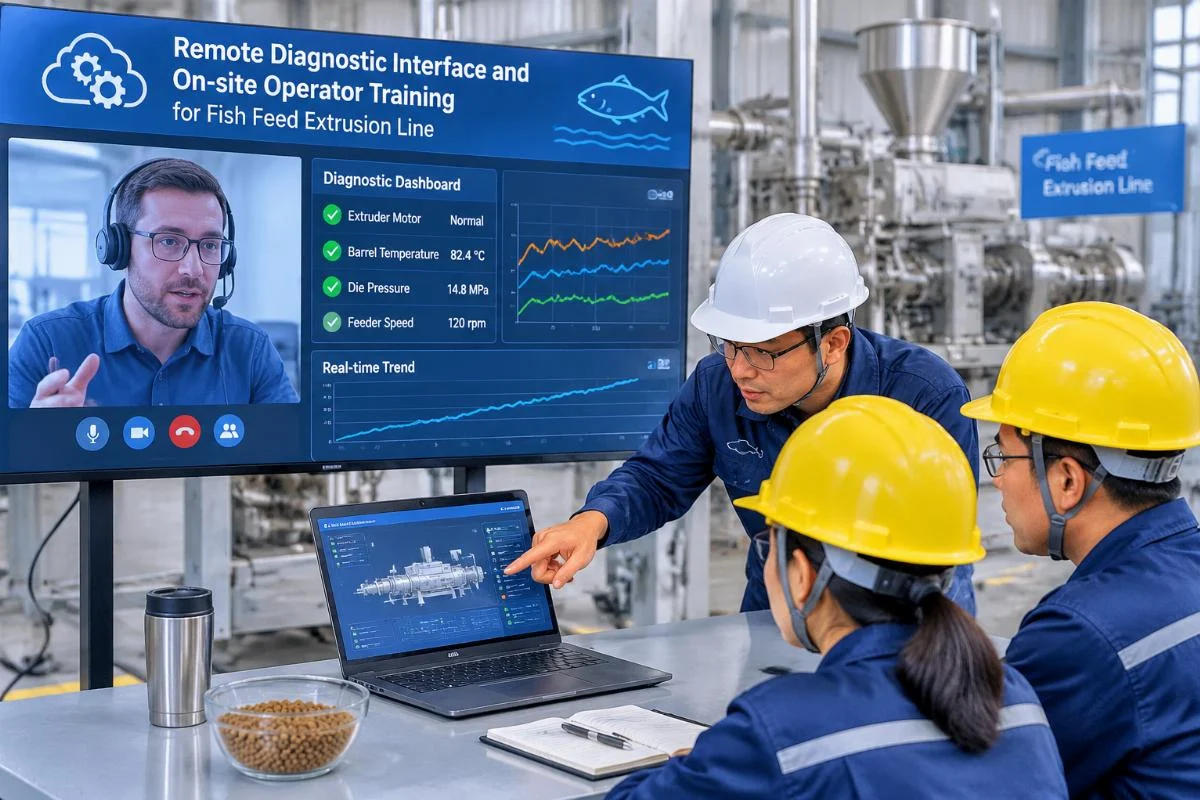
Always request a wear test report for the screws and barrels. Ask for the specific mechanical energy data under your target formula. Furthermore, check the manufacturer’s remote diagnostic assistance capabilities. When a machine goes down, every hour of downtime costs a mid-six-figure loss in potential revenue.
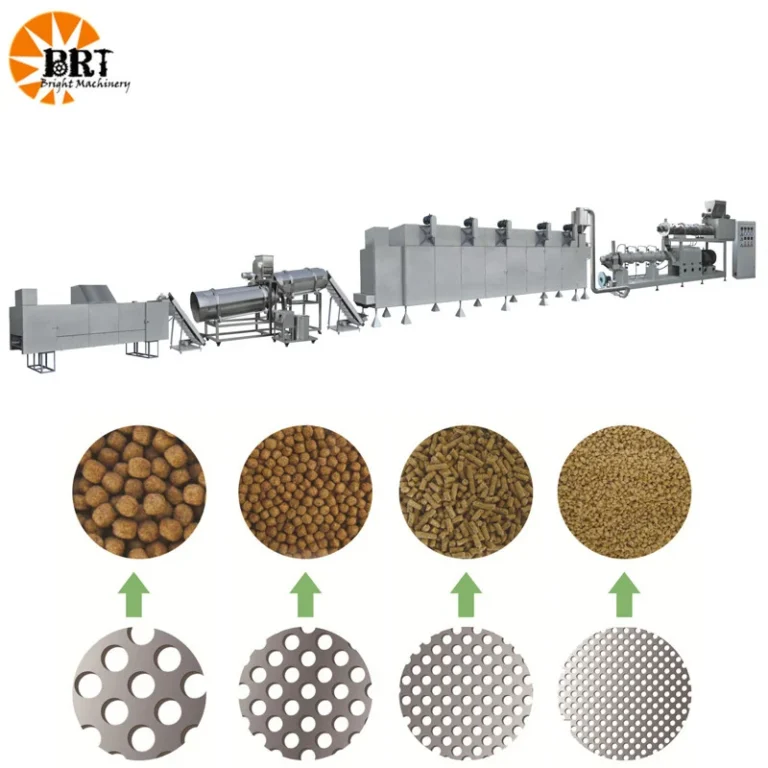
Meiteng provides multi-language technical support and remote diagnostic assistance to troubleshoot issues instantly. Our CE and ISO certifications are verifiable, and our on-site installation teams ensure that the DS65, DS70, and DS85 lines are calibrated perfectly to your specific facility conditions. We also provide ring die and pellet forming customization, ensuring that the physical dimensions of the feed match the exact requirements of your target fish species.
Conclusion
Choosing between Extru-Tech and Meiteng floating feed extruder options requires ignoring nameplate hype and focusing on real-world floating rates, screw durability, and turnkey integration.
Evaluate the specific mechanical energy consistency, verify the screw alloy heat treatment, and demand a fully integrated production line to avoid hidden debugging costs. True value lies in stable output and reliable after-sales support, not just brochure specifications.