Fish Feed Technical Article
DS70 Twin-Screw Extruder for Cage & Pond Feed: Wholesale Manufacturer
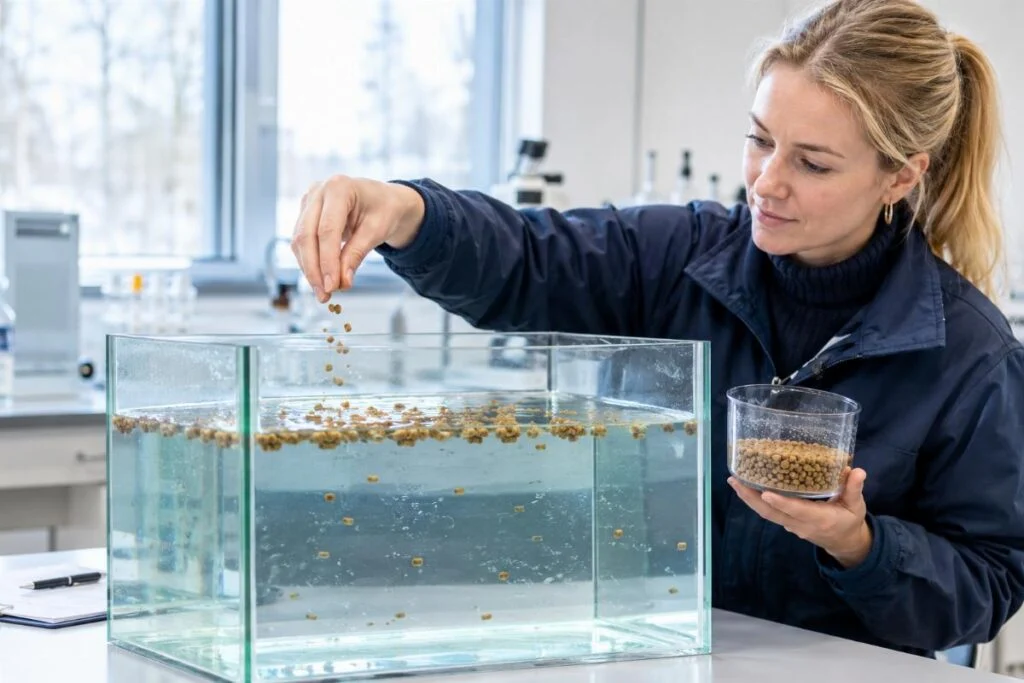
Higher extrusion temperatures do not guarantee better water stability; they often cause micro-cracks that ruin pellet integrity in open water.
When evaluating cage culture vs pond culture feed, the absolute core difference lies in water stability requirements. Cage feed demands superior resistance to nutrient leaching in open water, requiring specialized twin-screw extrusion parameters to achieve dense, durable pellets, whereas standard pond feed prioritizes basic expansion and bulk density.
Early in my career, I spent years on the shop floor inspecting twin-screw extruder quality, which eventually led me to international trade shows in Hanover and Chicago. During one Hanover exhibition, a Nordic client brought raw materials to test our DS70 twin screw extruder for cage feed. I configured the screw combination based purely on standard expansion rates, completely ignoring the苛刻 (strict) water stability demands of cage farming. When the feed hit the water tank during the trial, it disintegrated almost immediately, clouding the water and threatening our reputation on the spot. I had to stay up all night at the facility, completely reconfiguring the length-to-diameter ratio and dropping the drying temperature to salvage the run. That night cemented a hard truth: selling aquaculture equipment means understanding exactly how the fish eat in their specific environment, not just reading machinery blueprints. 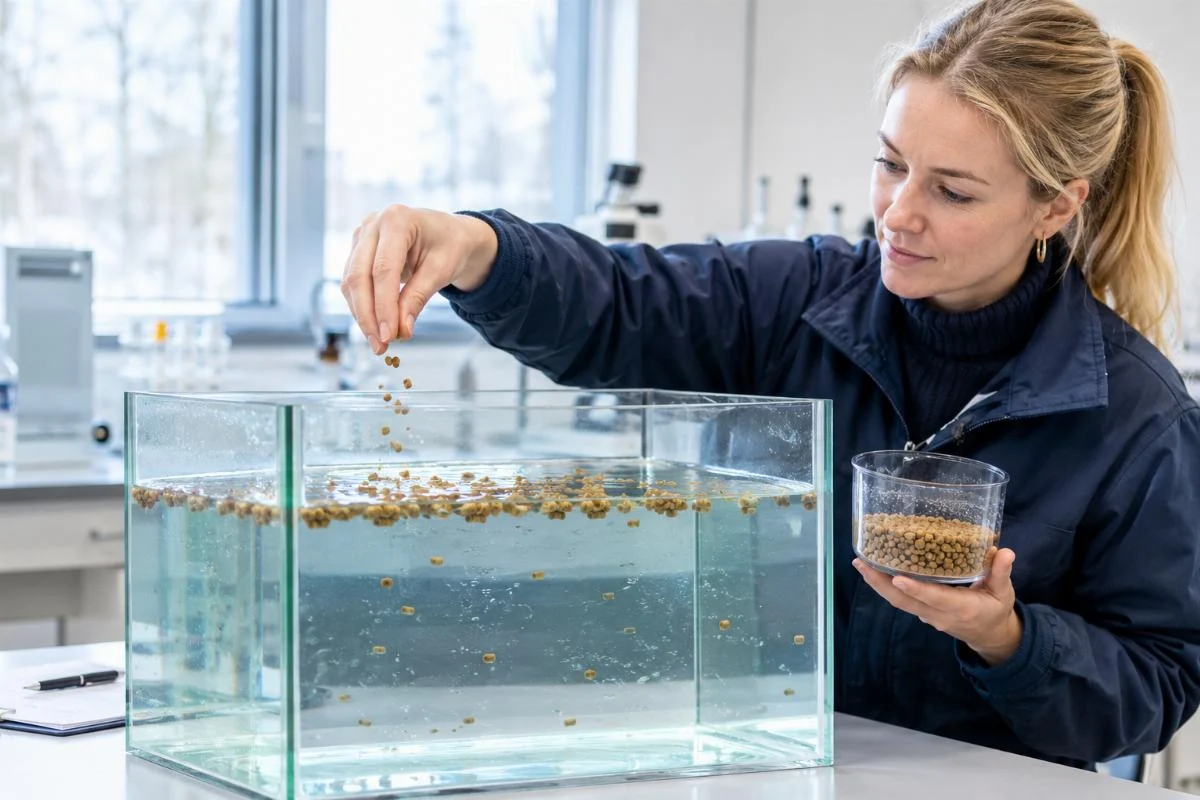
This realization drives how we approach the fundamental differences in feed production today.
What are the core differences in feed requirements between cage and pond culture?
Cage feed requires superior water stability to prevent nutrient loss in open water, while pond feed focuses on standard buoyancy and basic durability.
When producers transition between environments, the shift in cage culture vs pond culture feed dynamics is stark. In open ponds, feed floats on the surface, and fish consume it relatively quickly. The primary goal is achieving a standard expansion rate and higher bulk density so the pellets stay afloat without dissolving rapidly. However, cage culture involves dropping feed directly into open, often turbulent water columns where fish intercept it mid-water or near the bottom.
According to FAO aquaculture guidelines, feed left in open water for extended periods suffers severe nutrient leaching, leading to both economic loss and localized water pollution. To prevent this, cage feed must withstand prolonged submersion. This is where water stable fish feed extrusion becomes critical. The pellets must maintain their structural integrity against water currents and fish foraging behavior.
For instance, a Southeast Asian pond client of ours successfully runs standard floating feed using basic expansion parameters. The feed sits on the surface, and the fish eat it within minutes. But when that exact same recipe was tested in a marine cage setup, the pellets turned to mush before the fish could consume them. The physical environment dictates the mechanical requirement. 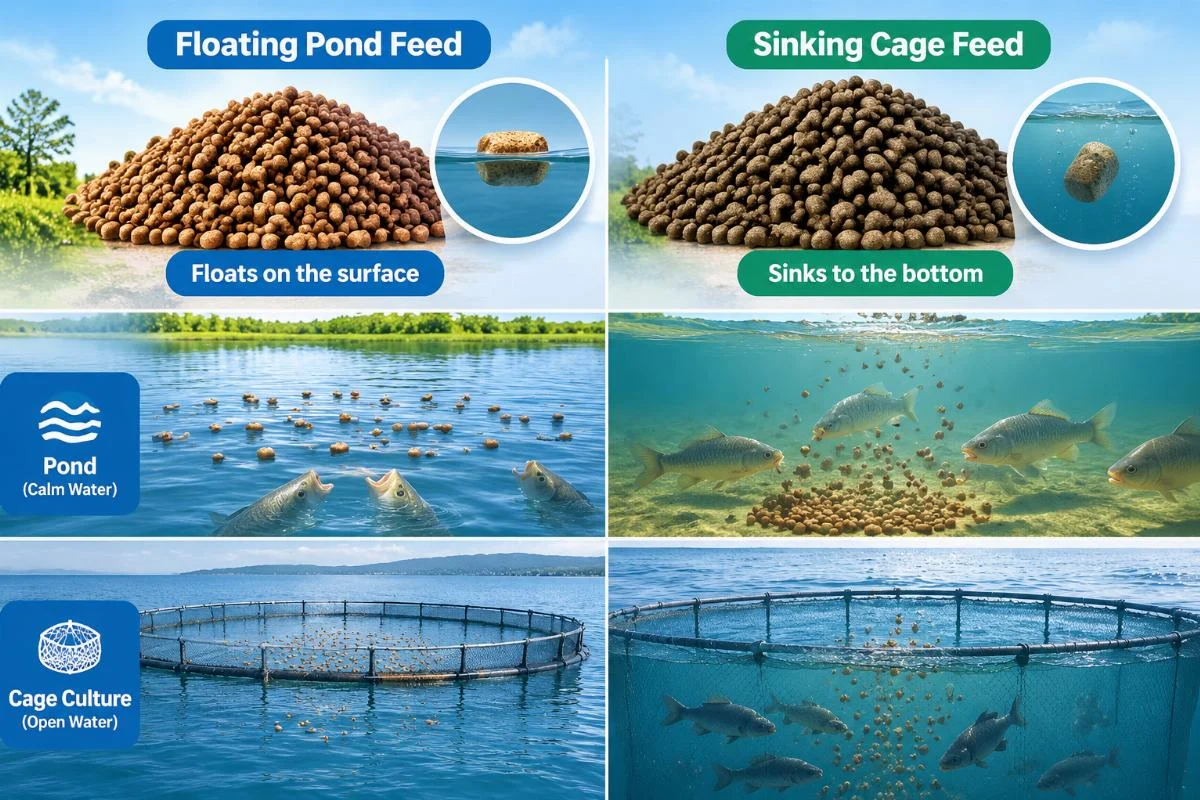
Why do standard pond feed recipes fail in cage environments?
Pond feed recipes fail in cages due to screw combination mismatches and inadequate shear control, not ingredient flaws.
A common misconception in the industry is that if a formula works in a pond, it just needs a longer drying time to work in a cage. This is fundamentally wrong. The failure of standard recipes in cage environments stems from the physical mechanics of the extrusion process itself.
When we analyze the root cause of rapid disintegration, it almost always traces back to the screw combination. Standard pond feed relies on a screw profile that maximizes volume expansion. This creates a highly porous internal structure. While perfect for surface floating, those microscopic air pockets act as capillaries in a cage, drawing water deep into the pellet core and causing it to burst from the inside out.
Furthermore, producers often attempt to fix this by simply increasing the extrusion temperature, assuming more heat equals better gelatinization. This is a dangerous trap. Excessive heat without corresponding pressure control causes micro-cracks on the pellet surface. Once submerged, water penetrates these cracks, accelerating structural collapse. International feed water stability standards emphasize that gelatinization must be uniform and dense, not just maximized by thermal input.
A Latin American mixed client learned this the hard way. They tried to use a high-temperature pond recipe for a sinking diet in cages. The feed sank, yes, but it disintegrated upon hitting the bottom nets. The issue was not the fishmeal or starch ratio; it was that the screw combination lacked the necessary compression zones to eliminate the porous structure required for sinking pellets. 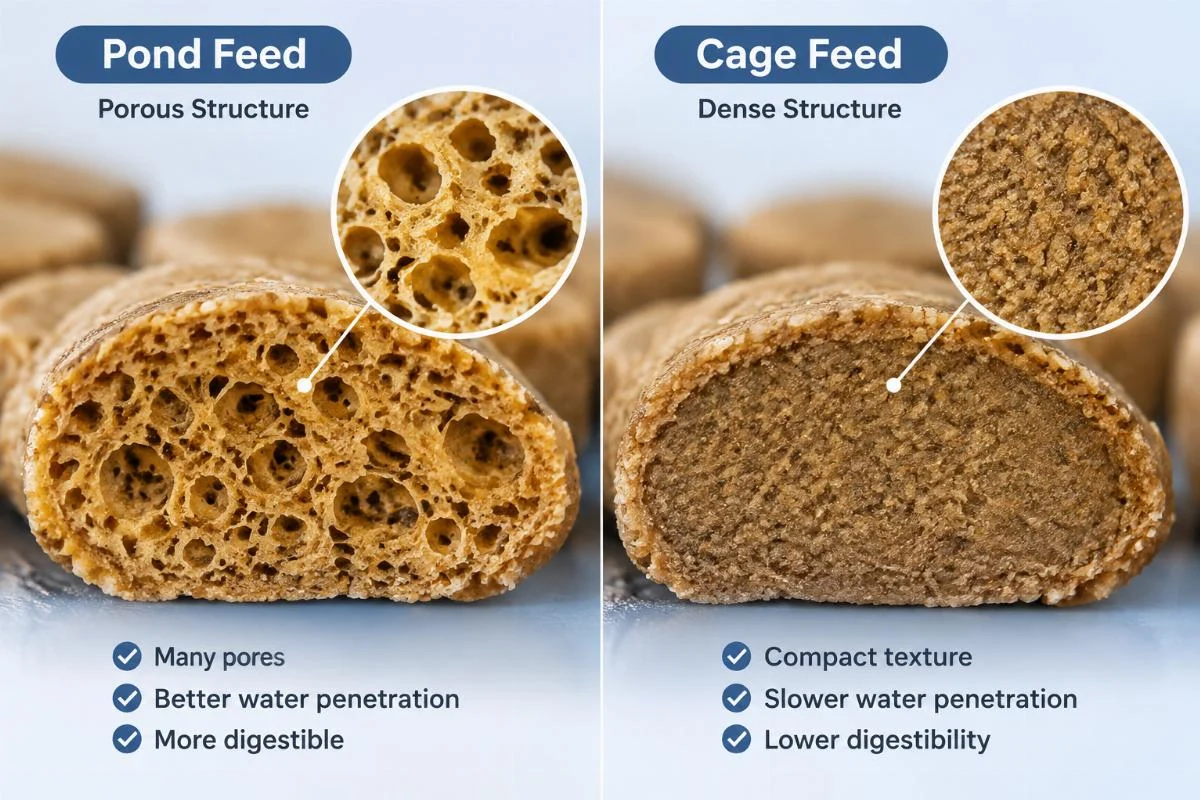
How does twin-screw extrusion optimize water stability for cage feed?
Precise control of shear, temperature, and L/D ratio in twin-screw extrusion ensures dense, durable pellets with high PDI.
Achieving the necessary durability for cage culture vs pond culture feed requires moving beyond single-screw limitations. Twin-screw extrusion provides the mechanical flexibility to manipulate the rheology of the dough precisely.
The magic lies in Specific Mechanical Energy (SME) application. In a twin-screw setup, we can configure kneading blocks and reverse screw elements to generate intense, localized shear without relying solely on barrel heat. This high shear breaks down starch structures at the molecular level, creating a homogeneous, gel-like matrix that acts as a waterproof binder.
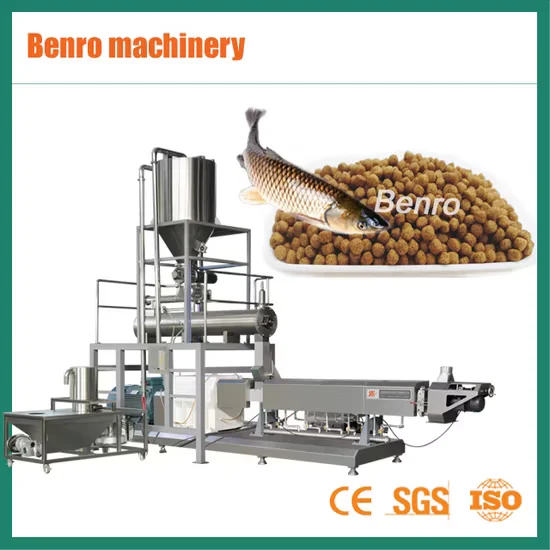
To achieve this, the equipment must allow for modular screw design. Our DS-series twin-screw extruders are engineered specifically for this level of customization. By adjusting the screw combination, we can control the residence time and the intensity of the shear force. This ensures that the starch is fully gelatinized and the protein matrix is tightly bound, directly improving the Pellet Durability Index (PDI).
Moreover, the integration of precise temperature control zones along the barrel prevents the aforementioned micro-cracking. We can maintain a high-pressure, high-shear zone in the metering section, followed by a controlled pressure release at the die. This results in a pellet that is dense enough to resist water penetration but still possesses the necessary buoyancy or sinking characteristics based on the die design. Academic aquaculture journals consistently highlight that twin-screw technology offers superior control over these physical parameters compared to traditional methods. 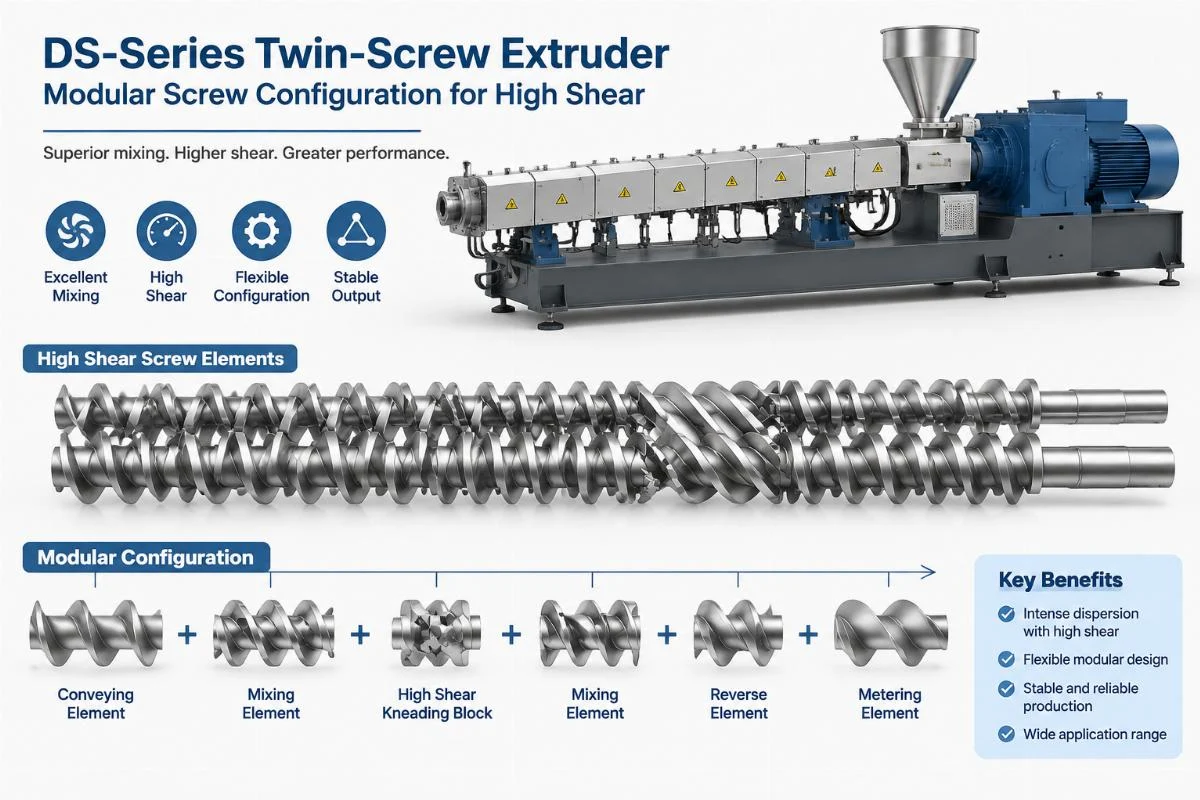
What extrusion parameters must be adjusted for cage-specific feed?
Customized screw configurations, extended L/D ratios, and precise drying temperatures are critical for pellet integrity.
Transitioning a line to produce true cage-grade feed requires deliberate parameter adjustments. It is not a matter of simply turning up the speed.
First, the length-to-diameter (L/D) ratio of the screw must be extended. A longer L/D provides the necessary residence time for complete gelatinization and homogenization under high pressure. When we worked with the Nordic client to fix their disintegration issue, increasing the effective L/D was the first step. It allowed the material to spend more time in the high-shear cooking zone, ensuring a denser final extrudate.
Second, the die compression ratio must be tailored to the specific feed type. For floating vs sinking feed for cage culture, the die dictates the final density. If producing sinking feed for bottom-feeding species in cages, a higher compression ratio die is required to eliminate air pockets entirely. Conversely, floating cage feed requires a die that allows for controlled expansion without compromising the outer shell density.
Third, and perhaps most counter-intuitively, the drying temperature must be carefully managed. Many producers blast the pellets with high heat to reduce moisture quickly. However, rapid surface drying creates a hard, brittle shell while the core remains moist. As the core moisture tries to escape, it creates internal stresses and micro-fissures. Lowering the drying temperature and extending the drying time ensures uniform moisture migration, preserving the structural integrity of the pellet.
This is where Meiteng’s integrated drying systems prove their value. By pairing the DS-series extruders with our multi-pass drying and cooling systems, we ensure that the pellets achieve the required moisture content without thermal shock. The entire line, from raw material intake to the final cooling stage, is designed as a cohesive unit to protect the physical structure of the feed. 
Conclusion
Mastering the transition from pond to cage production requires prioritizing structural density over simple expansion.
Understanding the nuances of cage culture vs pond culture feed means recognizing that water stability is a mechanical achievement, not just a recipe adjustment. By leveraging advanced twin screw extruder for cage feed configurations, controlling shear energy, and respecting the physics of drying, producers can eliminate nutrient leaching and maximize feed efficiency. The equipment must adapt to the water, not the other way around.