Fish Feed Technical Article
DS Twin-Screw Extruder for Fish Feed: Wholesale Manufacturer

Most producers assume alternative proteins just need simple mixing; in reality, they require high-shear twin-screw extrusion to neutralize anti-nutritional factors and ensure pellet integrity.
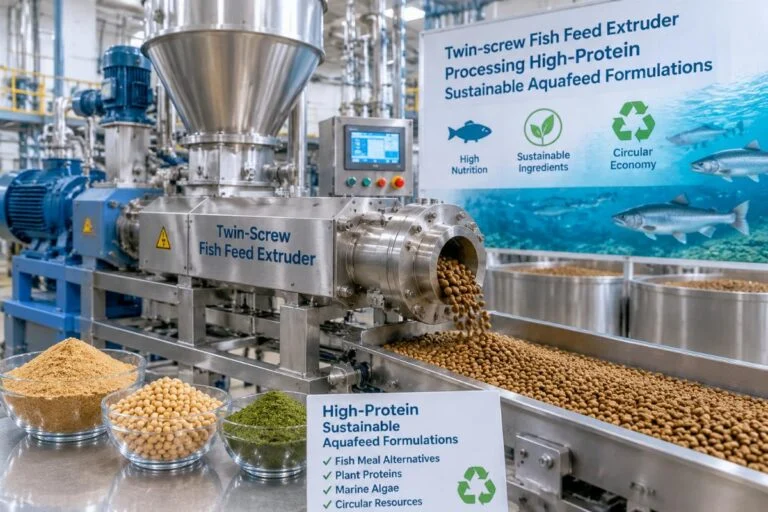
To successfully transition to alternative proteins for fish feed, manufacturers must upgrade from basic single-screw setups to food-grade twin-screw extruders capable of precise temperature profiling and high specific mechanical energy input, ensuring that plant-based and insect-based formulations achieve the necessary water stability and amino acid bioavailability without degrading heat-sensitive lipids.
Standing on the floor of the McCormick Place in Chicago during a major aquaculture trade show, I was holding a brochure for our DS70 twin-screw extruder, deep in conversation with a North American catfish feed buyer. We were making great progress until he suddenly asked about the extrusion degree, water stability metrics, and whether the screw material carried 3-A sanitary certification. I froze. I knew the machine specs inside out, but I completely blanked on the formulation science and on-site processing工艺. I watched him walk away and sign with a competitor who actually understood the recipe dynamics. That moment completely shifted my perspective on selling aquaculture feed extrusion lines. You cannot just pitch machine parameters; you have to understand the formulation and the现场工艺 to meet what buyers actually need.
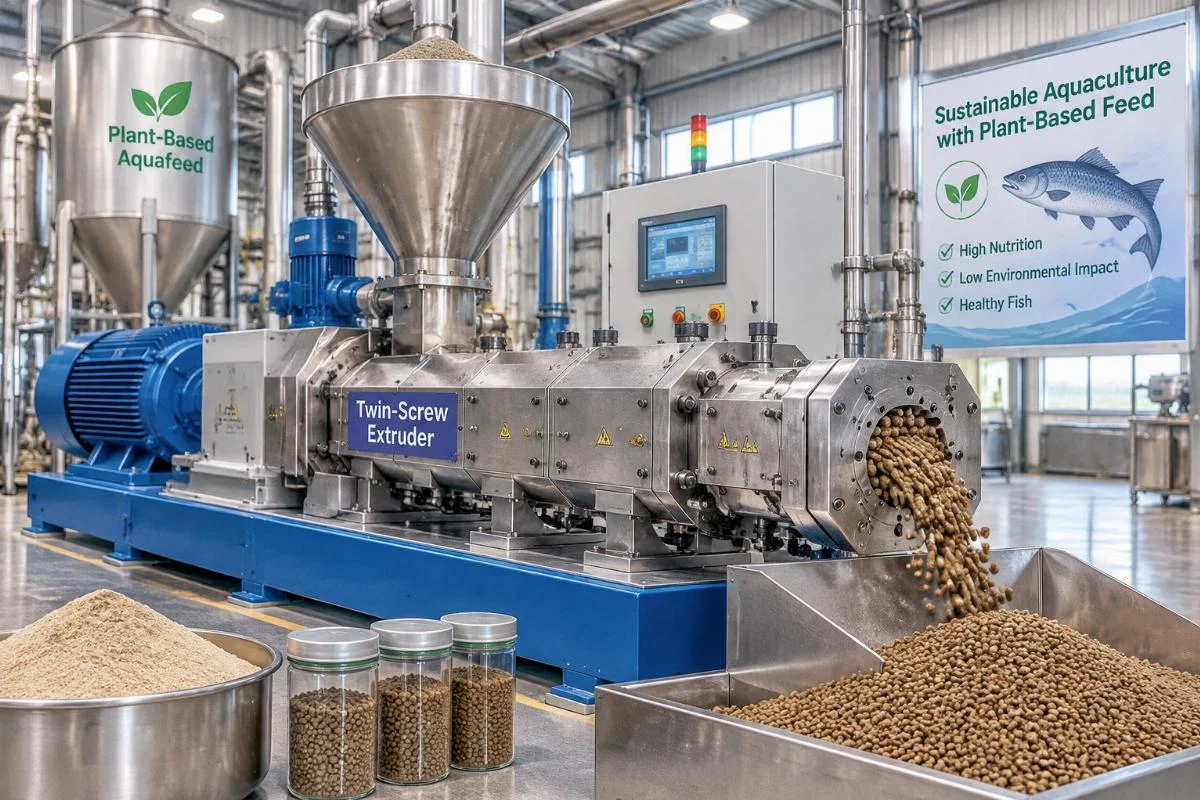
Transitioning to alternative proteins for fish feed is not just about swapping raw materials; it is a fundamental shift in processing physics.
Why Are Fishmeal Prices Surging and How Does It Impact Feed Costs?
Climate volatility and supply chain bottlenecks are driving fishmeal prices to historic highs, severely squeezing producer margins and forcing a rapid pivot toward alternative proteins for fish feed.
The global aquaculture industry is facing a structural cost crisis. Traditional fishmeal, long the gold standard for aquatic nutrition, is becoming increasingly scarce and expensive. El Niño events disrupt anchovy catches off the coast of South America, while stricter environmental regulations limit processing capacities in key exporting regions. When the price of premium fishmeal spikes, feed mills operating on thin margins are forced to either absorb the cost or pass it on to farmers, neither of which is sustainable.
I have seen regional feed mills in Southeast Asia struggle to maintain profitability when their primary protein source fluctuates wildly. They realized that relying solely on marine-derived ingredients was a massive financial risk. The solution was to integrate alternative proteins for fish feed, but this transition exposed a glaring weakness in their existing processing lines. Standard equipment simply could not handle the varying hydration rates and fiber contents of new raw materials. The margin squeeze is real, but the inability to process novel ingredients efficiently is what truly breaks a production schedule.

What Are the Most Viable Alternative Proteins for Aquaculture?
Plant meals, insect proteins, and single-cell yeasts offer scalable replacements, but each requires a distinct plant-based fish feed formulation strategy to match its unique physical and nutritional profile.
When mills ask me about viable fishmeal replacement in aquaculture feed, I always break it down by the raw material’s behavior under heat and shear.
First, consider plant-based feed startups scaling soy or textured vegetable protein (TVP). These materials are abundant and cost-effective, but they come with high fiber and specific anti-nutritional factors. A typical plant-based fish feed formulation might target a significant inclusion rate to offset fishmeal, but the hydration capacity of soy varies wildly depending on the source. If the moisture isn’t managed correctly during conditioning, the pellets will disintegrate in the water.
Then there is the insect protein sector, specifically black soldier fly larvae meal. This is a fantastic, sustainable protein source, but it is highly sensitive to heat. The lipids in insect meal are valuable for the fish’s energy profile, but excessive thermal degradation during processing will destroy those beneficial fats.
Finally, regional feed mills switching to poultry by-product meal face a different hurdle. This ingredient is rich in protein but lacks the natural binding properties of fishmeal. It requires intense mechanical work to gelatinize the residual starches and bind the matrix together. Many assume higher protein equals better growth; in reality, improper extrusion destroys amino acid bioavailability, rendering that expensive protein useless to the fish.

How Does Twin-Screw Extrusion Solve Alternative Protein Processing Challenges?
High shear and precise temperature control in a twin-screw extruder for alternative protein feed ensure nutrient bioavailability and water stability by neutralizing anti-nutritional factors without scorching heat-sensitive lipids.
This is where the processing equipment makes or breaks the product. A basic single-screw extruder relies on friction and guesswork to generate heat. When you are dealing with alternative proteins for fish feed, guesswork leads to batch failures.
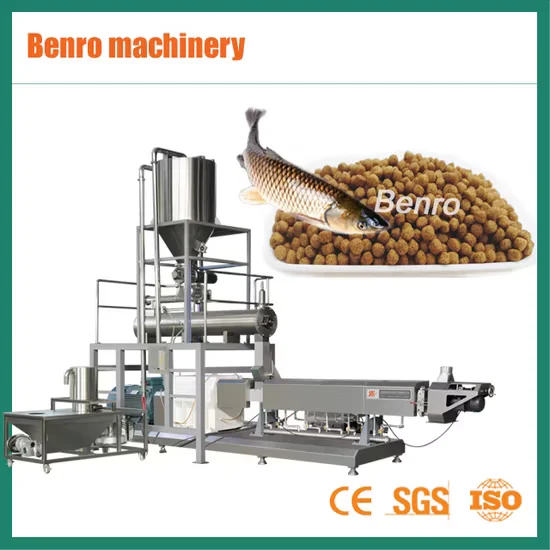
A twin-screw extruder for alternative protein feed operates on a completely different principle. The co-rotating screws intermesh, creating a self-wiping action that allows for precise control over the residence time and the specific mechanical energy (SME) input.
Let us look at the insect protein example again. To preserve the lipids in black soldier fly meal, the barrel temperature profile must be strictly controlled. A twin-screw setup allows operators to inject steam or liquid directly into specific zones, managing the thermodynamic profile so the material reaches the necessary gelatinization temperature without exceeding the lipid degradation threshold.
For the poultry by-product meal, the high-shear capability of the twin-screw design is non-negotiable. The screws can be configured with high-kneading elements to mechanically tear down the fibrous structures and force the starches to gelatinize fully. This mechanical action is what guarantees the pellet durability index (PDI) and ensures the feed maintains extended water stability, preventing nutrient leaching once it hits the pond. Without this level of mechanical control, the feed simply dissolves, wasting money and polluting the water.

What Formulation and Equipment Upgrades Are Needed for the Transition?
Upgrading to food-grade stainless steel twin-screw lines with sanitary design ensures consistent pellet quality, while partnering with a manufacturer that offers formula development support bridges the gap between raw material and final product.
You cannot simply pour a new plant-based fish feed formulation into an old machine and expect a miracle. The transition to alternative proteins for fish feed requires a holistic upgrade of both the hardware and the technical know-how.
Hardware-wise, the contact parts must be constructed from food-grade stainless steel to prevent corrosion from the varying pH levels of novel ingredients. More importantly, the equipment must meet strict sanitary standards. In my early days, I lost a client because I couldn’t answer questions about 3-A sanitary standards for the screw shafts and barrels. Modern aquaculture feed, especially for high-value species, demands equipment that prevents cross-contamination and allows for rapid, thorough cleaning between batches.
But hardware is only half the battle. The real upgrade is in formulation support. When a mill in Latin America wanted to introduce a new insect-based diet, they had the raw material but no idea how to balance the moisture and SME. We didn’t just ship them a DS-series twin-screw extruder; we worked directly with their R&D team to develop the plant-based fish feed formulation. We mapped out the temperature profiles, adjusted the screw configuration to optimize the shear, and ran trials until the water stability and expansion metrics were perfect.
This is where a turnkey approach becomes critical. A reliable manufacturer must provide comprehensive formula development support, on-site installation, and operator training. You need a partner who understands that a twin-screw extruder for alternative protein feed is not just a metal box; it is a highly calibrated biochemical reactor.

Conclusion
The shift toward alternative proteins for fish feed is a mandatory evolution for profitability, but it demands a parallel evolution in processing technology. Success relies on moving beyond simple mixing and embracing the high-shear, precision-controlled environment of modern twin-screw extrusion. By aligning advanced equipment capabilities with scientifically backed formulation strategies, producers can transform costly raw material challenges into consistent, high-quality aquatic nutrition.