Fish Feed Technical Article
DS Series Twin-Screw Extruder for Shrimp Feed: Wholesale Manufacturer
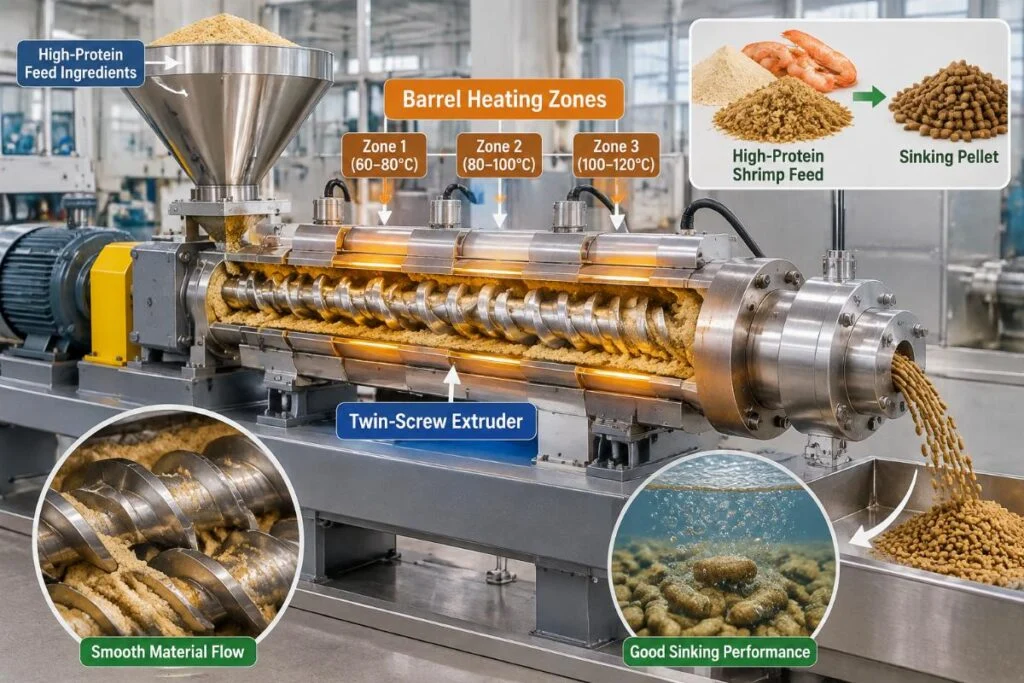
Most producers assume sinking feed simply requires adding heavy ingredients to the mix, but improper extrusion shear actually creates micro-bubbles that ruin the sinking rate.
When comparing extruded vs pelleted sinking shrimp feed, the extruded format delivers significantly superior water stability and starch gelatinization, which directly translates to better digestibility and lower feed conversion ratios for shrimp. However, achieving the correct sinking density without floating defects demands precise thermal and mechanical control, making a high-quality twin-screw extruder for sinking shrimp feed an absolute necessity rather than a mere upgrade.
Years ago, while sourcing extrusion equipment for a large aquaculture group in Jakarta, I learned the hard way that cutting corners on machinery leads to catastrophic batch failures. We opted for a budget-friendly, unbranded twin-screw machine to process whiteleg shrimp feed. The screw elements wore down rapidly under the high-friction environment of high-protein fishmeal formulations. Consequently, the feed failed to achieve the required density, and an entire container of shrimp feed was scrapped because it floated instead of sinking. Transitioning to the manufacturing side and spending extensive time visiting shrimp ponds across Southeast Asia, I realized that buyers’ deepest fears revolve around inconsistent sinking rates and rapid equipment degradation. Now, when evaluating the DS series models, I look far beyond rated capacity; I scrutinize the self-cleaning capabilities of the screws and the metallurgical composition of the die templates. Selecting the right extruded vs pelleted sinking shrimp feed production line is never just about negotiating the lowest price.
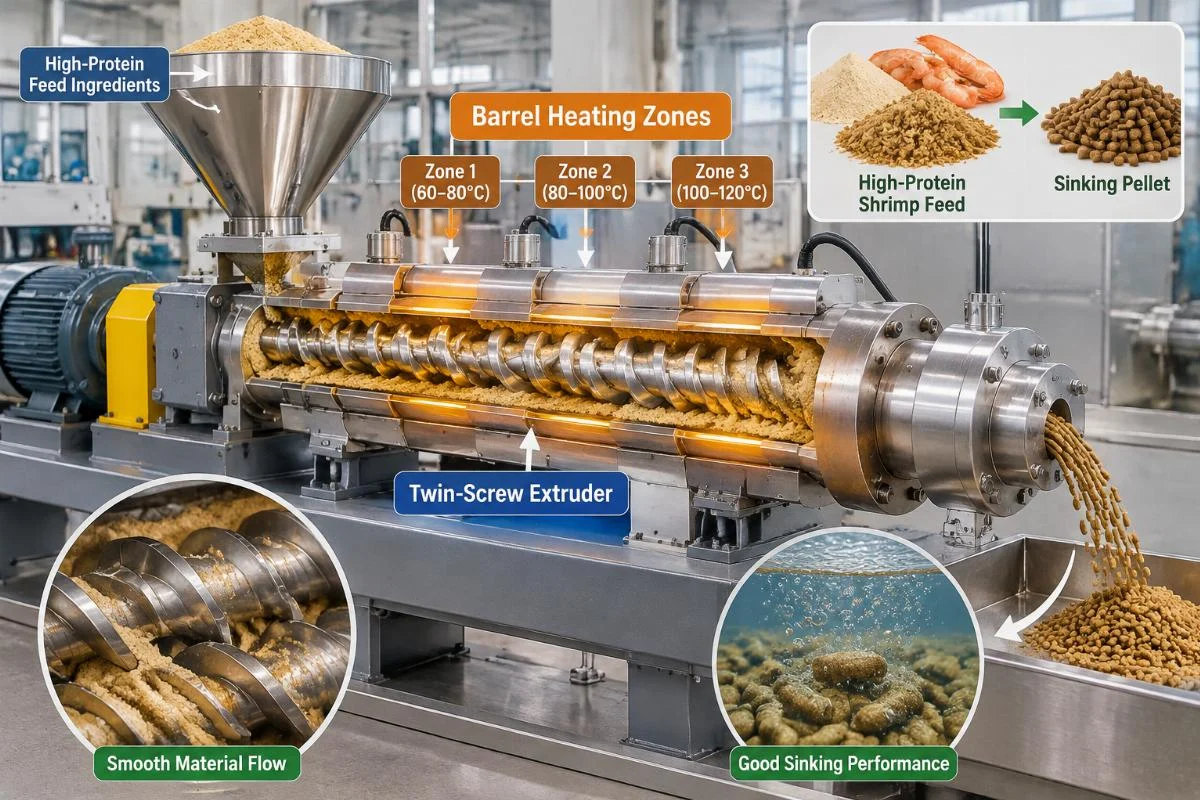
Understanding the mechanical and nutritional divergence between these two formats is the first step toward optimizing your production line.
What Are the Key Differences Between Extruded and Pelleted Sinking Shrimp Feed?
The fundamental difference lies in the degree of starch gelatinization and the structural matrix formed during processing, which dictates how the feed behaves once it hits the water.
Pelleted feed is typically produced using a standard pellet mill where the material is compressed through a ring die under moderate pressure and friction. The thermal input is relatively low, meaning the starches remain largely ungelatinized. In contrast, the extrusion process subjects the raw materials to high temperature, high pressure, and intense shear forces. This environment completely gelatinizes the starches, creating a cohesive, glassy matrix that locks in nutrients and resists water disintegration.
| Parameter | Pelleted Sinking Feed | Extruded Sinking Feed |
|---|---|---|
| Starch Gelatinization | Low to Moderate | High to Complete |
| Water Stability | Vulnerable to rapid disintegration | Resistant, maintains structure for extended periods |
| Protein Matrix Binding | Mechanical compression only | Thermoplastic extrusion bonding |
| Sinking Density Control | Uncontrolled, relies on raw material weight | Controlled via shear and moisture parameters |
| Digestibility for Shrimp | Basic | Noticeably enhanced due to cellular rupture |
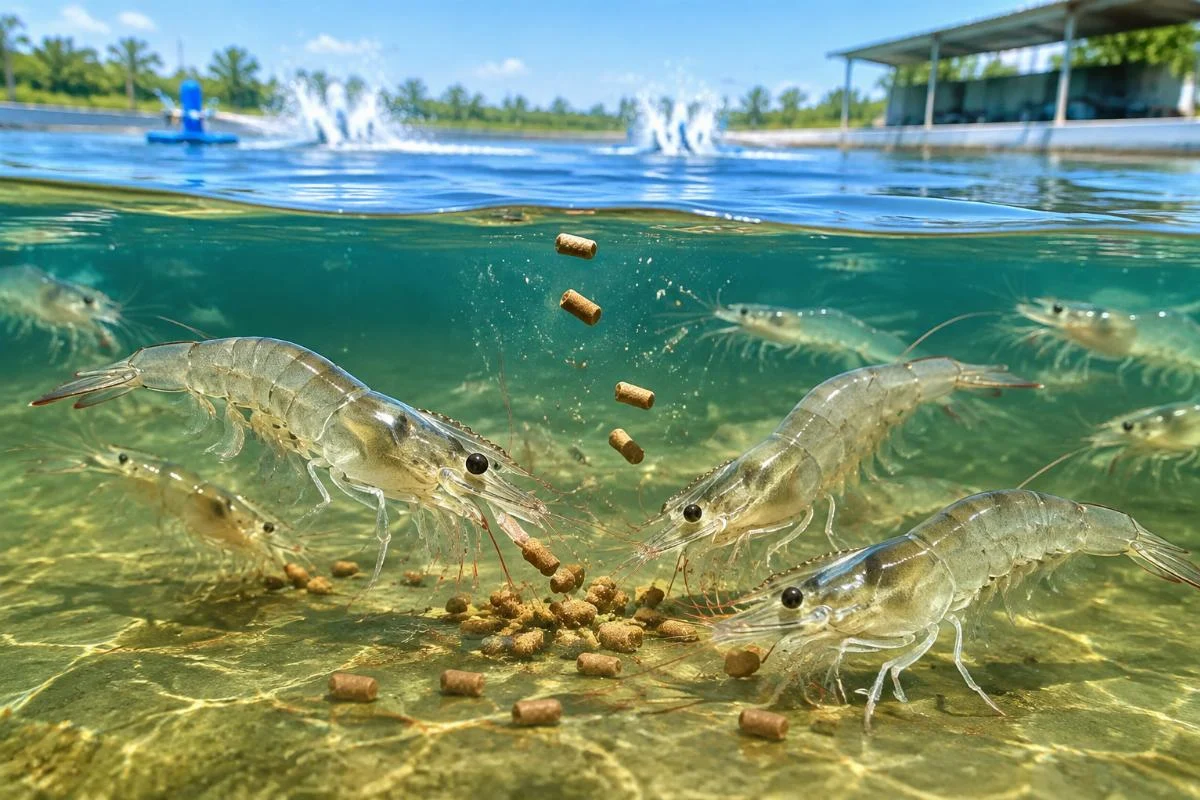
During a site visit to a commercial shrimp farm in Southeast Asia, the operators tracked the feed conversion ratio after switching formats. The transition to extruded feed resulted in a visibly cleaner pond bottom and a noticeable reduction in unelected feed accumulation. The water stability testing methods confirmed that the extruded pellets maintained their structural integrity for a substantially longer duration, preventing nutrient leaching.
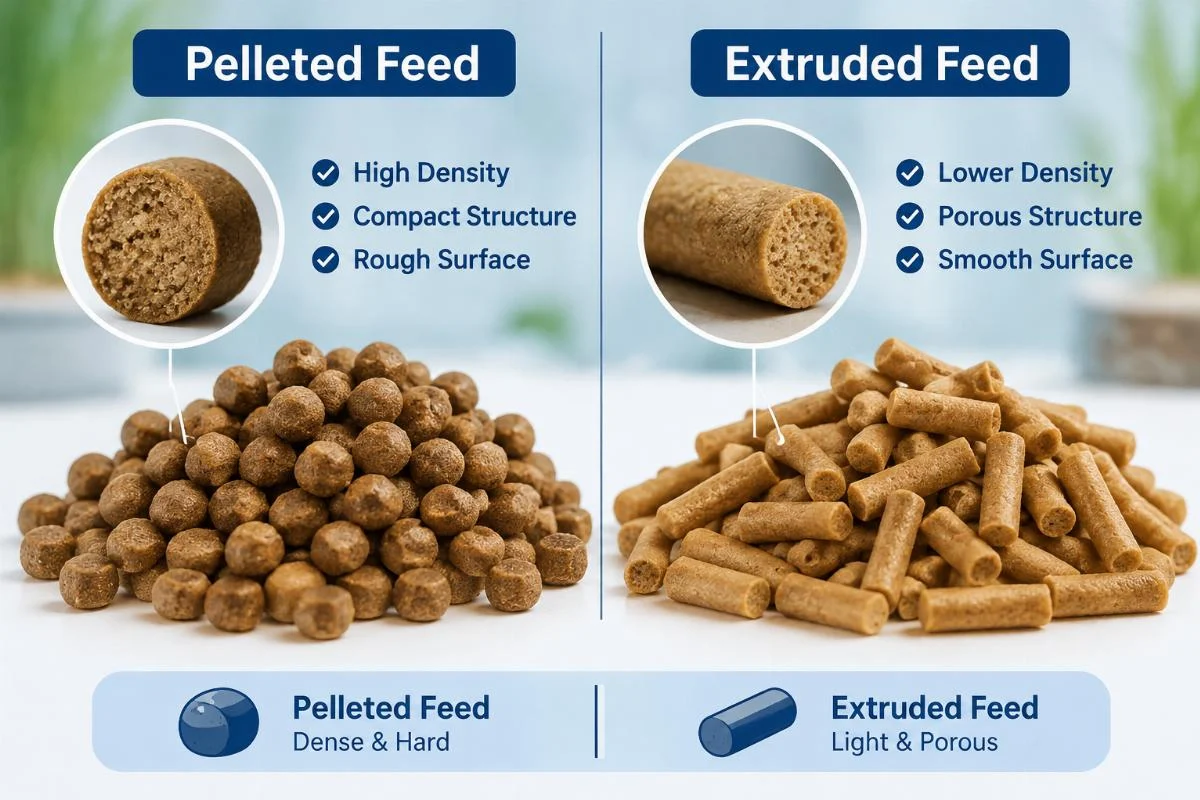
The structural integrity achieved through extrusion directly impacts the nutritional efficiency of the feed, leading us to evaluate the broader operational impacts.
What Are the Pros and Cons of Extruded Sinking Feed for Shrimp?
While extruded feed offers undeniable biological advantages for shrimp growth and pond health, the operational realities demand higher energy inputs and stricter equipment tolerances.
The pros of extruded vs pelleted sinking shrimp feed are heavily weighted toward biological performance. The intense shear and heat during extrusion rupture the cell walls of plant-based raw materials and denature anti-nutritional factors, making the proteins highly accessible to the shrimp’s digestive enzymes. Furthermore, the superior water stability means that vitamins and minerals do not leach out into the water column before the shrimp can consume them, drastically reducing water pollution and the risk of algal blooms.
However, the cons are rooted in production economics. The extrusion process requires significantly more electrical energy and precise steam conditioning. More critically, the high-protein, high-mineral formulations typical of shrimp feed are highly abrasive. If the equipment lacks proper metallurgical defenses, the wear on the screws and barrels will alter the shear profile, leading to inconsistent product density.
A startup feed mill in Latin America recently formulated a high-protein sinking shrimp feed. During the initial drying phase, they struggled with expansion degree and density control. The root cause was traced back to an extruder that could not maintain a stable thermal profile, causing micro-expansion that trapped air inside the pellet. This highlights the pros and cons of extruded shrimp feed: the process is highly sensitive, and marginal equipment will ruin the sinking characteristics.
To mitigate these production risks and capitalize on the biological benefits, the selection of the extrusion machinery becomes the most critical variable.
How to Choose the Right Extruder for Sinking Shrimp Feed Production?
Selecting a twin-screw extruder for sinking shrimp feed requires prioritizing screw self-cleaning geometry and wear-resistant die materials over mere throughput claims.
The core argument for investing in a specialized sinking feed extruder machine is the ability to manipulate the shear history of the dough. Unlike single-screw machines, which rely heavily on friction and are prone to surging with high-moisture or high-fat formulations, twin-screw extruders offer positive conveying and precise residence time control. This allows operators to dial in the exact level of mechanical energy input required to gelatinize the starches without generating enough expansive force to create floating micro-bubbles.
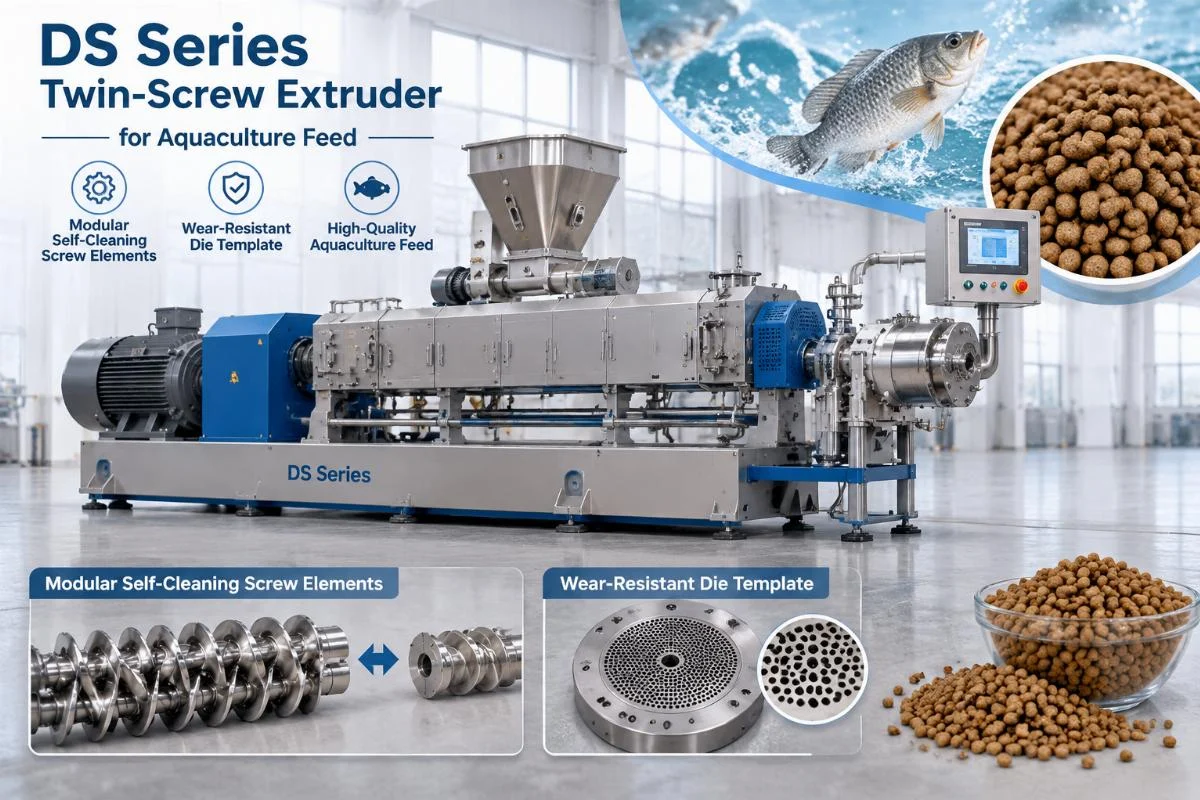
When evaluating equipment, the screw configuration is paramount. The screws must be designed to handle the abrasive nature of fishmeal and bone meal without rapid degradation. Furthermore, a self-cleaning screw design is essential to prevent material buildup, which can cause localized overheating and batch-to-batch density variations. The die template material must also possess extreme wear resistance to maintain the precise dimensional tolerances required for consistent pellet density over extended production runs.
This is where the DS series twin-screw extruders from Meiteng demonstrate their engineering focus. Designed specifically for demanding aquaculture applications, the DS series features modular screw elements that can be configured to optimize the shear profile for sinking feed. The barrels and screws utilize specialized wear-resistant alloys that substantially extend service life when processing abrasive shrimp feed formulations. The self-cleaning screw profiles ensure consistent material flow, eliminating the dead zones that lead to burnt or under-processed feed. Additionally, Meiteng provides comprehensive turnkey line support, including formula development and installation with operator training, ensuring that the machinery is perfectly calibrated to your specific raw material matrix.
Proper machine selection sets the foundation, but long-term consistency relies entirely on rigorous operational discipline.
What Maintenance Ensures Long-term Sinking Feed Quality?
Regular inspection and proactive replacement of wear parts are the only ways to prevent density deviations and catastrophic batch failures in sinking feed production.
The abrasive nature of shrimp feed formulations means that the clearances between the screws and the barrel liners will gradually increase over time. If left unchecked, this increased clearance reduces the shear force, leading to incomplete gelatinization and a drop in water stability. Worse, it can alter the density of the final pellet, causing a portion of the batch to float, which is unacceptable for bottom-feeding shrimp.
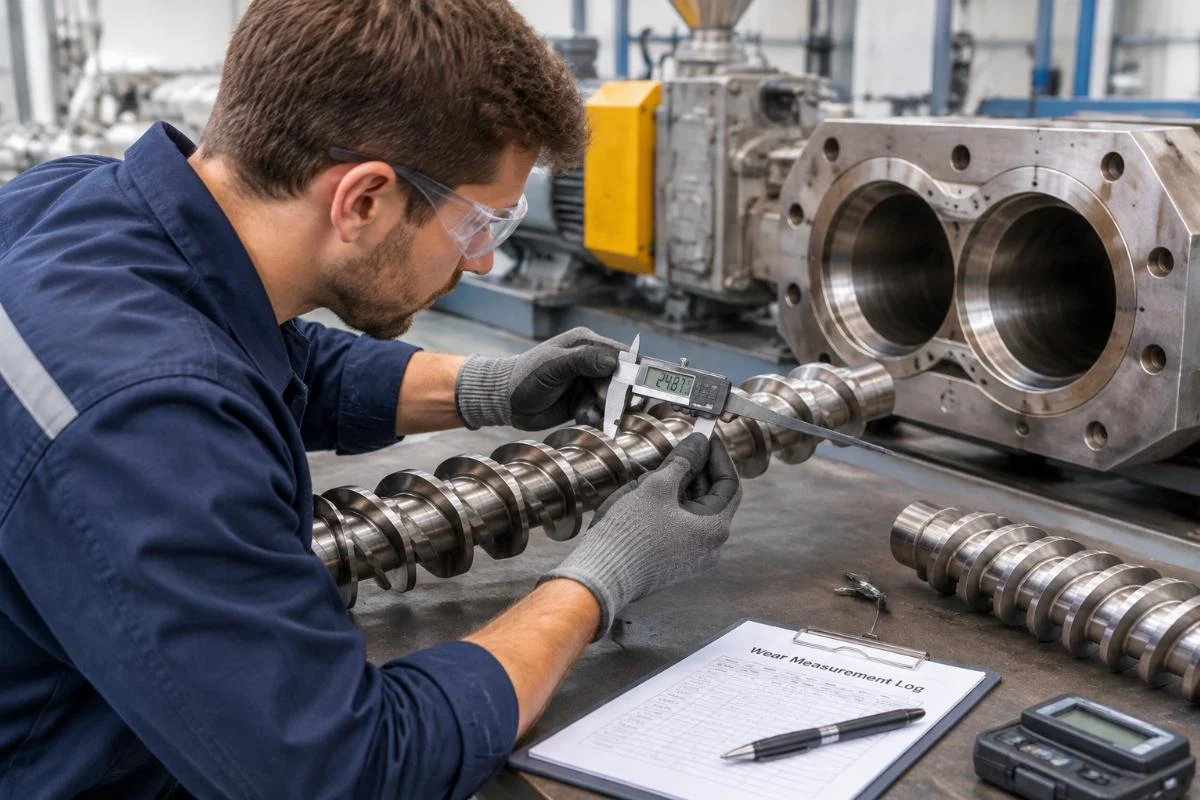
A strict maintenance protocol is non-negotiable. Operators must perform regular ultrasonic thickness testing on the barrel liners and measure the outer diameter of the screw flights to track wear rates. The die templates must be inspected for elongation of the holes, which affects the cutting quality and the surface smoothness of the pellets.
An equipment upgrade scenario in a Southeast Asian facility involved replacing an aging single-screw setup with a twin-screw extruder to fix sinking rate inconsistencies. The facility manager implemented a rigorous self-cleaning cycle at the end of every shift and scheduled weekly dimensional checks on the screw elements. This proactive approach prevented the gradual drift in extrusion parameters that typically ruins feed sinking rates. By treating the extruder as a precision instrument rather than a simple mixer, producers can ensure that every batch of extruded vs pelleted sinking shrimp feed meets the exact density and stability requirements of the market.
Conclusion
Extruded feed fundamentally outperforms pelleted feed in water stability and digestibility, but only when processed through precision-engineered twin-screw equipment.
Achieving the correct sinking density requires overcoming the abrasive challenges of high-protein formulations through specialized screw metallurgy and self-cleaning designs. Prioritizing equipment durability and precise shear control ensures consistent feed quality, protects your profit margins from batch failures, and ultimately supports optimal shrimp growth in the pond.