Fish Feed Technical Article
Clextral Alternatives: DS70 Twin-Screw Extruder for Salmon Trout Feed
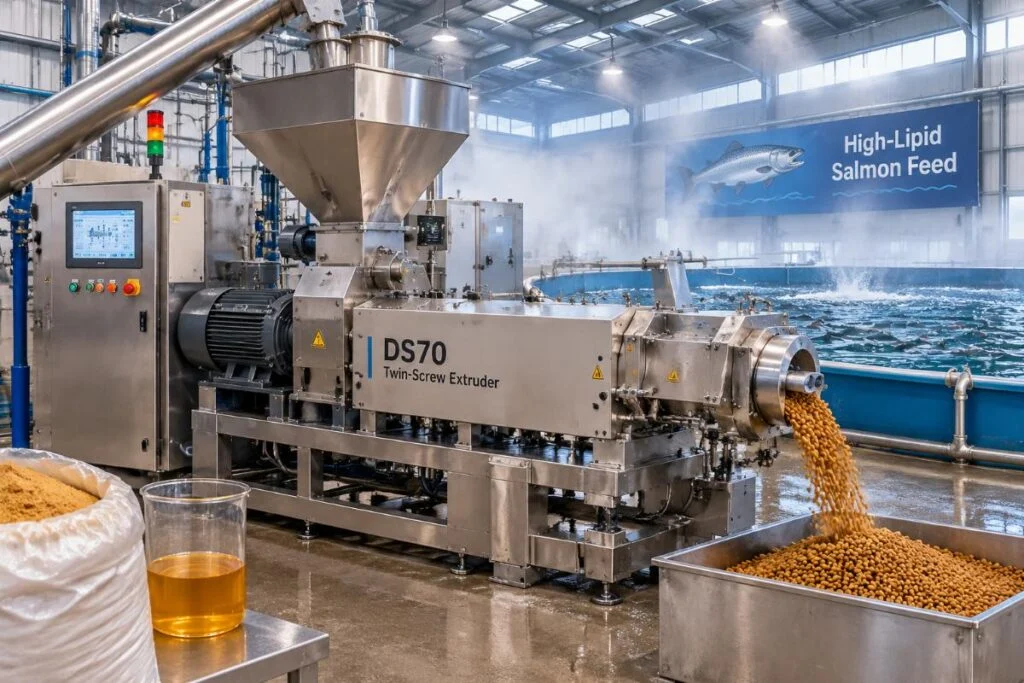
Paying a premium for European extrusion technology does not automatically guarantee lower operational costs when processing high-lipid aquaculture diets.
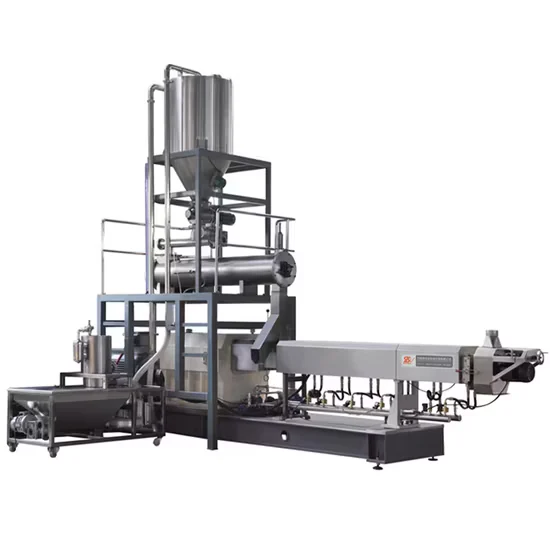
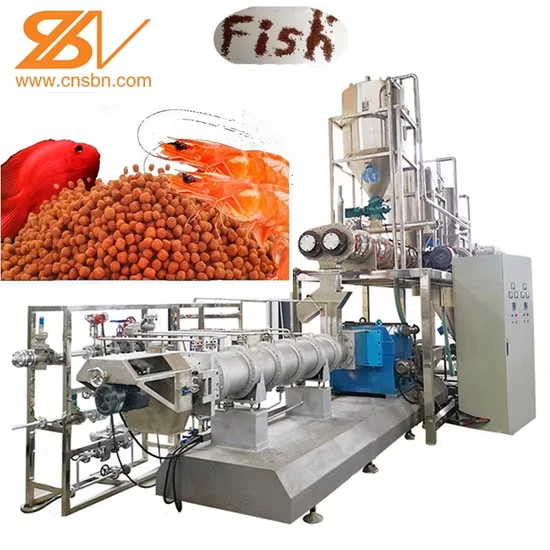
For producers seeking reliable Clextral alternatives salmon trout feed, the DS70 twin-screw extruder delivers equivalent extrusion performance with superior wear resistance and significantly faster local spare parts availability, effectively minimizing costly downtime in high-fat recipe applications.
Standing on the factory floor in Puerto Montt, the smell of rancid fishmeal and the sound of a stalled production line are all too familiar. Years ago, while handling after-sales support, I watched a major facility’s French-brand twin-screw machine grind its screws to a halt after processing high-lipid salmon feed. The factory waited months for overseas spare parts, bleeding revenue every single day. That scene cemented my belief: a machine is only as good as its uptime and the accessibility of its wear parts. When evaluating Clextral alternatives salmon trout feed, the real test is not the brochure specifications, but how the equipment handles continuous, abrasive, high-fat recipes in a humid, salty environment.
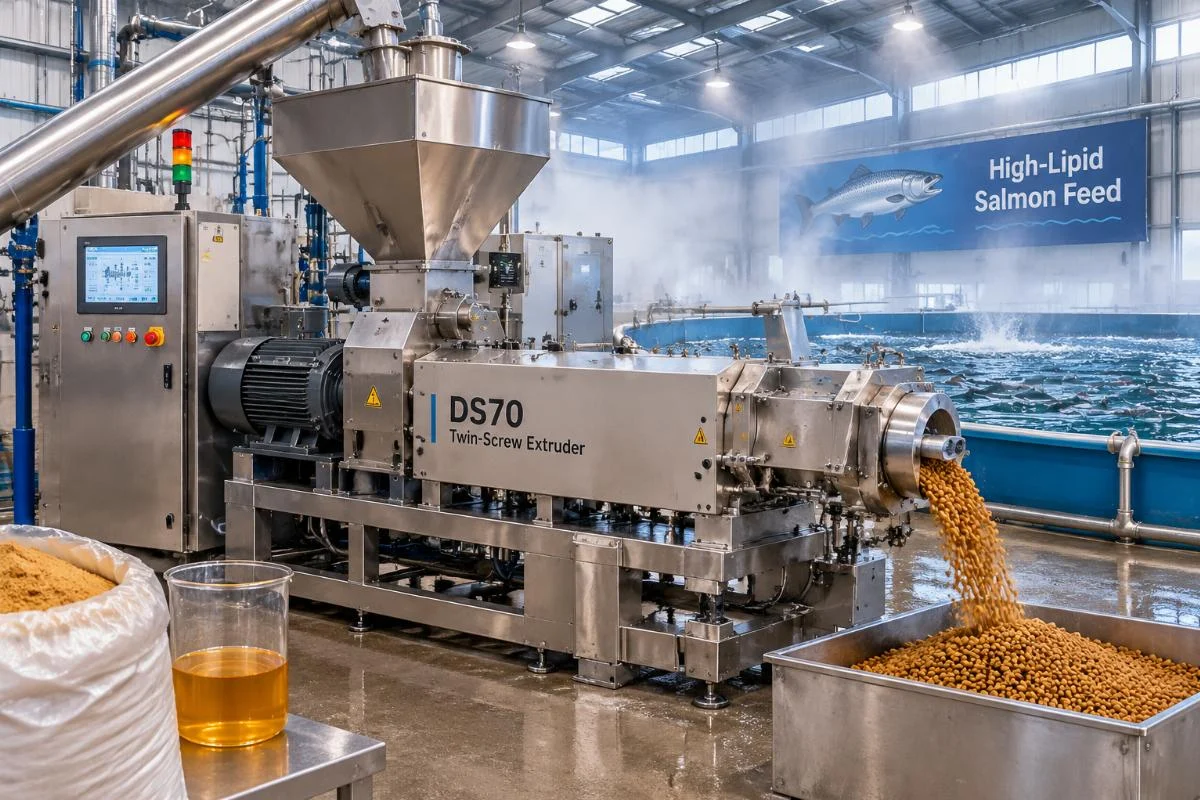
Transitioning from the harsh realities of the factory floor to the technical requirements of modern aquaculture, we must dissect why standard equipment fails and how specialized engineering solves these bottlenecks.
Why Seek Clextral Alternatives for Salmon Feed?
The primary driver for seeking Clextral alternatives salmon trout feed is the unsustainable operational expenditure caused by rapid wear and extended maintenance cycles inherent in processing high-lipid fishmeal.
Salmon and trout diets require substantial lipid inclusion to meet the nutritional profiles of carnivorous species. However, this high fat content, combined with the abrasive nature of fishmeal, creates a severe wear environment inside the extruder barrel. Standard European designs often struggle with this specific rheological challenge. Producers frequently find that the initial capital expenditure is quickly overshadowed by the recurring costs of replacing screws and barrels.
Furthermore, the geographic isolation of key aquaculture hubs exacerbates the problem. When a critical component fails, waiting for international shipping can halt an entire production batch. This is why the search for Clextral alternatives salmon trout feed has shifted from mere brand loyalty to a pragmatic evaluation of metallurgical durability and supply chain resilience. The goal is to maintain output consistency without the constant threat of catastrophic mechanical failure.

DS70 vs. Clextral: Key Spec Comparison
When evaluating Clextral alternatives salmon trout feed, a direct specification comparison reveals that specialized metallurgy and localized support structures outperform standard European baselines in high-lipid applications.
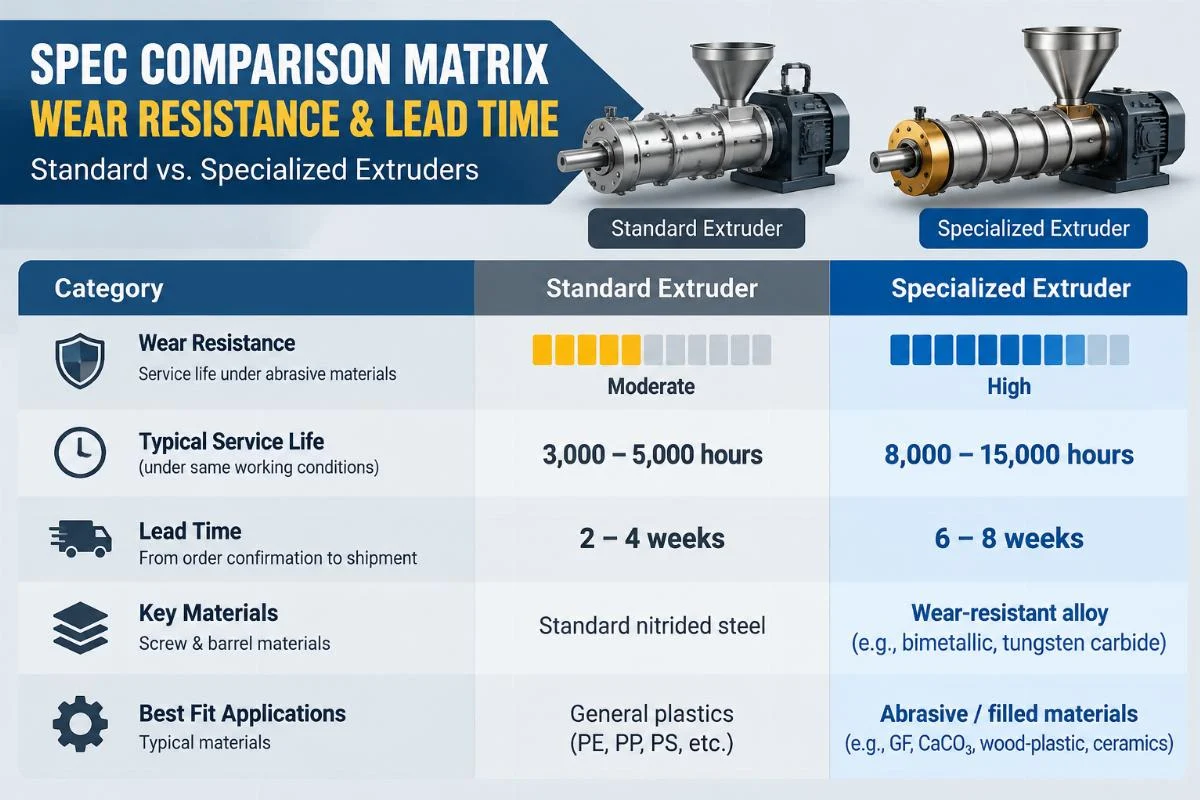
To understand the mechanical advantages, we must look beyond basic motor power and examine the material science and support frameworks that dictate long-term viability. The following matrix contrasts the operational realities of a standard European baseline against the specialized engineering of the DS70 salmon feed extruder.
| Evaluation Factor | Standard European Baseline | DS70 Specialized Configuration |
|---|---|---|
| Barrel Wear Resistance | Vulnerable | Highly Resistant |
| Screw Metallurgy | Basic Tool Steel | Advanced Anti-Wear Alloy |
| Spare Parts Lead Time | Noticeably Extended | Substantially Reduced |
| High-Lipid Capacity Stability | Moderate | Robust |
| Local Technical Support | Limited | Comprehensive |
A mid-sized producer in southern Chile faced this exact dilemma. They operated a legacy European twin screw extruder for high lipid fish feed that required barrel replacements multiple times a year. By switching to the DS70 configuration, they reported a dramatic extension in component lifespan. The specialized alloy formulation resists the corrosive and abrasive effects of fishmeal significantly better than standard grades. The conclusion is clear: when sourcing Clextral alternatives salmon trout feed, material science must take precedence over brand heritage.
Handling High-Lipid Fishmeal: The DS70 Advantage
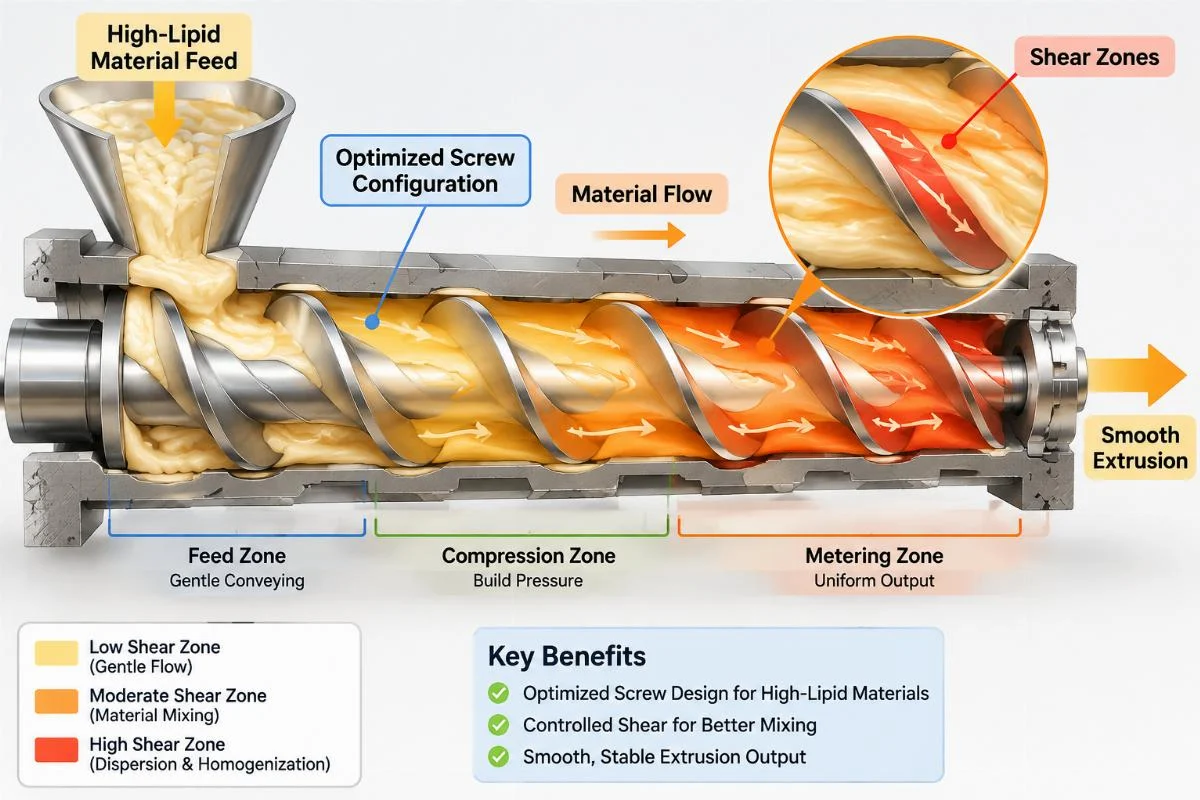
The DS70 salmon feed extruder manages high-lipid recipes through optimized specific mechanical energy control and specialized screw configurations that prevent material slippage and excessive friction.
Processing diets with elevated fat levels is notoriously difficult. The lipid acts as a lubricant, which can cause the material to slip against the barrel wall rather than being properly sheared and cooked. This slippage forces the machine to work harder, generating localized hot spots and accelerating wear on the flight edges.
The DS70 addresses this through a meticulously optimized screw profile. By adjusting the compression ratio and the sequence of kneading blocks, the machine ensures that the specific mechanical energy is distributed evenly throughout the barrel. This prevents the material from bypassing the shear zones. Furthermore, the anti-wear metallurgy used in the DS70 components is specifically selected to withstand the chemical attack of free fatty acids present in fishmeal.
During a recent installation at an aquaculture feed extrusion machine Chile facility, the production manager noted the consistency of the pellet durability index. Even with lipid levels pushing the upper limits of the formulation, the DS70 maintained stable torque readings and output rates. This stability is the hallmark of a true twin screw extruder for high lipid fish feed, ensuring that the physical quality of the feed remains uniform from the first hour to the last.
Total Cost of Ownership: Spare Parts & Support
The true cost of ownership for Clextral alternatives salmon trout feed is dictated by spare parts availability and the speed of local technical intervention, not just the initial purchase price.
A common trap in capital equipment procurement is focusing solely on the invoice price while ignoring the operational risks of supply chain latency. A European brand might offer a slightly higher initial throughput on paper, but if a specialized sensor or a custom screw element takes months to arrive from overseas, the financial impact of stalled production is devastating.
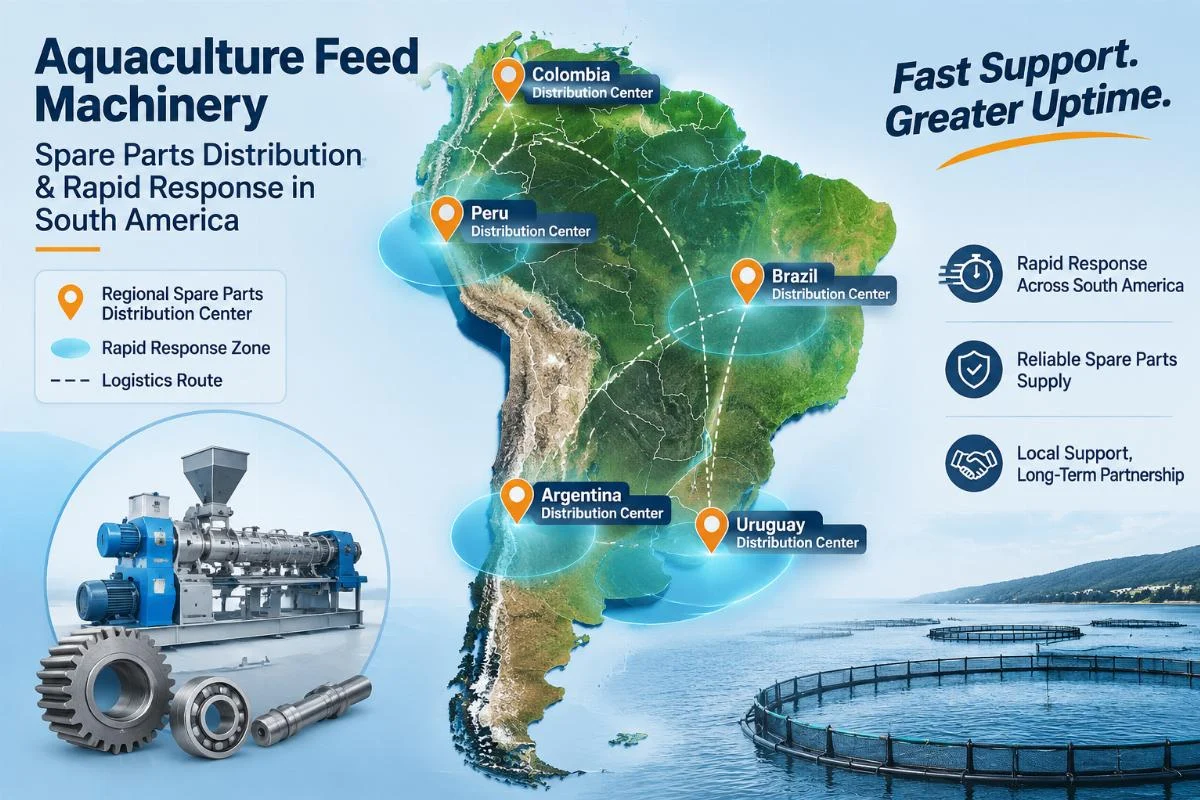
Meiteng’s approach to the Latin American market, particularly for the aquaculture feed extrusion machine Chile sector, is built on localized support. The DS70 is designed with standardized, interchangeable wear parts that are kept in regional inventory. When a producer in Puerto Montt or Puerto Varas needs a replacement barrel section, it is dispatched immediately, not scheduled for a trans-oceanic shipment.
Consider a contract manufacturer that experienced a critical bearing failure during their peak production season. With their previous European supplier, they faced a prolonged shutdown. With the DS70, the local technical team arrived on-site within hours, and the replacement parts were already in the country. This level of turnkey support, including on-site installation, commissioning, and operator training, transforms the DS70 from a mere piece of hardware into a reliable production partner. For buyers evaluating Clextral alternatives salmon trout feed, this logistical reality is the ultimate differentiator.
Conclusion
Selecting the right extrusion technology requires balancing metallurgical durability with logistical reality. The DS70 twin-screw extruder proves that superior wear resistance and localized support can outperform legacy European designs in high-lipid salmon and trout feed production, ensuring continuous operation and protecting your bottom line against the hidden costs of downtime.