Fish Feed Technical Article
Almex vs Wenger Aquafeed Extruder: OEM Manufacturer for Sale
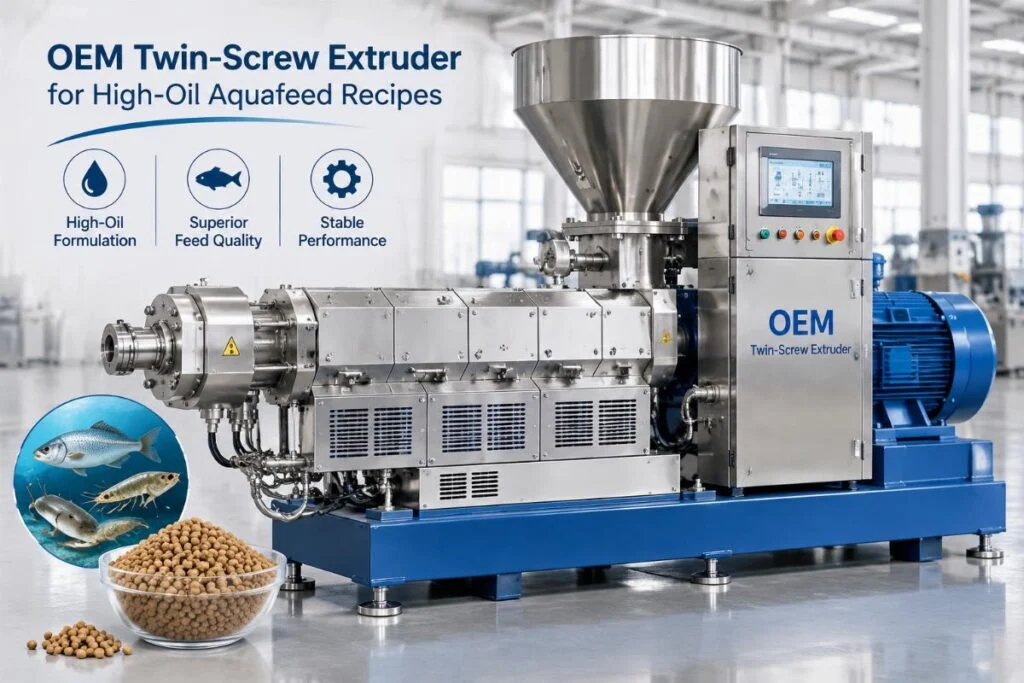
Most buyers assume premium imported brands guarantee zero downtime, but local ingredient variations actually cause severe wear, making localized OEM alternatives the true cost-savers.
When comparing the Almex vs Wenger extruder, both offer high capacity and brand prestige, yet mid-sized mills achieve significantly higher ROI through OEM twin-screw alternatives that provide custom screw configurations for local recipes and drastically reduced spare parts lead times.
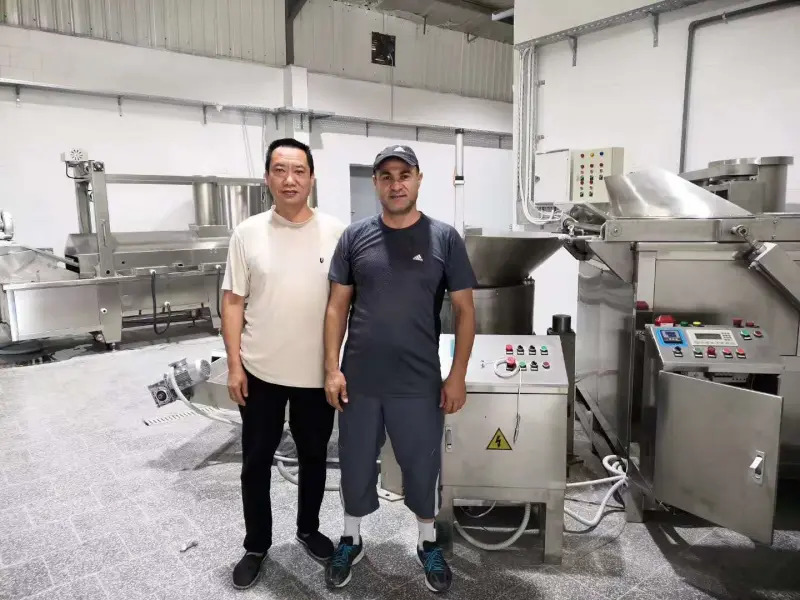
Early in my career, I handled quality inspections for extrusion machinery in Jinan before transitioning into international trade. I later supported several aquafeed projects across Southeast Asia, where buyers were absolutely fixated on imported premium machinery. The reality on the ground, however, was brutal. Local recipes heavy in fishmeal oil and cassava starch created extreme viscosity, causing rapid wear on imported screws. Waiting months for original spare parts meant entire lines stood idle. We eventually switched these operations to OEM twin-screw setups, fine-tuning the barrel and screw arrangements specifically for those regional formulas. Production stabilized, and spare parts costs were cut in half. After years in the field, the lesson is clear: buying equipment is not about chasing a logo; matching the machine to your specific工况 and utilizing OEM alternatives is where the real savings happen.

Let us break down the technical and commercial realities of these machines.
How Do Almex and Wenger Extruders Compare in Core Specifications?
Both premium brands deliver robust performance for large-scale operations, but their standardized designs often struggle with the unique rheology of emerging market recipes.
When evaluating the Almex vs Wenger extruder, buyers are looking at top-tier engineering. Both manufacturers utilize advanced metallurgy and precise mechanical energy input controls. However, their standard screw profiles are optimized for global baseline formulas, not necessarily for the high-fat, high-starch mixtures common in regional aquaculture.
| Specification Factor | Premium Imported Brands | OEM Twin-Screw Alternatives |
|---|---|---|
| Screw Alloy Customization | Standardized global grades | Tailored bimetallic alloys for local recipes |
| L/D Ratio Flexibility | Fixed configurations | Adjustable to optimize SME for high-fat formulas |
| Spare Parts Lead Time | Extended global shipping queues | Localized rapid supply chains |
| Recipe Adaptation | Generic barrel setups | Custom-tuned for regional viscosity |
A mid-sized aquafeed startup in Latin America faced severe budget constraints when trying to acquire top-tier imported lines. They needed a reliable 1-2 t/h capacity but could not justify the massive initial capital expenditure. By pivoting to an OEM alternative, they secured a fully customized line that matched their required output while keeping initial investments manageable. The OEM manufacturer adjusted the tool steel and bimetallic barrel combinations to handle their specific cassava-heavy mix, preventing the rapid degradation seen in generic imported screws.
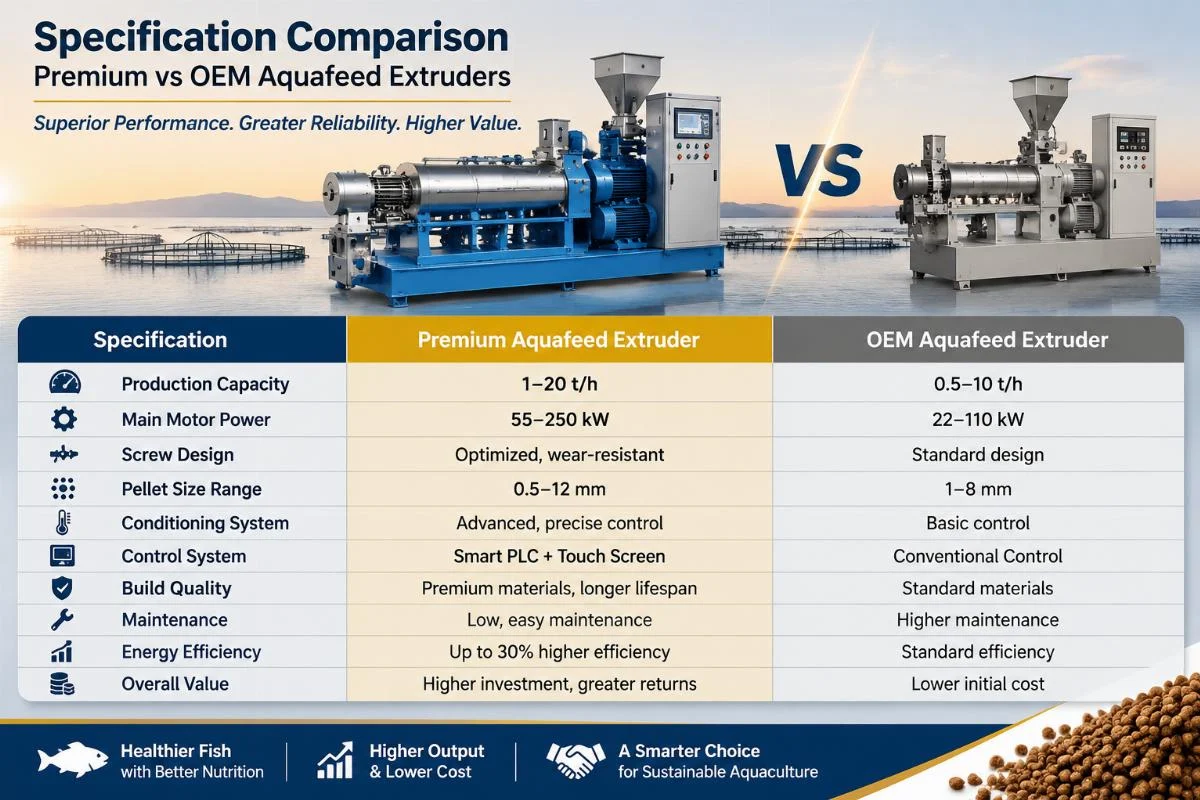
The data shows that while premium brands offer undeniable baseline quality, the rigidity of their standard configurations becomes a liability when local recipes demand specialized shear and pressure profiles.
What Are the Hidden Costs of Running Imported Extruders in Emerging Markets?
The true cost of imported machinery is not the initial purchase price, but the massive hidden downtime caused by localized wear and extended spare parts delays.
A common misconception is that importing a premium machine eliminates maintenance headaches. In reality, the hidden costs emerge quickly when local ingredient profiles clash with standardized machine tolerances.
Consider a floating feed producer in Africa who struggled with inconsistent pellet buoyancy. Their generic imported screw setups could not handle the specific protein and lipid ratios of their local raw materials. The result was a fluctuating floatation rate and frequent line stoppages for manual adjustments. When they finally engaged an OEM partner to redesign the screw elements and barrel lining, the floatation rate improved noticeably, and the mechanical stress on the main drive dropped significantly.
The hidden cost matrix often looks like this:
- Rapid Wear: Standard alloys fail prematurely against high-oil, abrasive local starches.
- Supply Chain Lag: Waiting months for original spare parts from overseas warehouses halts production.
- Yield Loss: Inconsistent gelatinization due to poor SME control leads to rejected batches.
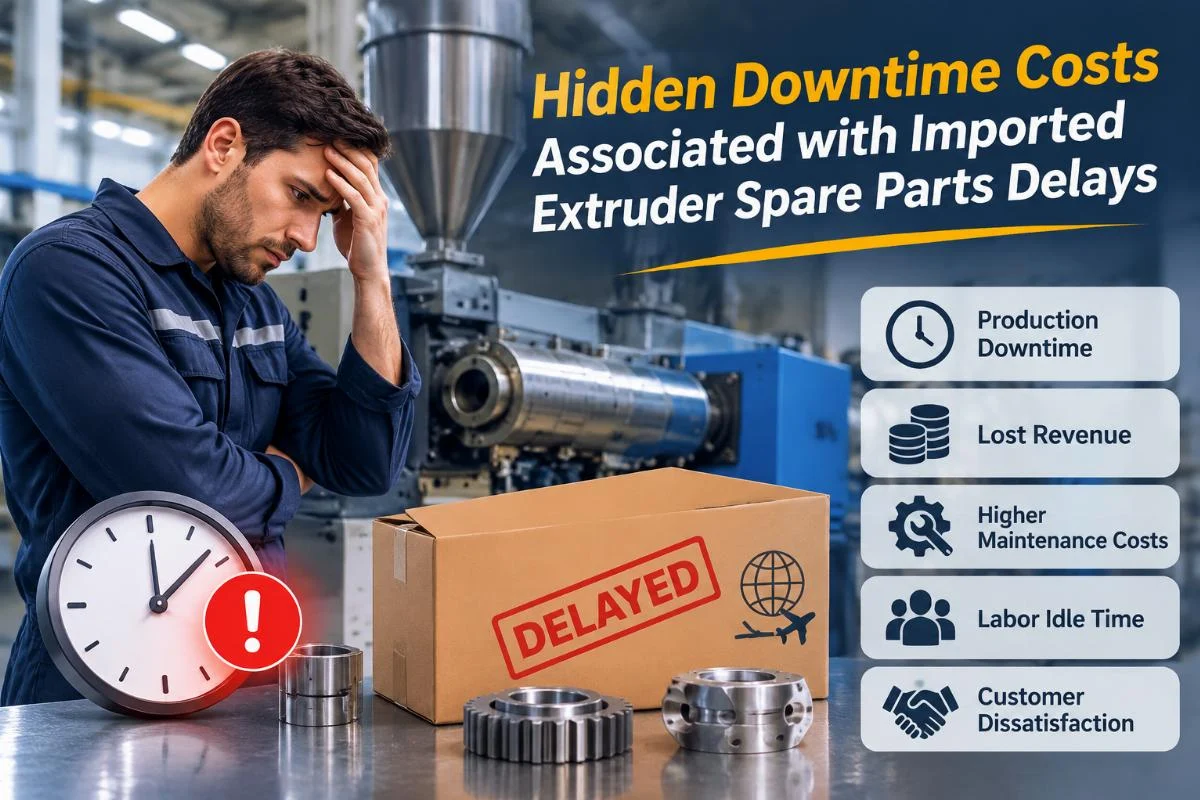
For a Southeast Asian fish feed mill, the high fishmeal oil content caused imported screws to wear at an accelerated pace. The delay in sourcing replacement parts meant the mill operated at reduced capacity for extended periods, losing far more in missed market deliveries than the premium paid for the imported brand initially.
How Can OEM Twin-Screw Alternatives Match Premium Performance?
OEM alternatives bridge the performance gap by offering custom screw arrangements and localized wear-resistant alloys that solve specific regional recipe challenges at a fraction of the cost.
The debate around the Almex vs Wenger extruder often ignores the agility of modern OEM manufacturing. Advanced OEM facilities now utilize the same foundational extrusion principles but apply them with a focus on formula-specific engineering.
When dealing with high-fat formulas, the specific mechanical energy (SME) input must be carefully managed to ensure proper starch gelatinization without burning the lipids. OEM manufacturers can tweak the L/D ratio and the sequence of conveying, kneading, and reverse elements to achieve the exact thermal and mechanical profile required.
A practical example involves a regional producer dealing with extreme ingredient variability. Instead of forcing a standard recipe into a rigid machine, the OEM partner designed a modular barrel system with interchangeable wear-resistant inserts. This allowed the producer to swap out specific barrel sections based on the day’s raw material batch, extending the overall service life of the core components and maintaining consistent pellet durability.
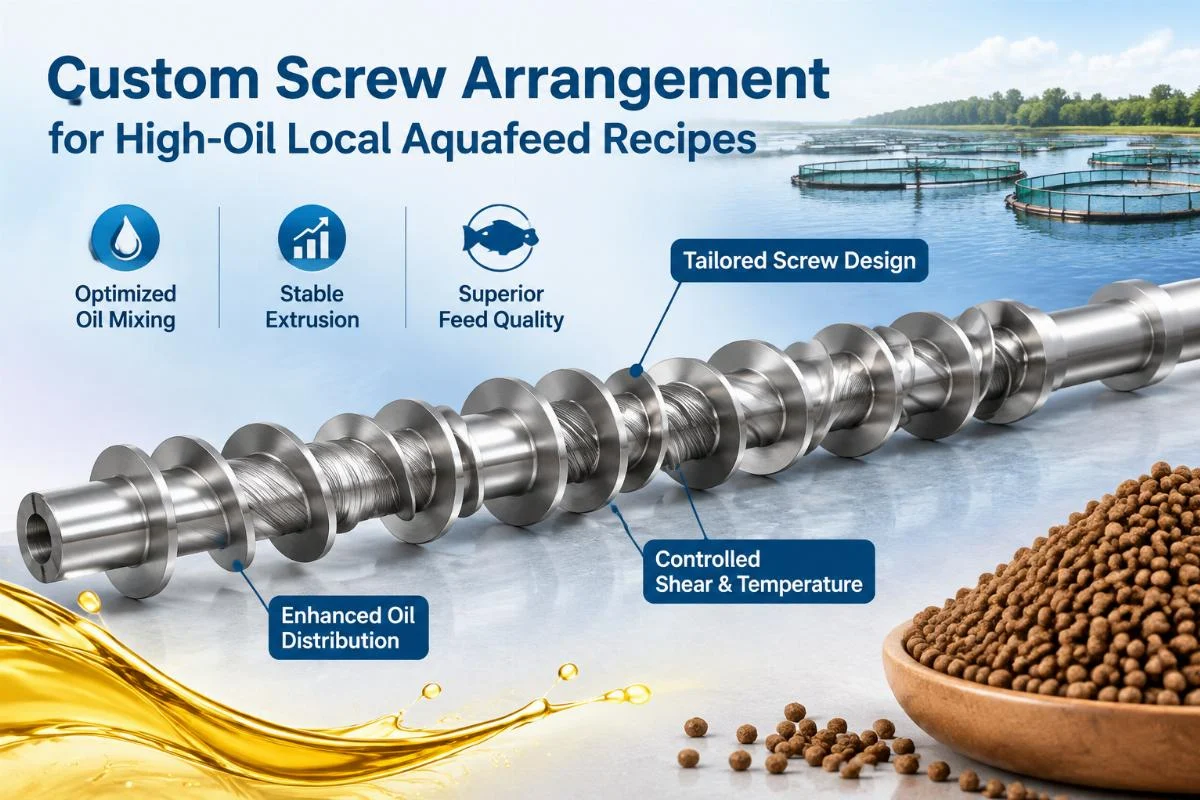
Furthermore, the supply chain advantage is undeniable. OEM partners located closer to emerging manufacturing hubs can deliver critical spare parts in a fraction of the time required by transcontinental shipping from premium brand headquarters. This localized support ensures that a minor component failure does not turn into a month-long production halt.
Which Extruder Setup Delivers the Best ROI for Your Aquafeed Mill?
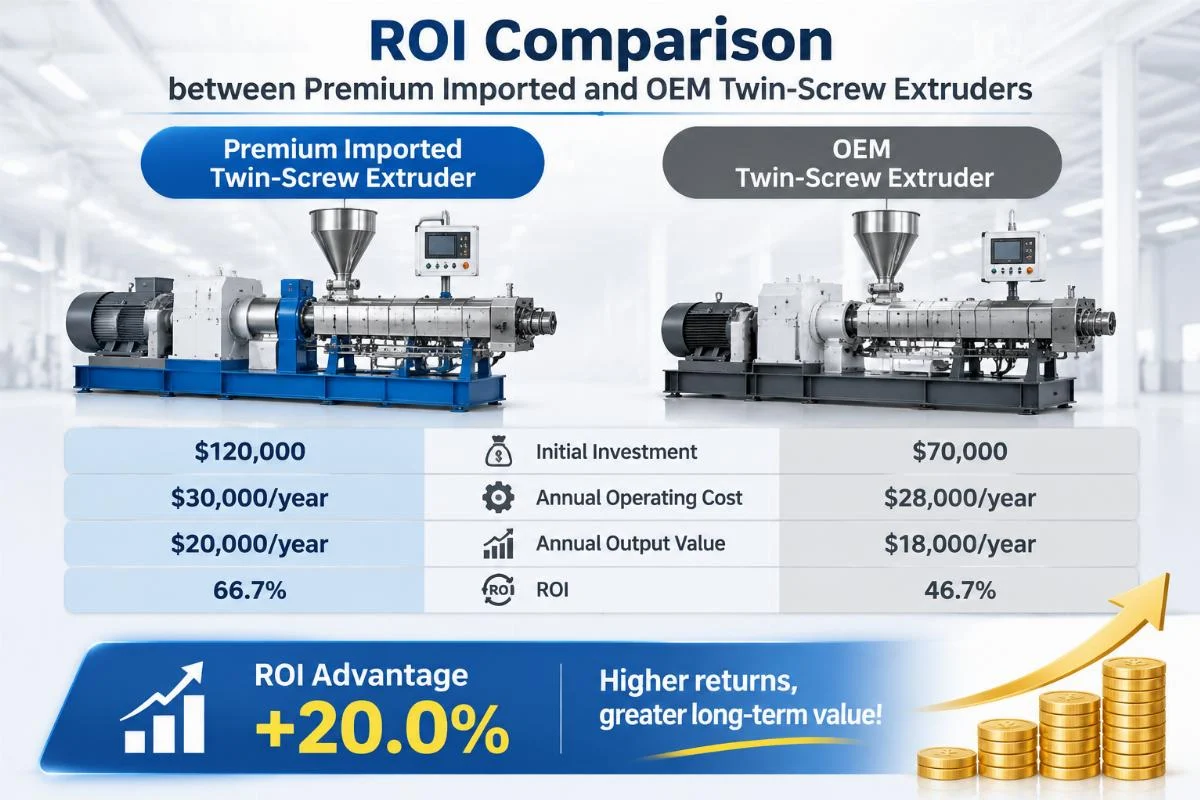
For mid-sized mills targeting regional markets, OEM lines with tailored formula support offer faster payback, stable production, and significantly lower total cost of ownership.
Choosing between an Almex vs Wenger extruder and a high-quality OEM alternative ultimately depends on your mill’s scale, recipe complexity, and operational agility.
If your operation runs standardized, low-fat global recipes with unlimited capital and a tolerance for long lead times, premium brands remain a viable option. However, for the vast majority of producers in Southeast Asia, Latin America, and Africa, the ROI calculation heavily favors the OEM route.
The financial advantages include:
- Lower Initial CapEx: Redirecting funds from brand premiums into better raw materials or facility upgrades.
- Reduced Operational Downtime: Localized spare parts networks keep lines running.
- Higher First-Pass Yield: Custom-tuned screws mean fewer rejected batches during recipe changeovers.
A mid-sized startup in the MENA region recently transitioned from a legacy imported setup to a customized OEM twin-screw line. By focusing on the specific hydration and texturization needs of their plant-based and aquafeed blends, they stabilized their output and reduced their per-ton energy consumption noticeably. The ability to consult directly with the OEM engineers on formula development, rather than just buying a “black box” machine, transformed their production efficiency.
Conclusion
Premium brands offer baseline prestige, but OEM alternatives deliver the customized engineering and localized support that emerging market aquafeed mills actually need to survive and scale.
The choice between an Almex vs Wenger extruder and a tailored OEM setup is not just about machinery; it is about aligning your production assets with your local reality. By prioritizing custom screw configurations, localized wear-resistant alloys, and rapid spare parts availability, mid-sized mills can achieve superior ROI and stable, high-quality output without the hidden costs of imported rigidity.